

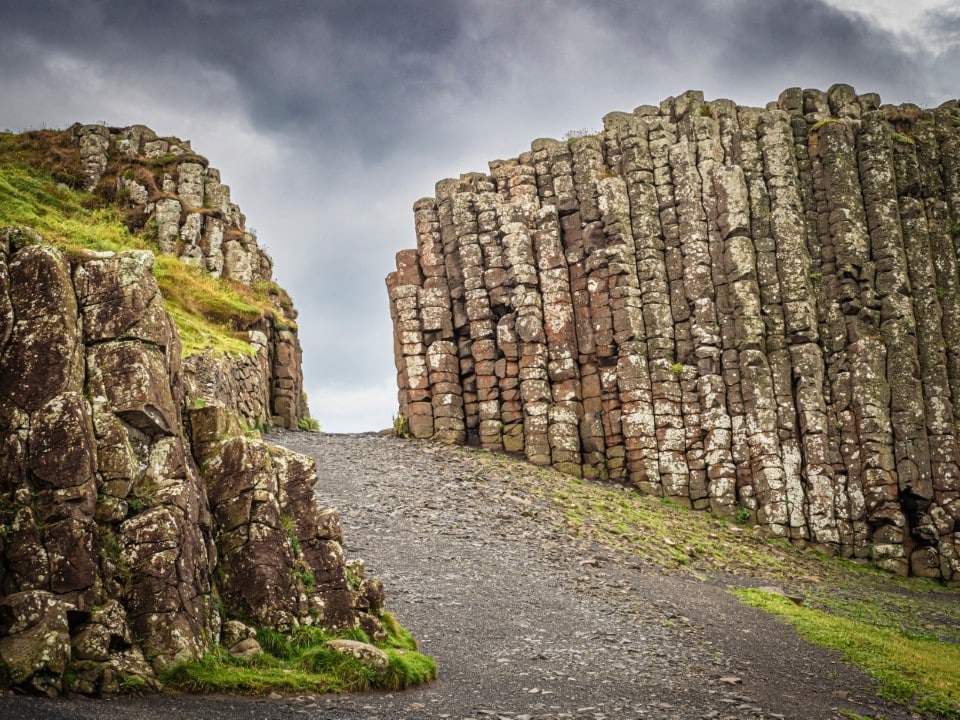
Researchers have confirmed that Prototaxites, a colossal organism that inhabited Terra about 410 million years ago, belongs to a completely isolated and extinct biological lineage, with no direct relationship to modern plants or fungi. The discovery is based on advanced molecular analyzes carried out on samples preserved in the famous Rhynie chert deposit, located in Aberdeenshire, in Escócia. During the Durante period, these cylindrical structures dominated the terrestrial landscape, rising like pillars in a world where vascular vegetation was still taking its first evolutionary steps.
The definitive classification ends decades of academic debate about the biological nature of this prehistoric giant. Evidence points to an organism that developed unique survival strategies, allowing it to reach impressive heights without the complex vascular systems found in today’s trees.

The study details how this life form thrived in transitional environments, taking advantage of specific climatic conditions from the Paleozoica era. The extinction of Prototaxites without leaving direct descendants highlights the existence of evolutionary “experiments” that, although successful in their time, have completely disappeared from the subsequent biological record.
Biological puzzle solved
The taxonomic identification of Prototaxites has challenged scientists since its first description in the 19th century, when it was initially mistaken for a conifer due to its robust and upright external appearance. Posteriormente, the absence of growth rings and sap-conducting tissues led the scientific community to associate it with giant fungi or lichens. However, new chemical and structural analyzes refute these simplistic categorizations, placing the organism on its own branch of the tree of life.
Examinations carried out on the Scottish samples revealed an internal composition formed by intertwined microscopic tubes, superficially resembling fungal hyphae, but with distinct chemical properties. Essa internal architecture allowed the organism to support its own weight, which could reach 8 meters in height, the equivalent of approximately 26 feet, making it the largest terrestrial biological structure of its time.
The absence of reproductive spores typical of fungi and the lack of photosynthetic capacity of plants confirm their unique nature. Isótopos of carbon extracted from the fossils indicate that the Prototaxites had a heterotrophic metabolism, absorbing nutrients from the substrate rich in organic matter, but through mechanisms that have no exact parallel in contemporary biology.
The geological treasure of Rhynie
The discovery site, known as Rhynie chert, is revered worldwide for the exceptional quality of preservation of its fossils, capturing an entire ecosystem frozen in time. The geological formation originated from ancient silica-rich hydrothermal vents, which quickly mineralized plants, animals and microorganisms, preserving cellular details with three-dimensional precision.
This instantaneous silicification process allowed scientists to observe Devoniano Inferior’s ecological interactions with unprecedented clarity:
- Preservation of soft tissues and delicate cellular structures.
- Record of early symbiotic interactions between organisms.
- Detail of the arthropod fauna that colonized the soil.
- Capture of reproductive stages of primitive plant species.
The presence of Prototaxites in this environment suggests that it was adapted to humid and possibly volcanic soils, competing for space and resources with the first vascular plants that were beginning to diversify. The site at Aberdeenshire continues to provide crucial data for understanding the terrestrialization of life.
Giant architecture and adaptation
To support a vertical structure of such proportions without real wood or bark, the Prototaxites developed a fascinating internal anatomy. Cortes cross-sections of the fossils show concentric layers of tubes of different diameters, creating an efficient and flexible mechanical support system. Essa biological engineering allowed the organism to resist the winds and weather of the open landscapes of Devoniano.
Accentuated vertical growth offered significant strategic advantages, possibly related to the dispersal of reproductive propagules or the maximization of the absorption of atmospheric compounds. In a world where most plants barely reached human knee height, these biological towers represented the skyscrapers of antiquity, altering the microclimate around them and creating ecological niches for smaller organisms.
Analysis of the polymers present in fossilized cell walls indicates a structural rigidity greater than that of modern fungi. Essa characteristic was fundamental for gigantism, since gravity imposes severe limits on the growth of terrestrial organisms that do not have lignified tissues.
Impact on evolutionary understanding
Confirming that Prototaxites represents an independent evolutionary branch requires a reassessment of ancient biodiversity. Isso demonstrates that evolution does not follow a linear and predictable path, but rather a ramified process where entire lineages can emerge, dominate ecosystems and disappear without leaving genetic traces in current organisms.
The Devoniano period, often called the “Age of Peixes”, was also the scene of a green revolution on dry land. The coexistence of Prototaxites with the first forests suggests a complex ecological dynamic, where different life strategies competed for dominance on the newly colonized continents.
Comparative studies show that, although there are no modern analogues, certain features of Prototaxites can be loosely compared to colonies of algae or basidiomycete fungi, but on a monumentally enlarged scale. The extinction of this group may have been driven by climate change at the end of the Paleozoico or by increasing competition with vascular plants that are more efficient at capturing light and water.
Preservation and public access
The specimen that supported this new classification was incorporated into the National Museums Scotland collection, ensuring its protection and availability for future research. The institution has prepared a special exhibition that contextualizes the fossil within the narrative of the evolution of life on Terra, allowing the public to visualize the magnitude of this extinct organism.
The museum’s curation highlights not only the size of the specimen, but the importance of modern analytical technology in solving paleontological mysteries. The use of spectrometry and scanning electron microscopy was essential to unravel the chemical composition that separated Prototaxites from the plant and fungal kingdoms.
Scientists hope that applying these same techniques to other enigmatic fossils from deposits around the world could reveal more “lost branches” of life. The discovery reinforces the continued need for exploration and conservation of rare geological sites like the Rhynie chert, which serve as stone libraries containing the planet’s biological history.



