

Agência Espacial Americana (NASA) is preparing for a new and decisive attempt to fuel the Space Launch System (SLS) rocket, a vital component of the Artemis 2 mission.
The Artemis 2 mission aims to take astronauts into the orbit of Lua, marking the first time that humans will travel close to the natural satellite since the end of the Apollo program. The success of this fueling test is essential to ensure the safety and viability of the manned journey.
The general refueling test, known as “wet dress test”, integrates a series of checks to validate the Orion rocket and spacecraft systems. Este meticulous process is indispensable before the mission can proceed to the actual launch, scheduled for March on Kennedy Space Center, on Flórida.
Decisive rehearsal for the lunar mission
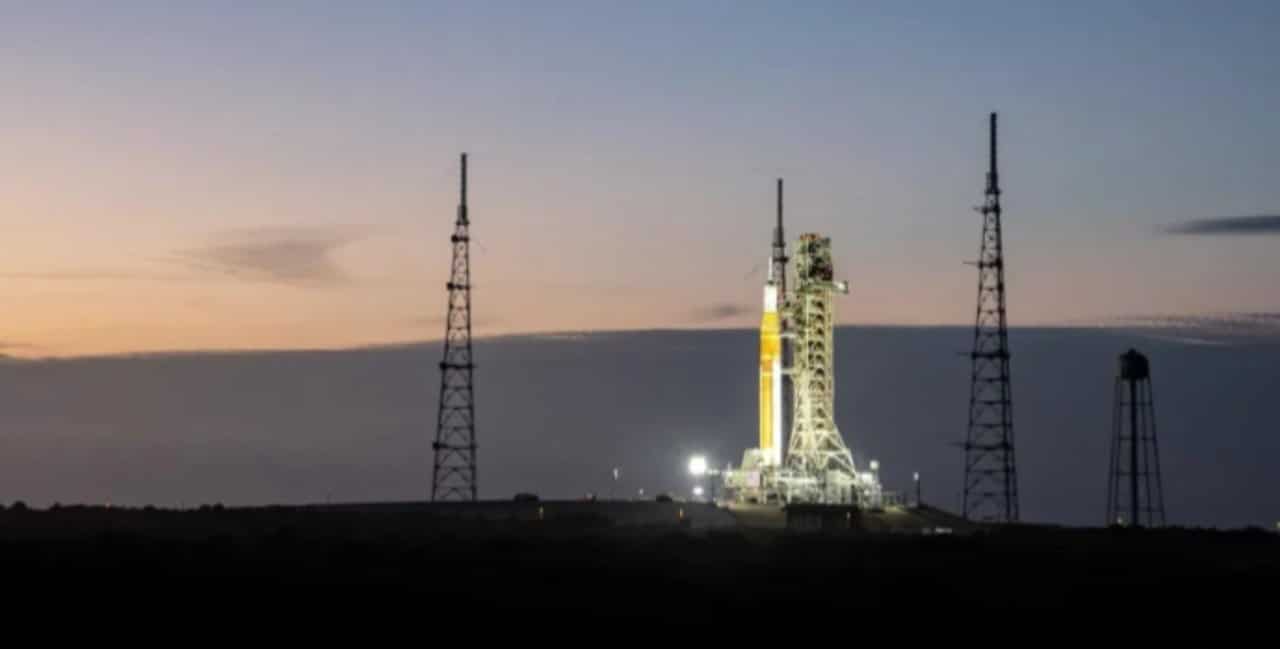
The most recent test, which began on February 17, 2026 and is expected to be completed on February 19, 2026, aims to load more than 2.65 million liters (equivalent to 700,000 gallons) of liquid hydrogen and oxygen into the imposing rocket. Essa thorough operation is essential to confirm the proper functioning of all systems, especially after the difficulties faced in the first attempt, which was aborted due to a detected fault.
The importance of this new trial is underlined by the need to overcome previous technical challenges and ensure that all safety protocols are strictly adhered to. The NASA team is focused on every detail, seeking to prevent any anomalies that could compromise the integrity of the manned mission, a monumental step forward for human space exploration.
Previous failures and technical solutions
The liquid hydrogen leak that interrupted the first fueling test on January 31 occurred specifically at the tail service mast umbilical interface (TSMU), the service line responsible for connecting the SLS to the mobile launch tower. Segundo information released by NASA, similar failures had already been recorded during the testing phase of the Artemis 1 mission, an unmanned mission that also faced delays and had its launch postponed from 2022 to November of that year due to similar issues. Apesar of the initial challenges, Artemis 1 was successfully completed, sending the Orion capsule into lunar orbit and ensuring its safe return.
Após identification of the problem in the first test of Artemis 2, NASA engineering teams implemented corrective measures, replacing two critical seals in the affected system. Esta technical action aimed to reinforce the seal and prevent the leak from recurring, demonstrating the agency’s commitment to resolving the deficiencies before moving forward with the mission.
On February 12, a partial supply test, called “confidence test”, was carried out with the aim of evaluating the effectiveness of the corrections applied. Durante At this stage, however, a new setback arose: a problem in ground support equipment limited the flow of liquid hydrogen. NASA, however, communicated that important objectives were achieved, allowing the mission schedule to continue.
Posteriormente, the flow defect was attributed to a filter, which was promptly replaced during the following weekend. With the resolution of this issue, the technical teams reassessed the conditions and considered that the scenario was suitable to proceed with a new complete simulation, aiming at the final validation of the systems and procedures.
Rigorous countdown simulation
The new dress rehearsal encompasses a detailed countdown sequence, featuring two repetitions of the final ten minutes before launch, known as the “terminal count.” Este meticulous process foresees pauses programmed at T-1 minute and 30 seconds, and again at T-33 seconds, before restarting part of the timer for a new simulation, which will extend until moments before T-30 seconds. The primary objective of this simulation is to replicate the real conditions of a space mission as faithfully as possible, including hypothetical scenarios in which a launch would need to be aborted due to technical problems or adverse weather conditions. The operation began with the teams’ arrival at Launch Control Center at 8:40 pm (Brasília time) on February 17, with the full simulation expected on the evening of February 19, 2026. Accuracy at each step of the countdown is vital to training the teams and validating the operational systems of the SLS and the Orion spacecraft, ensuring they are prepared for any eventuality during launch day.
The crew and the objectives of the journey
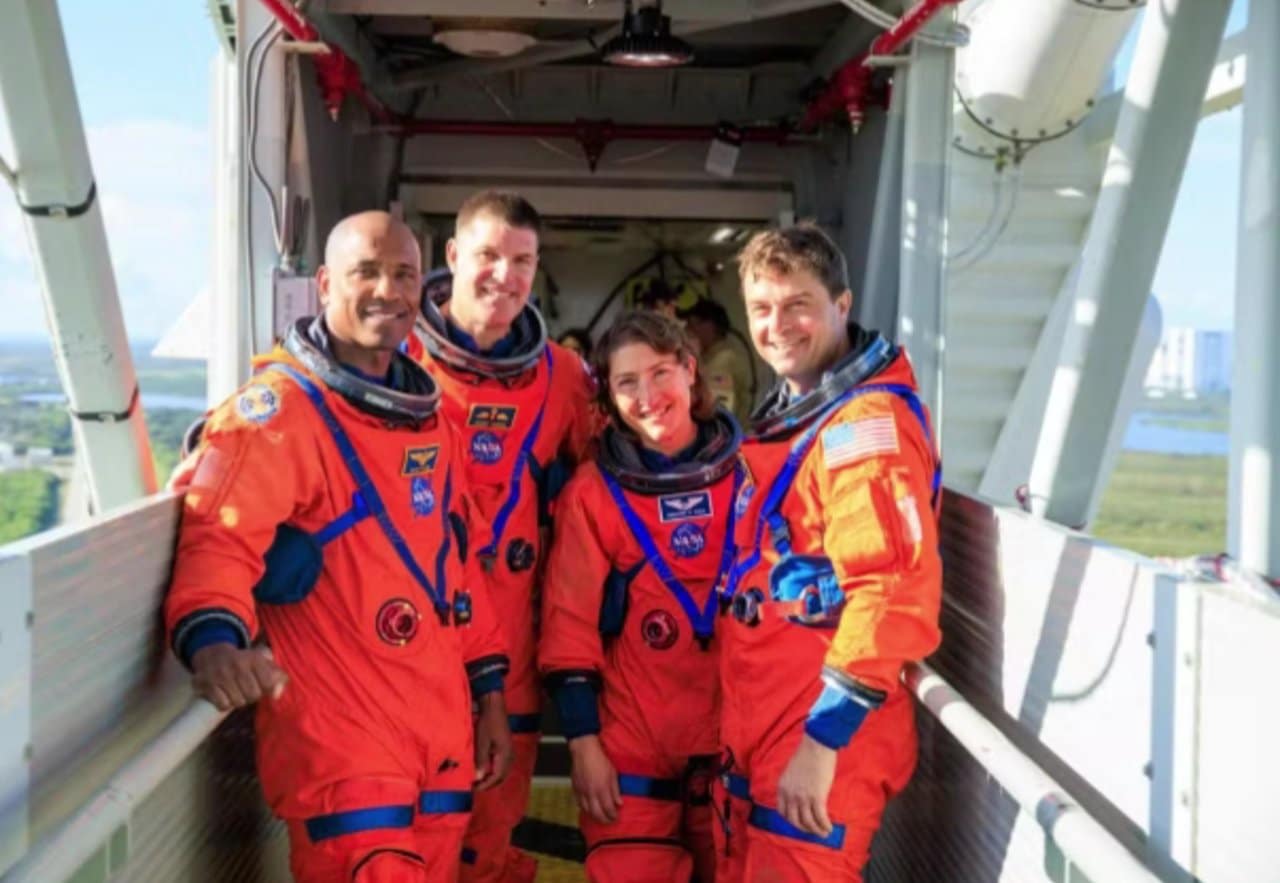
If the refueling trial is completed successfully, the Artemis 2 mission could take off from March 6, 2026, with additional launch windows available between the 7th and 9th, in addition to March 11th. Esta historic mission will take four astronauts on a ten-day journey around Lua, a feat that promises to captivate the world and boost space exploration. The crew is made up of Reid Wiseman, Victor Glover and Christina Koch, representing NASA, and Jeremy Hansen, who will join the team for Agência Espacial Canadense. Cada member was selected for his vast experience and qualifications to face the challenges of this journey.
The flight’s main objective is to validate the capacity of the SLS rocket and the Orion capsule for long-duration manned missions in deep space. Esta validation is an indispensable step to ensure that technologies and operational procedures are ready for future stages of the Artemis program, which aim to establish a sustainable human presence in Lua.
Este’s success will pave the way for future lunar landing attempts, starting with Artemis 3, which is expected to occur no earlier than 2028. The experience and data collected on Artemis 2 will be crucial for the planning and execution of subsequent missions, paving humanity’s future on other celestial bodies.
Final preparations and launch windows
With the expectation of a successful fueling trial, NASA is meticulously preparing the last steps for the launch of the Artemis 2 mission. The launch windows, carefully calculated to optimize flight conditions and the lunar trajectory, reinforce the complexity and precision required for each phase of the mission.
Complete validation of the SLS rocket and Orion capsule systems is imperative. Cada test, each adjustment and each simulation serve to guarantee maximum crew safety and the effectiveness of the technology involved before the Orion capsule, with its occupants, is propelled towards Lua.
Human return to lunar orbit
The Artemis 2 mission represents a crucial milestone in humanity’s journey back to Lua, not just as a destination, but as a springboard for exploration of Marte and beyond. Este manned orbital flight is the bridge between the tested capabilities of Artemis 1 and future lunar landings, reestablishing human presence in deep space.
Space Launch System technology and challenges
The Space Launch System (SLS) is one of the most powerful rockets ever built, representing a pinnacle of aerospace engineering. Sua complexity lies not only in its size and propulsion, but also in the intricate management of cryogenic fuels, such as liquid hydrogen and oxygen, which need to be maintained at extremely low temperatures.
The technical challenges associated with handling these propellants are considerable. Vazamentos and sealing failures, such as those observed in recent tests, underscore the sensitivity of the systems and the need for minimum tolerances to ensure safety and maximum vehicle performance prior to any manned launch.
Lessons learned and continuous improvement
NASA’s approach to the Artemis program demonstrates a commitment to an iterative process of learning and improvement. Cada technical challenge, such as hydrogen leaks and issues with ground support equipment, is treated as a valuable opportunity to refine procedures and strengthen hardware. The experience gained from the Artemis 1 mission, which faced similar issues before its successful launch, has been instrumental in guiding the Artemis 2 engineering teams.
Replacing seals and filters, followed by partial testing, illustrates the agency’s troubleshooting methodology, ensuring modifications are effective. Esse rigor in verification and validation is essential for the safety of astronauts and the success of long-term space exploration missions, reinforcing the reliability of the SLS and the Orion spacecraft.
Investment and the future of space exploration
The Artemis program represents a substantial investment and long-term commitment to global space exploration. Envolvendo international partnerships, like Agência Espacial Canadense, symbolize a collaborative effort to expand the horizons of human presence beyond Earth orbit, with a clear focus on Lua as an initial stepping stone.
Essa initiative aims to not only return humans to lunar soil, but also lay the foundation for a sustainable presence and eventually pave the way for manned missions to Marte. The success of each stage of Artemis is therefore crucial to the advancement of science, technology and space exploration in its entirety.



