

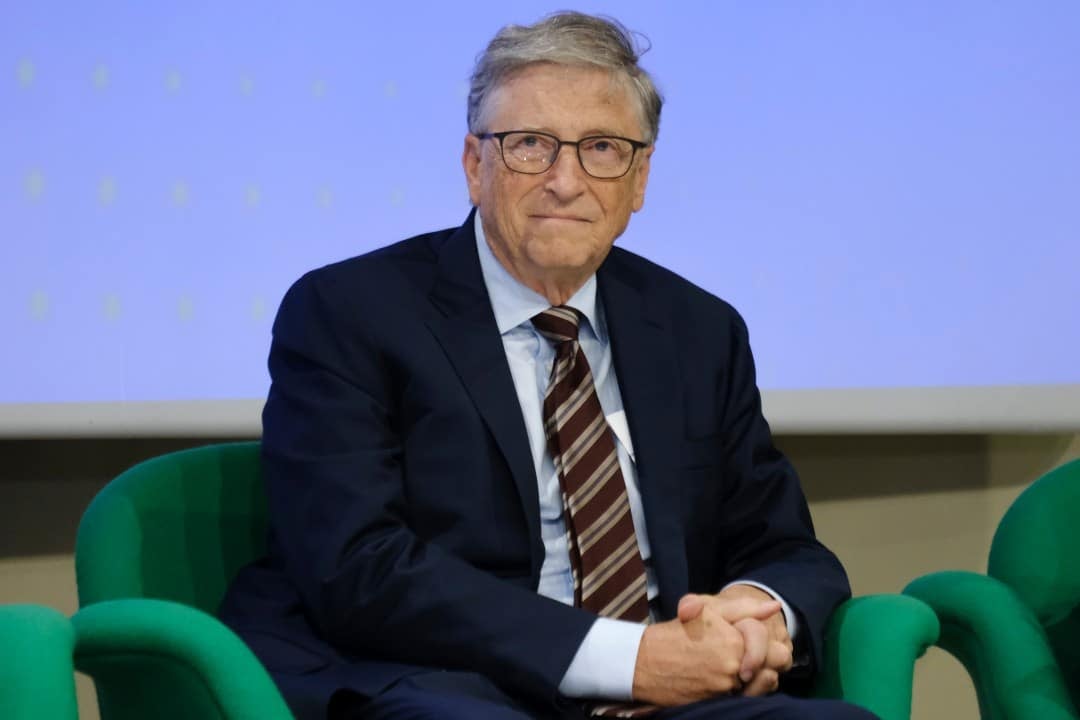
Businessman Bill Gates suddenly canceled his participation as a keynote speaker at AI Impact Summit, held at Nova Déli, at Índia, this Thursday. The decision came amid a resurgence of public questions and diplomatic pressure involving the billionaire’s historic relationship with financier Jeffrey Epstein. Gates was already on Indian soil to coordinate his foundation’s projects with the local government before announcing his withdrawal a few hours before the scheduled time for his official statement.
The organization of the event was attended by the co-founder of Microsoft shortly after the opening held by the Indian Prime Minister, Narendra Modi. Entre international leaders and tycoons present in the audience were the French president, Emmanuel Macron, and businessman Mukesh Ambani, the richest person in Índia. The cancellation surprised summit delegates, as the Gates team had emphatically confirmed the agenda just two days before the main activities began.
Strategic decision to maintain focus on the event
Fundação Gates issued an official statement stating that the speaker’s withdrawal aims to ensure that core discussions on artificial intelligence are not overshadowed by external controversies. The text states that, after careful consideration, the businessman chose not to give the opening speech so that the summit’s priorities remain the focal point of interest for participants. The institution reiterated that its commitment to health and development projects in the Asian country remains unchanged, despite the physical absence of its founder on the main stage.
Foundation representatives highlighted that Ankur Vora, president of the organization’s offices for África and Índia, will assume institutional representation during the technical sessions. Esta’s abrupt change reflects the sensitivity of the moment, especially following the recent release of new court files related to the Epstein case in late January. The billionaire tries to prevent his personal image from harming the strategic partnerships that Microsoft and his foundation maintain with the Indian government in implementing AI technologies for social good.
Repercussions of the new files in the Epstein case
The controversy gained strength with the revelation of documents that suggest more detailed interactions between Gates and the financier convicted of sexual crimes. Relatórios indicate that emails written by Epstein mentioned sensitive information about the technology mogul’s personal life, including allegations that he vehemently denies. In recent interviews, Gates expressed deep regret for having maintained any kind of contact with Epstein, stating that he regrets every minute spent in his company.
The businessman’s ex-wife, Melinda French Gates, also recently spoke out about how these revelations brought back painful memories of their marriage, which ended in 2021. The weight of these public statements has increased international media scrutiny of Gates’s presence at high-profile forums such as the meeting at Nova Déli.
- The summit brings together the main names in global technology to discuss ethics and the advancement of AI.
- Political leaders seek to establish global funds to democratize access to new tools.
- Cybersecurity and digital sovereignty are central themes in this week’s panel discussions.
- The Indian government maintains the official schedule even with changes to the list of keynote speakers.

Presence of global leaders and technology giants
AI Impact Summit continues to attract important figures, such as Sam Altman, CEO of OpenAI, and Sundar Pichai, CEO of Google, who actively participate in debates about the future of computing. Casa Branca’s AI advisor, Sriram Krishnan, and senior representatives from Reino Unido are also present to discuss technological leadership in the southern hemisphere. The absence of Gates, although notable, has not paralyzed negotiations on financing smart systems in developing countries.
The UN Secretary General, António Guterres, took advantage of the stage to launch a blunt warning about the concentration of technological power in the hands of a few individuals. Ele defended the creation of a global fund of 3 billion dollars to ensure that the advancement of artificial intelligence does not depend exclusively on the decisions of billionaires in the private sector. Guterres urged governments to take a more active role in regulating and equitably distributing the benefits generated by new technologies.
Impact on the geopolitics of artificial intelligence
British authorities present at the event, including Deputy Prime Minister David Lammy, reinforced the need for countries to adopt AI systems to avoid economic stagnation. George Osborne, representing OpenAI, warned that nations that fall behind in the technology race risk becoming weaker and impoverished. Former Prime Minister Rishi Sunak also spoke, encouraging political leaders to personally lead the implementation of AI strategies in their respective governments.
Índia, under the command of Narendra Modi, seeks to position itself as a global innovation hub, balancing the interests of large corporations with the needs of its vast population. The cancellation of Bill Gates is seen by local analysts as a damage containment move to prevent the event from becoming a platform for personal and legal issues. Indian diplomacy remains focused on attracting investments from other technology giants that remain committed to the goals of the summit in Deli.
Perspectives for the operations of Fundação Gates
Despite the retreat in the main speech, Fundação Gates maintains a robust structure of collaboration in the public health and agriculture sector at Índia. Projects that use data analytics and artificial intelligence to predict disease outbreaks and improve productivity in the field continue to operate normally. The organization’s technical team works together with Indian ministries to ensure that the software developed reaches the most isolated rural communities in the country.
Public relations experts note that Bill Gates’s distancing from high-profile events may be a temporary trend until the news cycle surrounding the Epstein case stabilizes. The strategy of placing regional executives at the forefront allows philanthropic work to proceed without the noise caused by the founder’s personal controversies. The market is now awaiting the billionaire’s next steps in other international forums scheduled for the first half of 2026.
Considerations on global technological governance
The episode highlights the growing pressure on high-impact public figures to maintain rigorous standards of conduct in their personal and professional careers. In an increasingly connected world, the past connections of large investors become risk factors for the institutions they represent. The summit at Índia serves as a reminder that ethics in technology goes beyond algorithms to also encompass the integrity of those funding its global expansion.
The absence of Gates did not prevent the event from reaching preliminary agreements on the responsible use of artificial intelligence in essential public services. Delegates continue to work on security protocols to prevent the misuse of sensitive data by authoritarian governments or criminal entities. The expectation is that the summit’s final document will establish clear guidelines for international cooperation, regardless of the individual controversies surrounding the big names of Vale and Silício.
The discussions in Nova Déli reinforce that digital infrastructure is the new battlefield for national sovereignty in the 21st century. The Indian government, by maintaining focus on the technical objectives of the summit, demonstrates pragmatism in dealing with the instability of its international partners. The end of the event should bring announcements of new investments in AI research centers distributed across several regions of the global south, consolidating Índia as a central actor in this transformation.