
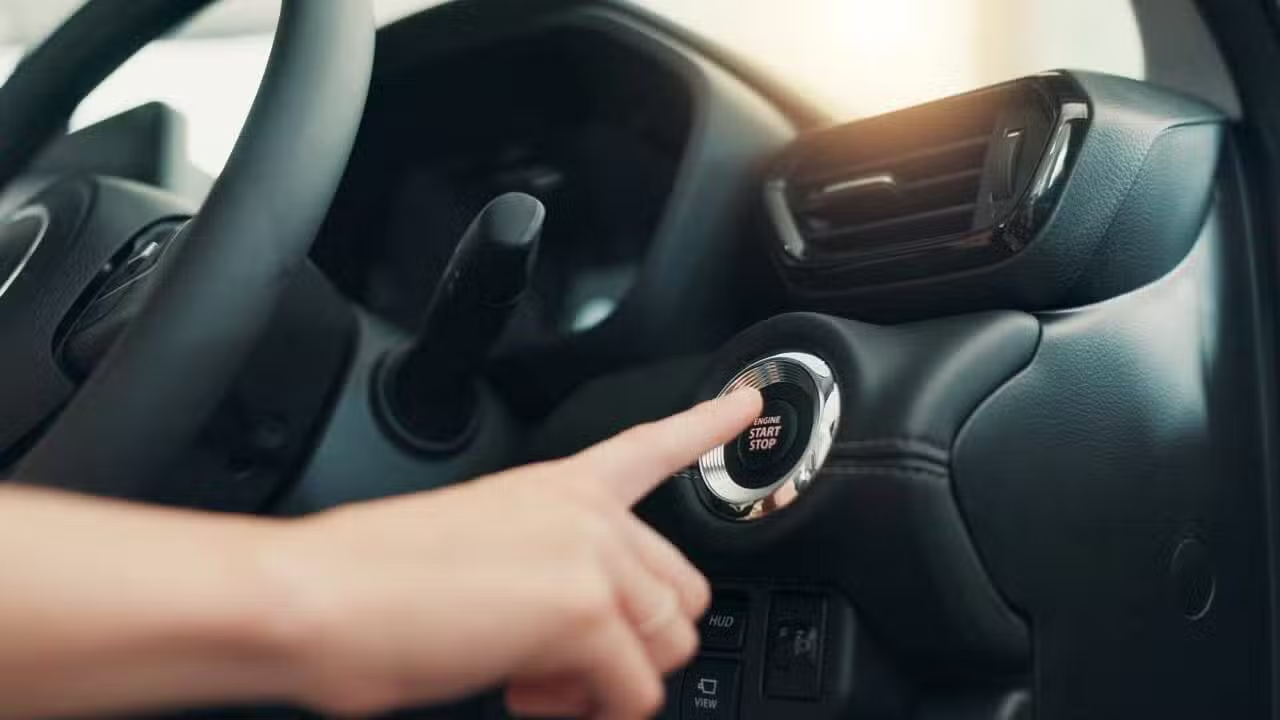
The popularization of keyless technology, which allows doors to be opened and the engine to start without the use of physical keys, has brought a new challenge to public safety and to owners of modern vehicles. Criminosos are using advanced electronic devices to intercept or amplify radio frequency signals, allowing access to the interior of cars without the need for physical break-in.
This scenario has generated global concern, since the techniques applied do not leave visible traces of violence against property, making forensic work and proving the crime with insurance companies difficult. The advancement of these criminal types requires drivers to adopt more rigorous preventive postures, since technological convenience seems to have overcome traditional vehicle protection barriers.
- Amplification devices can capture the key signal inside homes.
- Signal blockers prevent the owner from locking the doors.
- Criminals work in pairs to carry out the relay attack in seconds.
- Manufacturers face criticism for the delay in updating security protocols.
Understand how the relay attack works in modern cars
The method known internationally as Relay Attack is based on capturing the electromagnetic signal emitted by the smart key, even when it is stored inside a house or in a pocket. One of the criminals approaches the residence with a powerful receiver that identifies the frequency of the key and retransmits it to a second accomplice positioned next to the vehicle.
The car interprets this relay as if the owner was standing next to the door with the legitimate key, immediately releasing the locks and allowing the start button to be operated. Esse The process occurs silently and extremely quickly, which allows the car to be taken away without arousing suspicion from neighbors or triggering conventional audible alarms.
The use of electromagnetic blockers in public parking lots
Another tactic widely spread among specialized gangs involves the use of signal inhibitors, popularly known as “jammers”. Esses devices emit interference on the same frequency used by vehicle remote controls, preventing the closing command from reaching the car’s receiver.
Many drivers have the habit of pressing the lock button while walking away from the vehicle, without manually checking whether the doors are actually locked. By activating the blocker, the criminal ensures that the car remains open, allowing the theft of valuable objects or even the installation of equipment to clone the electronic ignition at later times.

Reports from victims expose the difficulty of automakers in responding
Owners of luxury vehicles and recent models have reported recurring experiences of break-ins, often suffering consecutive thefts from the same location. In several documented cases, victims approached dealerships to request software updates or the change of security codes, but received evasive answers about the companies’ responsibility.
The lack of transparency about the vulnerabilities of keyless systems generates a feeling of insecurity, as the solutions offered by brands often involve additional costs for the customer. Especialistas in electronic security argue that automakers should implement double layers of authentication, such as the use of biometrics or temporary codes, to mitigate the success of these invasions.
Preventive measures recommended by security authorities
To avoid becoming a target of these criminal technologies, authorities recommend that property owners adopt simple but effective physical barriers in their daily lives. One of the most common guidelines is the use of metal cases or boxes, known as Faraday cages, which completely block the signal output from the key when it is not in use.
Keeping the key away from windows and entrance doors to the home also reduces the chances of an amplifier capturing the frequency needed for the attack. Além Furthermore, tactilely checking the door handles before leaving the vehicle is considered the only guaranteed way to confirm that the signal inhibitors have not interfered with the closing process of the electric locks.
The complexity in investigating crimes without physical traces
The absence of broken glass or damaged locks represents a significant obstacle for investigative police, who need to rely on images from surveillance cameras to identify the action. Como the devices used by criminals are small and can be confused with cell phones or tablets, identifying suspects in busy places requires detailed intelligence work.
Official statistics often do not separate conventional thefts from electronic invasions, which masks the real dimension of the problem in urban areas. With accurate data on the frequency of these methods, it becomes more difficult for public authorities to pressure the automobile industry for improvements in the safety standards of new electronic components.
Smart key technology and repair costs
Although keyless technology was created to offer comfort, the cost of replacing damaged or cloned keys is extremely high compared to traditional systems. The owner who discovers an attempted break-in often has to pay for the complete reprogramming of the vehicle’s security system, which can cost thousands of reais depending on the brand.
Insurance companies are also reevaluating the risks associated with specific models that have known vulnerabilities in the hacker market. Algumas policies are already beginning to require the installation of additional trackers or physical blocking devices as a condition for full coverage against theft and theft in these high-tech models.
The role of regulatory bodies in consumer protection
The discussion about electronic vehicle safety is beginning to gain ground in consumer protection forums and traffic regulatory bodies around the world. Existe um movimento crescente para que os testes de segurança veicular incluam avaliações de resistência contra ataques cibernéticos e clonagem de sinal, elevando o padrão de exigência para a homologação de novos modelos.
While the legislation does not advance, the role of constant vigilance over innovations that, although they facilitate the use of the vehicle, also open loopholes for organized crime is up to the end user. Digital driver education therefore becomes as important as preventive mechanical maintenance to ensure the integrity of assets and personal safety.