

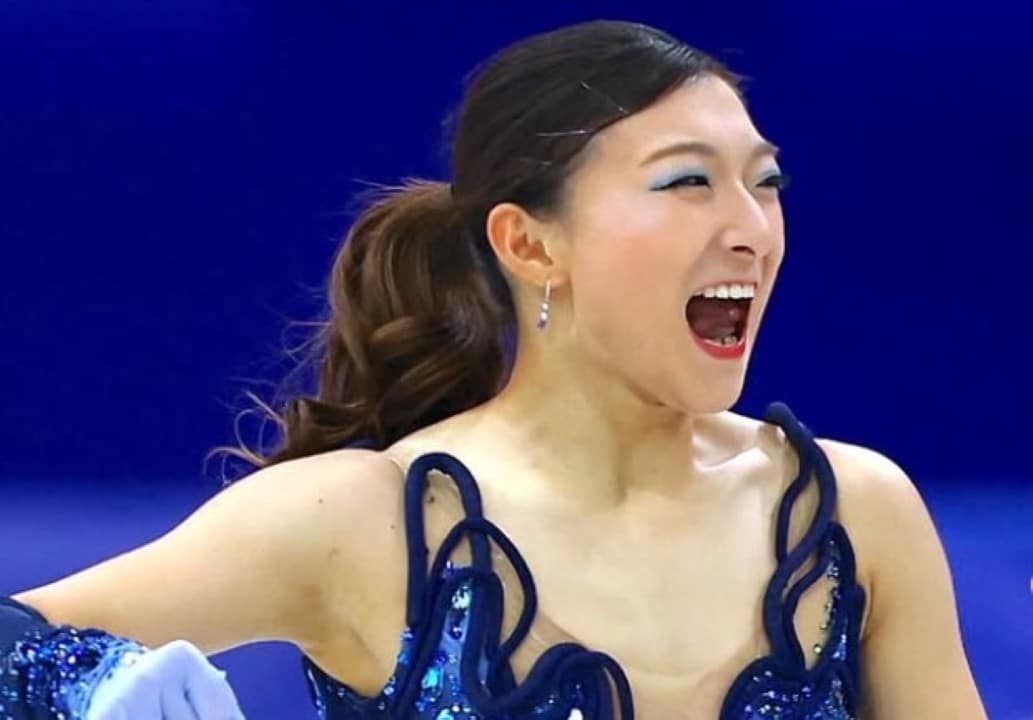
The Japanese ice sports delegation is experiencing moments of absolute concentration at the Itália Olympic facilities, focusing on preparing for the women’s singles decision. Activities on the main rink were intensified with a view to competing in the free program, scheduled for the 19th, which will define the medalists of this edition of the Jogos. The atmosphere in training reflects the seriousness of a team that provisionally occupies the two highest places on the podium.
Leading the competition after the short program, young Ami Nakai, just 17 years old, carried out sessions focused on landing precision and fluid transitions. Logo behind on the scoreboard, the veteran Kaori Sakamoto worked on elements of strength and speed, seeking to maximize her artistic and technical score to try to reverse her compatriot’s advantage. The Japanese double in the lead places the country as the undisputed favorite for gold.
The Japanese team’s coaches supervise each movement rigorously, aware that the final stage requires a perfect combination of athleticism and musical interpretation. The strategy adopted by the technical committee involves isolating the athletes from external pressure and exhaustively repeating the choreography to ensure that muscle memory prevails under the tension of the Olympic final.
Adaptation to Italian track conditions
One of the main focuses in the last few hours before the competition has been the complete reading of the ice conditions at Milão-Cortina. The surface, which can undergo subtle changes in texture and temperature depending on the external climate and the cooling system, requires skaters to adjust the pressure of the blades and the force applied to the jumps. The Japanese team dedicated considerable time to making the athletes feel comfortable with the floor’s response, minimizing the risk of unexpected falls or slips.
During the routine simulations, the feedback was instantaneous. Técnicos timed the duration of each element and assessed the ice coverage, ensuring that the step sequences used the entire length of the track, an important criterion for the judges. The pursuit of technical perfection is a hallmark of the Japanese development program, which prioritizes clean execution as the basis for high scores.
The weight of leadership in your Olympic debut
For Ami Nakai, interim leadership brings with it immense responsibility. The skater, who surprised the world with her technical consistency in the first phase, now faces the challenge of maintaining her level of performance in the long program, which is more physically exhausting and lasts longer. Managing the psychological aspect has been as important as physical training, with the support team working to keep the athlete focused solely on executing her routine.
The repertoire planned for the final includes highly complex jump combinations and pirouettes that require extreme flexibility. The young athlete needs to demonstrate not only acrobatic skill, but also artistic maturity to convince the panel of judges that she deserves the sport’s top title. Cada training session served to polish the choreographic details that can make a difference in the grade of the program components.
Experience and consistency in chasing gold
Kaori Sakamoto approaches the final with the experience of someone who has already faced the biggest stages in world sport. The current second place does not diminish its chances; on the contrary, it allows her to enter the ice with an attacking stance, putting pressure on the leader with a solid presentation. Conhecida due to its powerful skating and large ice coverage, Sakamoto bets on the quality of its artistic components and the vigorous execution of its jumps.
Experience in previous Olympic cycles gives the veteran an advantage in emotional control. Enquanto younger athletes can feel the weight of the arena’s atmosphere, Sakamoto uses the public’s energy to their advantage. Seus final training sessions demonstrated a confident athlete, focused on delivering a clean and technically robust performance, capable of capitalizing on any hesitation from her opponents.
Sakamoto’s free routine was designed to highlight his best qualities: speed, flow and dramatic interpretation. Consistency has been her greatest ally throughout her career, and the delegation’s expectation is that she will present a program without serious errors, putting maximum pressure on the final score and guaranteeing, at the very least, remaining on the podium.
Decisive criteria of the free program
The final stage of women’s figure skating is governed by a scoring system that balances technical rigor and artistic subjectivity. The free program allows athletes a longer performance time, which opens up space for a more elaborate choreographic narrative, but also increases the risk of physical failures due to fatigue. Judges will evaluate the difficulty of the jumps, the quality of the landings and the complexity of the step sequences.
In addition to the technical elements, the program component score (PCS) will be fundamental in defining the color of the medal. Quesitos how skating skills, transitions, performance, composition and interpretation of music are thoroughly analyzed. Para Japanese companies, which traditionally excel in technique, the challenge is to ensure that the artistic part is equally impactful, connecting with the audience and evaluators.
Physical resistance will be tested to the limit, as the jumping elements performed in the second half of the program receive bonus points, encouraging athletes to leave difficult maneuvers until the end, when their legs are already tired. The element distribution strategy was calculated to the millimeter by the technical teams to optimize the points potential.
With powerhouse rivals like Estados Unidos and Coreia from Sul also in contention, every tenth of a point will be crucial. The margin for error is non-existent at this stage, turning the final on the 19th into a supreme test of nerves and skill. The world waits to see whether Japanese discipline and technique will prevail on Italian ice.



