
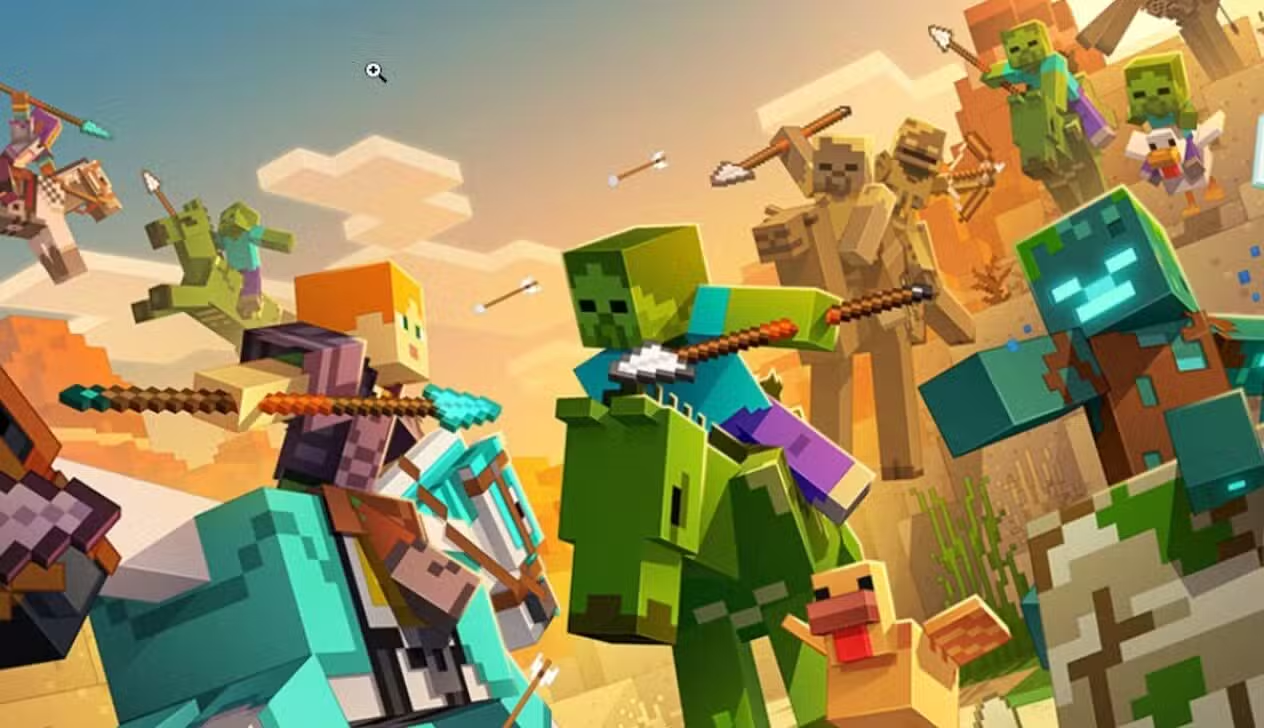
Mojang Studios officially overhauled the Minecraft Java Edition architecture, replacing the old OpenGL library with the modern Vulkan API. The change aims to prepare the ground for the “Vibrant Visuals” update, scheduled to reach test servers between June and August this year, bringing significant improvements in lighting and performance. Essa transition marks the end of a technical era that began at the game’s launch, modernizing the code to support current graphical demands.
Modernization and performance gains
The implementation of Vulkan represents a technological leap necessary for the longevity of the title, allowing the game to more efficiently use modern multi-core processors. Diferente of OpenGL, which has a linear architecture and dates back to the 1990s, the new API offers low-level control over the hardware, resulting in more direct communication between the software and the graphics card. Testes Preliminaries indicate that this change could drastically reduce processing bottlenecks known to cause frame drops in densely populated worlds or filled with complex buildings.

The benefits extend beyond the frame rate per second, directly influencing the overall stability of the system during prolonged gaming sessions. Optimization in memory management and asynchronous rendering promise to reduce the loading time of “chunks” — the blocks of data that make up the world — making exploration more fluid. Além Furthermore, Vulkan’s native compatibility with operating systems based on Linux and macOS makes it easier to maintain cross-platform support, ensuring that future updates are distributed with greater agility and fewer system-specific errors.
For players with machines equipped with recent hardware, the update should unlock a new level of visual fidelity without the need for heavy external modifications. The integration of more sophisticated rendering technologies will allow the development team to introduce native effects that were previously exclusive to third-party mods or version Bedrock.
Impact on system requirements
The technological transition will have immediate consequences for users using computers with components manufactured before 2014. Placas videos that do not have native support for version 1.1 of Isso directly affects owners of Nvidia GeForce 600 and AMD Radeon HD 7000 series GPUs, who will need to perform hardware upgrades to continue accessing the latest versions of the game.
Mojang plans to update the official list of minimum requirements in the coming weeks, bringing the game in line with contemporary industry standards.
What to expect from the Vibrant Visuals update
The main focus of the change to Vulkan is to enable the arrival of the “Vibrant Visuals” package, which promises to transform the game’s aesthetics while maintaining its characteristic artistic style. The new graphics engine will support real-time light physics calculations, enabling dynamic shadows and accurate reflections on surfaces such as water and ice. Além addition, the update must introduce:
- Atmospheric variations specific to each biome, such as dense fog in swamps;
- Three-dimensional particles reacting to weather events and explosions;
- Improvements in the saturation and contrast of the original textures;
- Improved support for high refresh rate displays.
Challenges for the modding community
The graphics engine change poses a considerable technical challenge for the vibrant community of custom content creators. Modificações that rely on direct OpenGL calls, especially those focused on shaders and deep visual changes, will stop working and require a complete rewrite of their code. Desenvolvedores of popular tools have already started discussions in specialized forums to create new compatibility libraries, seeking to minimize the impact on the mod ecosystem.
While the adaptation period may cause some player-favorite add-ons to be temporarily unavailable, migrating to Vulkan provides more robust tools for creating complex mods in the long term. Mojang recommended that developers begin studying the new API documentation immediately, aiming for a smoother transition when test snapshots are released to the public.
Implementation schedule
The replacement process will not be abrupt, occurring in phases to ensure the stability of the user experience. Durante summer, players will have access to test versions (snapshots) that will allow them to switch between OpenGL and Vulkan, making it easier to identify bugs and compatibility issues.
Complete removal of legacy engine support will only occur after validating performance metrics and confirming that the new technology operates consistently across different hardware configurations. The company reinforces its commitment to monitoring community feedback throughout the process.