

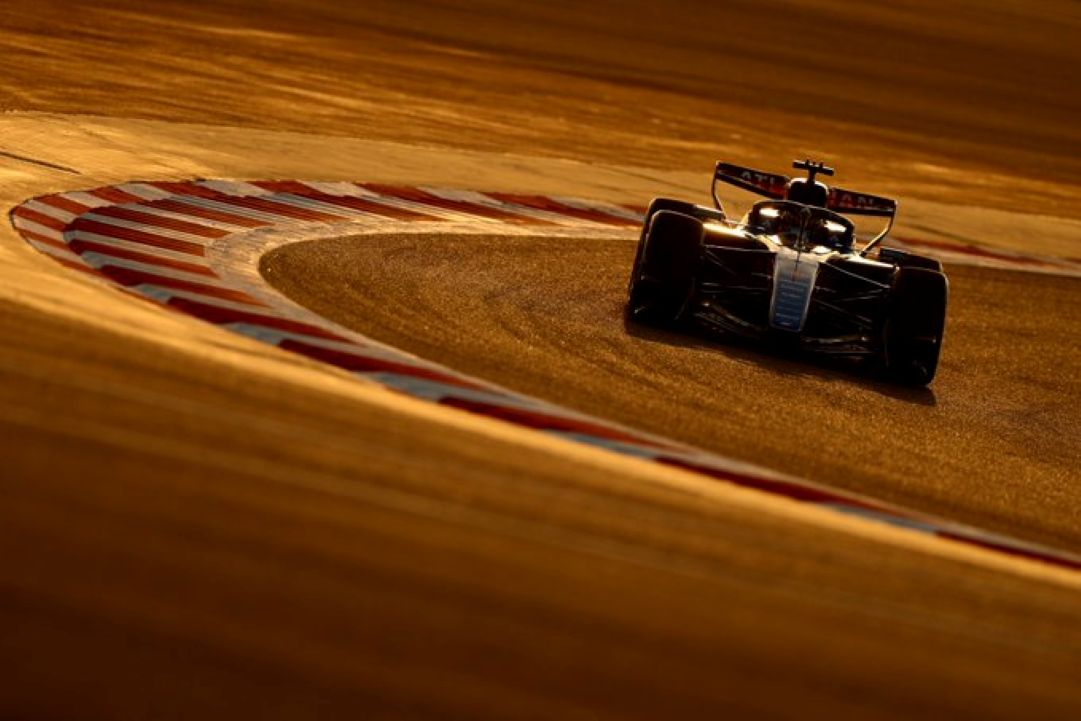
The Fórmula 1 teams accelerated their search for performance on the penultimate day of pre-season testing at Circuito Internacional of Bahrein. With a focus on configurations and innovations, the day highlighted clear trends among the main teams.
Andrea Kimi Antonelli, for Mercedes, recorded the best time of the session, with 1m32s803 in 79 laps. Oscar Piastri, from McLaren, was just behind, just 0s058 behind, completing 86 laps.
Max Verstappen, driving for Red Bull, closed the top 3 with 139 laps, demonstrating consistency despite not prioritizing fast times. The day was marked by technical innovations and some mechanical setbacks.
Highlights of the main teams
The Ferrari caught attention with an innovative rear wing, tested by Lewis Hamilton, which rotates in straight lines to optimize aerodynamics. The Italian team classified the component as an experimental item and removed it in the afternoon to focus on long-distance simulations. Hamilton completed 78 laps, contributing to the understanding of the SF-26 car.
McLaren kept the pace strong, with Lando Norris leading the morning session in 1:33.453 and 72 laps. Zak Brown, team leader, highlighted that the MCL60 is among the four best, but warned of the importance of development throughout the season.
Red Bull prioritized mileage, with Verstappen accumulating valuable data without incident. The Austrian team tested C3 compounds, refining setups for the start of the championship at Austrália.
Technical innovations in focus
The Ferrari’s rear wing sparked discussions in the paddock about compliance with 2026 regulations. Especialistas noted that the design aims to reduce drag at high speeds, enhancing gains on long straights. The team plans to evaluate collected data to decide on its future implementation.
Mercedes and McLaren also experimented with smaller aerodynamic upgrades, such as tweaked diffusers. Essas changes aim to balance downforce and energy efficiency, crucial in the new rules for hybrid engines.
Challenges faced by Aston Martin
Fernando Alonso faced problems with the Honda power unit, completing just 68 laps. The afternoon session ended prematurely when the car stopped on the track as a precaution. The British team identified flaws that require urgent corrections before the premiere on Austrália.
Alonso expressed frustration but praised the team’s effort in resolving the issues. With limited mileage, the Aston Martin now analyzes partial data to optimize the AMR26.
Efficiency and consistency of Mercedes
George Russell and Andrea Kimi Antonelli combined for 157 laps without significant interruptions. Andrew Shovlin, chief engineer, highlighted that the high mileage compensated for losses from the previous week. The team focused on testing with C3 tires, refining the balance of the W17.
Antonelli, in his last night session, ran with less fuel and set the best time of the day. Ele remained cautious, noticing minimal differences between the leaders, in the range of hundredths of a second.
Russell will have a similar opportunity in the final session, aiming for qualifying simulations. Mercedes demonstrated reliability, positioning itself as a strong contender.
Emerging trends in the paddock
The four teams that dominated 2025 – McLaren, Mercedes, Red Bull and Ferrari – appear to maintain their early lead. Zak Brown, from McLaren, predicted a season with intense development, influenced by the new regulations. Equipes averages, such as Haas and Audi, accumulated consistent laps, but without outstanding times.
The Racing Bulls showed progress with the Isack Hadjar, completing 87 laps and testing updated components. Já to Williams prioritized long-duration setups, with Franco Colapinto leading in mileage with 120 laps.
Sauber, now Audi, faced minor challenges, but Gabriel Bortoleto contributed valuable data in 67 laps. Equipes like Alpine and Haas focused on aerodynamic assessments, avoiding mechanical risks.
VCARB, with Liam Lawson, accumulated 106 laps, testing high downforce packages. Essas sessions indicate a tight initial hierarchy, with minimal margins between hands.
Preparations for the last day
The teams plan race simulations on the final day, prioritizing endurance and tire management. With nighttime conditions representative of the Bahrein GP, final testing will be crucial for pre-Australia adjustments.
Ferrari should continue to evaluate its innovative wing in varying configurations. Enquanto therefore, Aston Martin seeks to recover lost mileage to validate updates.
Red Bull, with Verstappen in command, aims to refine fuel strategies. McLaren, confident in its package, will test performance limits in short stints.
Mercedes will close with Russell, focusing on simulated qualifications. Essas final activities will help solidify initial setups for the season.
Accumulated mileage analysis
Max Verstappen led in laps completed, with 139, followed by Franco Colapinto with 120 and Alexander Albon with 117.
Kimi Antonelli, with 79, prioritized quality over quantity. Lewis Hamilton and George Russell scored 78 and 77, respectively, in split sessions.
Nico Hulkenberg, for Haas, completed 73 laps, and Lando Norris, 72.
Esteban Ocon and Valtteri Bottas completed 58 each, highlighting teams focused on specific tests. Esses numbers reflect varying strategies between data collection and fault resolution.
Outlook for the early season
New 2026 regulations emphasize hybrid efficiency, influencing observed aerodynamic designs. Equipes like Ferrari innovate to gain advantages on straights, while Mercedes focuses on reliability.
McLaren demonstrates balance, positioning itself as a consistent threat. Red Bull, despite high mileage, adjusts details to maximize Verstappen potential.
Aston Martin, with setbacks, needs to accelerate development to avoid being left behind. Equipes smaller ones look for niches, such as setups for specific circuits.
The paddock agrees that the hierarchy can evolve quickly with updates. Austrália, in March, will reveal the true balance of forces.
Details about aerodynamic innovations
The Ferrari introduced a beam-type rear wing behind the exhaust in the first week, evolving to the rotating element in the second test. Esse design aims to minimize turbulence, improving airflow at speeds above 300 km/h. The team tested in varied conditions, collecting extensive telemetry data. Outras teams observe closely, evaluating legality and effectiveness. Innovation can influence rivals to explore similar concepts, driving an early technology race.
Highlighted mileage and reliability
Mercedes made up for lost ground with efficient sessions, completing outstanding testing from the first week. The absence of mechanical failures allowed focus on optimizations such as suspension balance. Antonelli praised the progress, but warned of tight margins.
The Red Bull, with leading mileage, validated the RB22’s durability. Verstappen tested different compounds, simulating racing scenarios.
McLaren balanced performance and endurance, with Piastri and Norris sharing tasks. The British team has accumulated valuable data for computer simulations.
Mechanical setbacks analyzed
Aston Martin identified failures in unit Honda, stopping Alonso prematurely. Engenheiros work on solutions, prioritizing remote diagnostics.
Other teams, like Alpine, faced minor sensor issues, which were resolved quickly. Esses incidents highlight the importance of testing to mitigate risks in the season.
Tire and compound strategies
Teams predominantly tested C3, simulating qualifications. Ferrari and Mercedes explored C2 for long distances, assessing wear.
Red Bull focused on C4 for short stints, collecting initial grip data. Essas assessments inform choices for the initial GP.
Expectations for the Austrália GP
With tests almost completed, teams prepare logistics for Melbourne. Ferrari emerges as an innovator, potentially leading the starting grid.
Mercedes and McLaren show consistency, while Red Bull bets on continuous development. The season promises fierce competitions from the start.