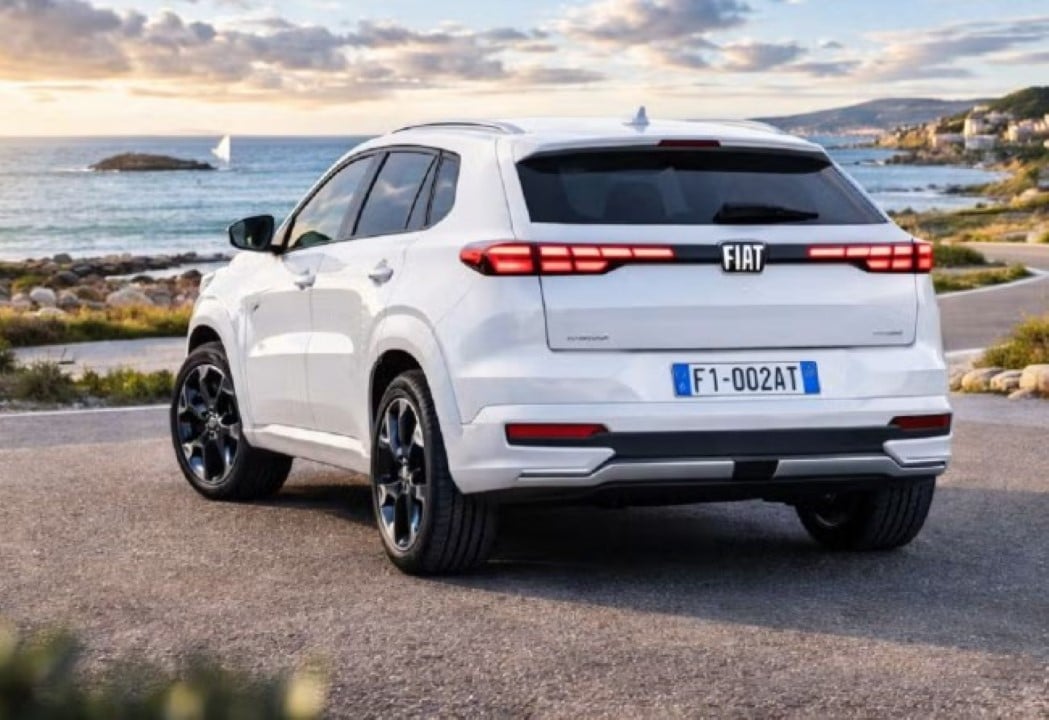
The automotive industry is closely following Fiat’s strategic moves to consolidate its participation in the family vehicle segment, with emphasis on the development of a new robust sports utility vehicle. The project, treated internally as a significant evolution of the Panda family, aims to fill an important gap in the Italian brand’s portfolio, offering a versatile transport alternative for consumers who require expanded space. The initiative uses the Smart Car architecture from the Stellantis group, a modular base that already equips other vehicles from the conglomerate and allows for a substantial reduction in manufacturing costs through the sharing of technical components.
Industrial strategy and shared platform
The use of the Smart Car platform is the central pillar of this market offensive, allowing the automaker to align its production with “sister” models such as the Citroën C3 Aircross and the Opel Frontera. Essa industrial synergy not only optimizes supply logistics, but also ensures that the new model reaches dealerships at a competitive price, challenging established rivals in the entry-level segment.

The focus of the project is on rationality and cost efficiency, avoiding excesses that could make the final product more expensive. With dimensions that should range between 4.4 and 4.5 meters in length, the vehicle was designed to maximize every inch of the cabin, prioritizing habitability over design lines that compromise usable space, such as steeply dropped ceilings.
The official revelation of the technical specifications and definitive name is expected to take place in the second half of the year, at which point the brand will detail the global distribution of the product. The expectation is that the model will serve both European and emerging markets, adapting to the specific infrastructure and purchasing power needs of each region.
Internal configuration and versatility for seven occupants
The great competitive advantage of this new C-SUV lies in its ability to transport up to seven passengers, a feature that is increasingly rare in vehicles in this price range. The Fiat’s engineering focused efforts on developing a functional third row of seats, offering a practical solution for large families who, until then, had to migrate to minivans or SUVs of higher categories and prohibitive prices.
The modularity of the interior follows the philosophy of “functionality over luxury”, maintaining the utilitarian essence that has established the brand’s historic models. The seat arrangement allows multiple configurations, facilitating the transport of bulky loads when maximum capacity is not necessary.
Finishing materials were selected with durability and ease of cleaning in mind, essential features for a car with intense family use. The proposal is to offer a robust environment, capable of resisting everyday wear and tear, without compromising ergonomic comfort for driver and passengers.
Rectilinear design and visual identity
Aesthetically, the model adopts a visual language that refers to robustness, with straight lines and a quadrangular silhouette inspired by the Grande Panda concept. The front should feature the manufacturer’s new lighting signature, incorporating LED headlights with pixelated graphic elements, giving the optical set a technological and modern look.
External elements reinforce the vehicle’s utilitarian vocation:
- Functional roof bars for transporting extra luggage;
- Plastic moldings in the wheel arches to protect the body;
- Lower protectors on the front and rear bumpers;
- High ground clearance to cope with uneven floors.
Although it is not an extreme off-roader, the car is designed to face small adventures and the imperfections of urban and rural roads with ease. The simplicity of the lines also facilitates repairs and maintenance, in line with the low cost of ownership proposal that the brand wishes to convey in this launch.
Hybrid powertrain and electric options
The engine range has been designed to meet stringent global emissions standards whilst offering fuel savings to the owner. The heart of the line must be the 1.2 PureTech engine, widely used by the Stellantis, equipped with 48-volt micro-hybrid technology (MHEV). Este system uses a small auxiliary electric motor integrated into the automatic double-clutch transmission, allowing maneuvers at low speeds and reducing the effort of the thermal engine, which can generate powers of around 136 horsepower.
For markets that demand full electrification, Fiat has also developed 100% electric variants. Estas versions must deliver power between 113 and 156 horsepower, depending on the battery pack chosen. The autonomy will be calibrated to suit urban commutes and short trips, keeping the cost of batteries under control so as not to make the final price of the car unviable.
The flexibility of the Smart Car platform allows combustion, hybrid and electric versions to be produced on the same assembly line, adjusting supply according to the demand of each market without major industrial complexities.
Market positioning and competition
The commercial objective is clear: to compete in the market with brands that dominate the affordable SUV segment, such as the Dacia. With an estimated price of around 20,000 euros for the entry-level versions, the model is positioned aggressively. The combination of medium size, seven-seat option and efficient mechanics aims to attract the rational consumer, who seeks the best cost-benefit ratio.
Production must be allocated to factories with optimized operating costs, such as the Sérvia or Marrocos plants, following the logic applied to the Citroën models. Essa strategy is essential to maintain healthy profit margins while charging a sales price below the category average.
By democratizing access to electrification technologies and offering generous internal space, the Fiat reaffirms its commitment to accessible mobility. The new SUV promises to shake up the market, offering a robust and modern transport tool for families, without requiring the high financial investment typical of current seven-seater vehicles.
