

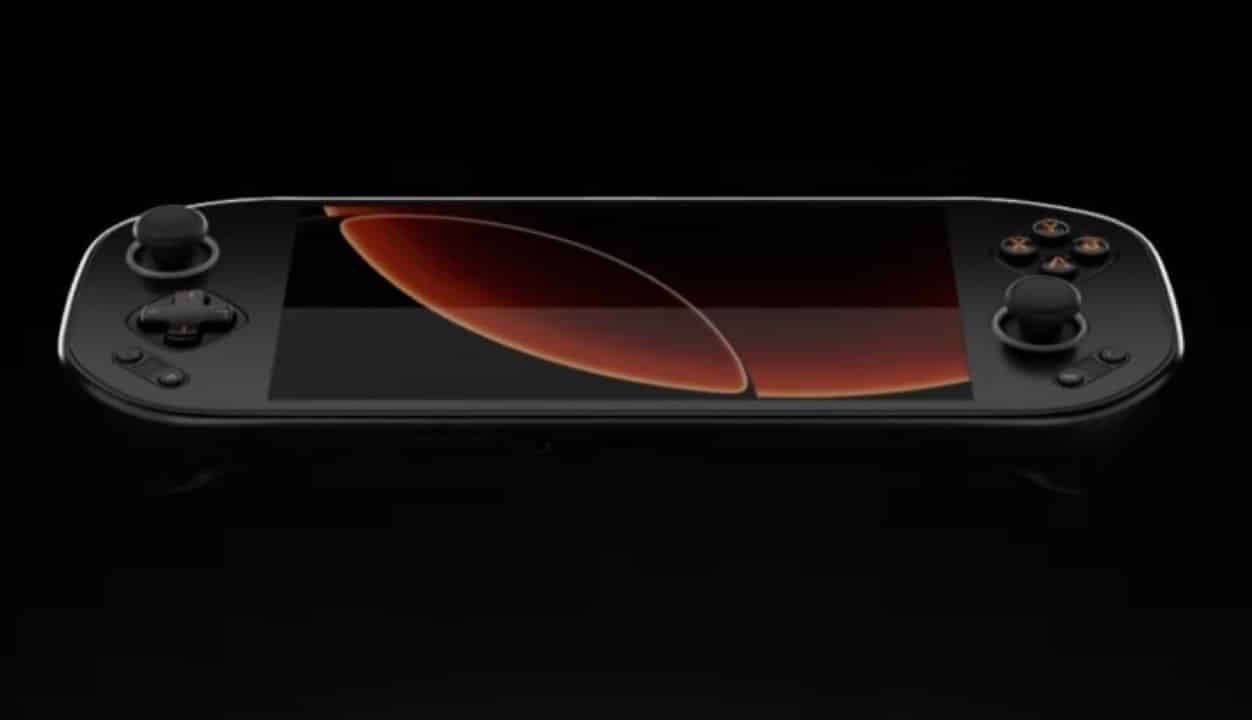
The manufacturer Mangmi officially announced the launch of the Pocket Max, a new portable device that promises to shake up the emulation and mobile gaming market with a different hardware approach. The device arrives to compete in an increasingly saturated segment, betting not only on robust technical specifications for running classic and modern titles, but mainly on modular engineering that allows physical customization of controls, something rare in devices based on the Android operating system. The brand’s strategy aims to appeal to both game preservation enthusiasts and streaming service users seeking superior ergonomics.
The equipment was designed to offer a bridge between the nostalgia of old desktop consoles and current mobile display technology, while remaining cost-competitive in relation to handheld PCs.
Among the main highlights confirmed by the company for the launch are:
- Active cooling system for long sessions of use;
- Compatibility with advanced graphics drivers for emulation;
- Ergonomic structure aimed at user comfort.
Processing and technical capacity
Inside the chassis, the Pocket Max is driven by the Qualcomm Snapdragon 865 processor. Despite being a chipset originally launched in 2019, it remains a reference for efficiency and compatibility in the emulation scenario in 2026. The choice of this component allows the console to stably run demanding systems, such as PlayStation 2 and GameCube, often operating at resolutions that surpass those native to the original consoles, in addition to running titles selected from Nintendo Switch.
To ensure that performance remains constant without frame drops due to overheating, the device’s engineering included visible fans and an optimized heat dissipation system. Informações Preliminaries indicate that the standard model should hit the shelves equipped with 8 GB of RAM and 128 GB of UFS 3.1 internal storage, a configuration sufficient for fast loading of textures and fluid navigation in the system interface.
Innovation in physical controls
The big difference between the Pocket Max and its direct competitors is the implementation of magnetically fixed controls. Este modular system allows the player to remove and rearrange the action buttons and the digital directional pad (D-pad) in a practical way, without the need for technical tools. The functionality meets a long-standing demand from the community for layout customization and ease of maintenance, bringing the device closer to the versatility found in high-cost handheld computers.
In addition to the customizable front face, the device offers features aimed at competitive and complex gameplay. The inclusion of programmable back buttons allows the creation of macros, essential for genres such as fighting and RPG, while analogue triggers ensure precision in racing simulators. The ergonomic design, with curved grips and asymmetrical arrangement of the analog sticks, follows widely accepted standards in the industry, aiming to reduce fatigue during prolonged use.
Display and visual experience
The laptop’s visual interface is made up of a 7-inch OLED screen with Full HD resolution. The panel technology is strategic for the device’s proposal, as the infinite contrast and absolute blacks of OLED offer superior fidelity when simulating old screens (CRT) through image filters. The front design adopts a modern aesthetic, with continuous glass and reduced edges, available in colors ranging from discreet black to editions that pay homage to the classic Game Boy.
Another relevant technical point is the refresh rate of 144 Hz. Embora Most retro games do not use this frequency, the high frame rate significantly benefits modern game streaming via the cloud or local PC, as well as making navigation through the Android system extremely responsive. Essa feature puts the Pocket Max at a technical advantage against rivals who still use IPS panels limited to 60 Hz.
Competitive Landscape
The arrival of the Pocket Max intensifies the competition in the Android notebook niche, placing the Mangmi in direct confrontation with consolidated models such as the Retroid Pocket 5 and the AYN Odin 2 Portal. By offering a generously sized screen and the exclusivity of magnetic controls, the manufacturer seeks to capture a share of the market that values mechanical innovation combined with reliable performance.
The pricing policy, described as affordable, suggests an aggressive strategy for the launch phase. The expectation is that the device will attract consumers who want cutting-edge emulation performance, but who consider the prices charged for handhelds based on the x86 architecture to be prohibitive, consolidating the brand as a viable option for the gaming community.