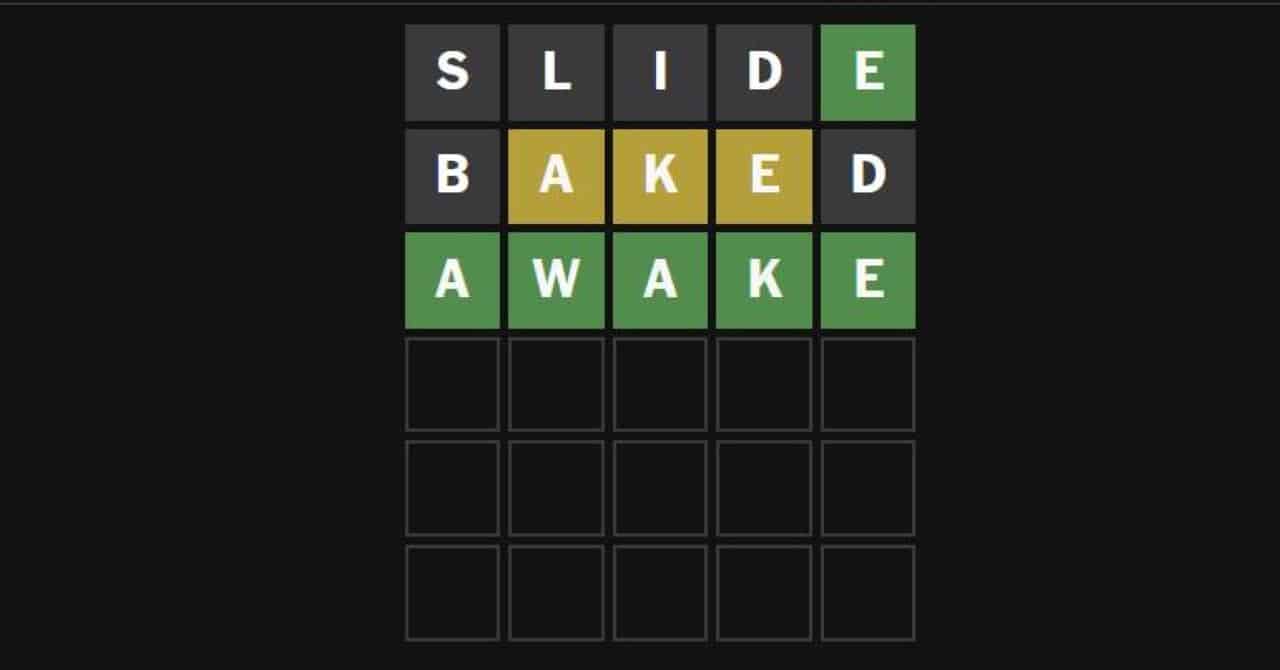
The renewal of the digital pastime at midnight at Nova York time mobilized millions of users around the world on February 21st. The search for the five-letter word generated a spike in activity across digital platforms, with players sharing their performances and colorful grids on social media. This edition’s solution, the term “AWAKE”, stands out for its everyday relevance and thematic irony, referring directly to the act of being awake or in a state of alert.
Global engagement remains high, cementing the game as a morning routine for many enthusiasts who try to solve the puzzle in up to six tries. The simple mechanic, which provides visual feedback through green and yellow boxes, continues to attract veterans and new fans alike. This Saturday’s challenge exemplifies how apparently simple words can generate broad discussions about resolution tactics and linguistic patterns.
Vowel opening and selection strategies
Experienced players recommend starting the game with words rich in vowels to quickly eliminate or confirm the fundamental letters of the alphabet. Opções such as “ADIEU” or “AUDIO” are often cited by experts as efficient choices for the first row of the grid. Essa technical approach significantly reduces the universe of possibilities and accelerates the process of logical deduction.
In the specific case of the word “AWAKE”, the presence of vowels such as A and E, the first being repeated, can confuse beginners who do not consider the duplicity of characters. Identifying these letters early is crucial to avoid wasting attempts on subsequent lines. Muitos users also choose to include common consonants, such as S, T or R, at the beginning to map correct and incorrect positions with greater precision.
The tactics employed aim not only at success, but at preserving the six available chances, avoiding the premature end of the game. Using test words that cover a broad spectrum of phonemes allows players to visualize the structure of the hidden answer more clearly. Applying these analytical methods turns random guessing into an exercise in structured logic.
History and evolution of the platform
Originally created by Josh Wardle in 2021 as a gift for his partner, the game experienced exponential growth, jumping from ninety players to millions in just a few months. The simplicity of the interface, devoid of intrusive ads or aggressive monetization in the initial phase, was a determining factor in attracting a diverse audience. The acquisition by The New York Times in 2022 marked a new phase, expanding the puzzle’s reach to an even larger global audience.
Since integration into the newspaper’s portfolio, the hobby has incorporated additional features such as detailed personal statistics and practice modes that allow training without affecting daily results. Constant updates keep the experience fresh, curating words that avoid frequent repetition and test different aspects of English vocabulary. The term “AWAKE” now joins an extensive list of solutions that defy the participants’ logic.
The cultural impact of the phenomenon extended beyond the English language, inspiring variations in several languages and thematic spin-offs. Comunidades of gamers have formed online forums to discuss solutions and share frustrations or victories, strengthening social bonds through digital entertainment. Essa continued evolution reflects the enduring success of minimalist games in a digital age often saturated with complex information.
Data analysis and global performance
Records show that the game had billions of plays over the last year, reaffirming its dominance in the word puzzle segment. Usuários from different time zones access the site, creating waves of activity that accompany the sunrise in each region. The “AWAKE” solution, although common in the English language, resonates thematically with the moment in which most players face the challenge.
Statistical data indicates that words containing repeated vowels, like this Saturday’s solution, require an average of 4.2 attempts to be solved by the majority of the user base. Jogadores that use optimized opening terms such as “SLATE” tend to outperform the overall average. The statistics provided by the platform serve as a guide for beginners to refine their approaches and better understand the mechanics of odds.
Reports suggest that around seventy percent of users can solve the puzzle in four or fewer attempts, although this rate varies depending on the complexity of the word of the day. Daily engagement sustains the game’s status as a persistent cultural phenomenon, resisting the rapid cycle of internet trends. Post-pandemic growth is often attributed to the ease of sharing results via emojis, creating a network of friendly competition.
Auxiliary tools and educational impact
External tools such as analysis bots and simulators have gained popularity among gamers looking to improve their logical thinking. Esses features evaluate past performance and suggest improvements in word choices, allowing users to learn from their own mistakes. The integration of statistical data transformed the game into a more analytical activity for a significant portion of the public.
In addition to entertainment, the game found space in educational environments, being used by teachers to stimulate vocabulary and critical thinking in students. The versatility of mechanics allows it to be adapted as a pedagogical tool, encouraging learning in a playful way. Parcerias with educators and the development of versions aimed at classrooms demonstrate the didactic potential of the platform.
The influence also extends to pop culture, with references in television series and the creation of memes that circulate daily on social media. The simplicity of the design ensures the longevity of the product in a volatile market, where the user’s attention is intensely fought for. Desafios diaries like today reinforce this trajectory, keeping the game relevant and present in the daily lives of millions of people.
Projections for the future indicate that the platform will continue to innovate, possibly exploring collaborative modes or integrations with new augmented reality technologies. Tendências point to greater inclusion, with the development of accessibility features for the visually impaired and hearing versions. The expansion into new formats aims to ensure the puzzle remains accessible to an increasingly broad and diverse audience.
