
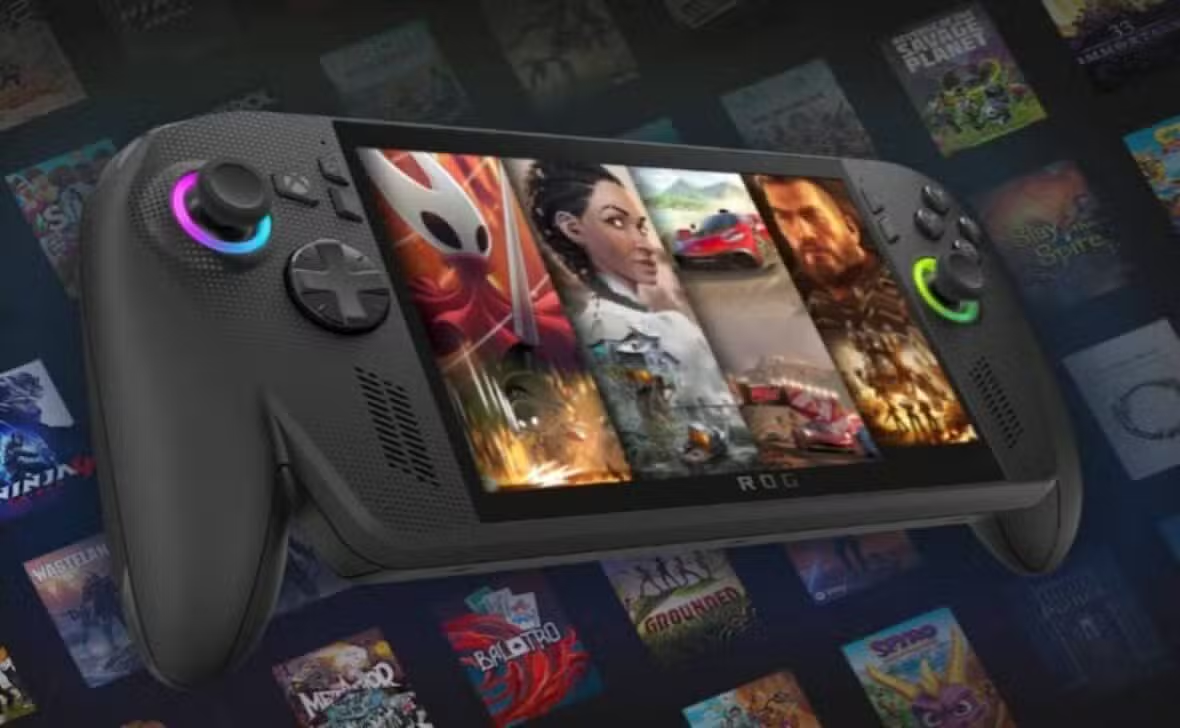
Owners of high-performance portable devices face a period of technical uncertainty regarding the longevity of their equipment. AMD has stopped providing regular driver updates for the Ryzen Z1 Extreme processor, the core component that powers popular consoles in the gaming market. Informações recent reports indicate that these devices have not received new official software packages for more than six months, with the last significant update registered in August 2025.
The situation gained prominence after the release of a statement from the Korean division of Lenovo in response to a consumer. The manufacturer indicated that there are no concrete plans to release new driver updates or BIOS revisions for the original Legion Go model equipped with the Ryzen Z1 chip. The scenario suggests a discontinuity in official support, leaving users dependent on software versions that can quickly become obsolete in the face of constant releases in the gaming industry.

This interruption in support occurs just over two and a half years after the launch of the processor, which hit the market in 2023. Diferente of the extended life cycle observed in desktop processors from the same brand, the line aimed at mobile devices seems to follow a more accelerated replacement dynamic, generating frustration among consumers who invested in premium hardware.
Impact on gaming performance and stability
The absence of new drivers directly impacts the end user experience, especially when running newly released titles. Software updates are critical to fixing graphics glitches, optimizing power management, and ensuring compatibility with the latest rendering technologies. Sem this continued support, portable consoles are at risk of instability and lower-than-expected performance in modern games.
ASUS ROG Ally users have reported similar scenarios, confirming that official drivers stopped being distributed in the middle of last year. The lack of specific optimization for the chip’s integrated RDNA 3 graphics architecture prevents the hardware from reaching its full potential, limiting the practical lifespan of the device for games that require greater processing power and thermal efficiency.
Many gamers try to work around the problem by installing generic drivers provided by AMD for the Windows operating system. However, this alternative solution does not offer the same stability as drivers customized by manufacturers. The Radeon 780M graphics chip, present in the processor, relies on fine voltage and frequency adjustments that are defined specifically for the compact form factor of portable consoles.
Support differences between hardware generations
The contrast in the treatment given to different generations of processors became evident with the arrival of new models on the market. Dispositivos equipped with the successor Ryzen Z2 Extreme, like the Legion Go S, continue to receive active support and frequent updates from both AMD and hardware partners. Essa disparity reinforces the perception that the development focus was completely migrated to the new architecture, leaving the installed base of the previous generation in the background.
Industry representatives explain that drivers for the Ryzen Z series require manufacturer-specific calibration. AMD provides the technological base, but it is up to brands like ASUS and Lenovo to adapt the power profiles and ventilation curves for each chassis. Quando the device manufacturer stops this adaptation work, the user is left with no official options, even if AMD continues to develop technologies for other platforms.
The technical community has sought independent solutions to keep devices functional. Fóruns experts share system modifications and manual tweaks that attempt to replicate missed optimizations. Embora functional for advanced users, these methods involve security and stability risks that are not ideal for the average consumer just looking to play games.
Current scenario and alternatives for the consumer
The market for portable consoles with x86 architecture has expanded rapidly, but the sustainability of long-term support remains a challenge. The Ryzen Z1 Extreme has been positioned as a robust solution to compete with other mobile platforms, offering desktop performance in a small form factor. The early halt to updates raises questions about companies’ commitment to the durability of high-cost electronic products.
For affected homeowners, there are few official alternatives left. The manufacturers’ recommendation has been to avoid the forced installation of drivers intended for newer models, as this can cause irreversible hardware conflicts. Monitoring support pages remains the official route, although expectations for new developments are low. Below are the main points that define the current state of support:
– The Ryzen Z1 Extreme processor was launched in 2023 and powers the main notebooks on the market.
– The last official driver update occurred in August 2025, marking a long hiatus.
– Lenovo Korea confirmed the absence of plans for new updates to the original Legion Go model.
– Technical support focus has migrated to the Ryzen Z2 line and newer devices.
– The use of generic drivers is possible, but results in loss of specific optimization.
Even though the hardware maintains competent processing capacity for the current game library, the lack of refinement via software can accelerate the obsolescence of these devices. Sem a definitive global position from AMD or its partner manufacturers on a possible resumption of support, the user community remains dependent on third-party tools and generic operating system updates.