

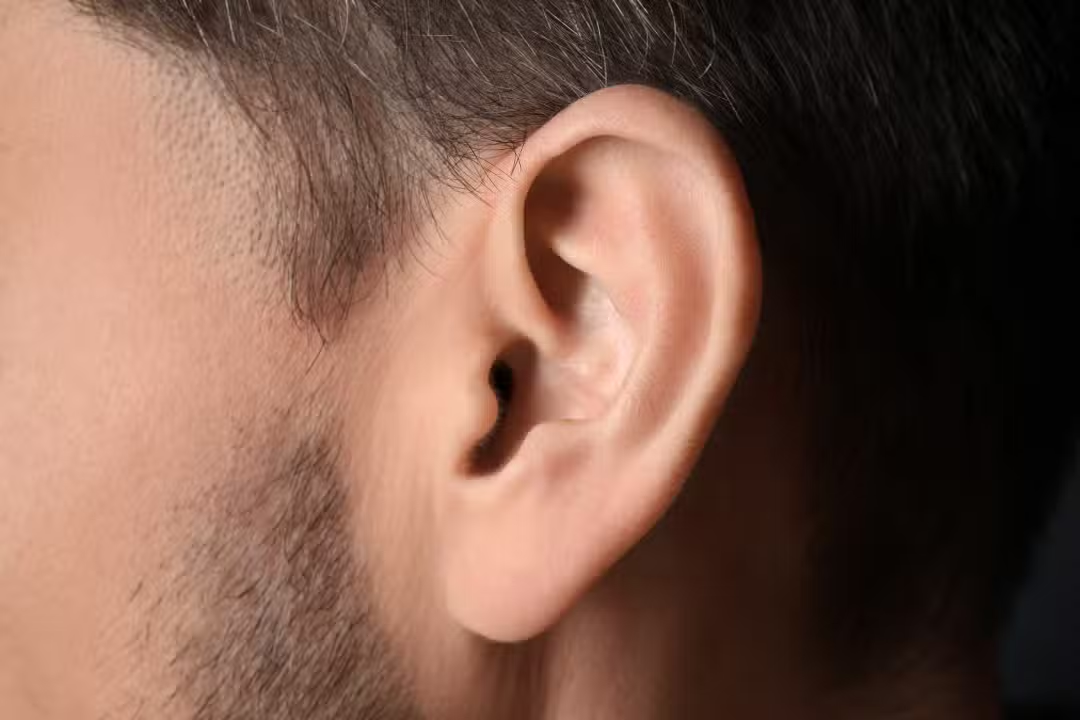
A diagonal fold in the earlobe, known as the Frank sign, has drawn the attention of specialists following recent cases of heart complications in apparently healthy individuals. Essa mark, observed in several populations, appears as a possible indicator of vascular changes that deserve detailed investigation.
Medical studies associate this crease with a greater risk of atherosclerosis, a condition in which fatty plaques accumulate in the arteries, potentially leading to serious events such as heart attack or stroke. The presence of the sign does not confirm the disease, but integrates clinical assessments for risk stratification.
Researchers note that the crease appears more frequently in people with coronary obstructions, and its early detection can guide further examinations. Profissionais health professionals recommend integrated monitoring with factors such as blood pressure and cholesterol levels.
Origin and description of the Frank signal
The Frank sign was identified in the 1970s by a doctor who noticed the crease in patients with arterial problems. Essa diagonal fold crosses the earlobe, starting from the region close to the ear canal to the posterior edge, and can occur in one or both ears.
Over time, clinical analyzes revealed correlations with premature vascular aging. The mark reflects possible changes in connective tissue and microcirculation, elements that affect the elasticity of arteries throughout the body.
Association with heart disease
Several studies indicate that individuals with the sign have a higher incidence of coronary artery disease. In groups evaluated through tests such as angiography, the fold appeared in significant percentages among those with obstructions.
This statistical link reinforces the need to consider the signal in broad clinical contexts. Médicos use tools such as coronary calcium scoring to complement visual observation and quantify real risks.
Atherosclerosis, the main related condition, begins silently years before evident symptoms. The sign serves as an accessible marker, encouraging preventive assessments in vulnerable populations.
Complementary risk factors
Uncontrolled arterial hypertension worsens the vascular condition associated with the sign. Pacientes with high blood pressure require strict monitoring, combined with habits that promote circulatory health.
Diabetes and high cholesterol levels also interact with the changes observed in the ear. Glycemic and lipidemic Controle reduces the progression of arterial plaques, mitigating potential complications.
Smoking accelerates endothelial damage in arteries. Cessar the habit has a positive impact on vascular elasticity, reducing the relevance of the sign as an isolated predictor.
A sedentary lifestyle contributes to the accumulation of negative factors. Atividade Regular physical strength strengthens the cardiovascular system, altering the risk profile in individuals with the mark.
Recent studies and scientific evidence
Analyzes carried out in Brazilian university hospitals confirm the prevalence of the sign in patients with a history of cardiac events. In samples of hundreds of individuals, diagonal folding appeared in greater proportions among those with confirmed arterial lesions.
International research, including systematic reviews, supports the correlation with accelerated cellular aging. Esses findings suggest that creasing reflects underlying biological processes, such as loss of elastic fibers.
In public health contexts, the signal integrates screening protocols for early identification. Programas of prevention incorporate observation into routine consultations, directing resources to groups with greater susceptibility.
Impact on younger populations
The appearance of the sign in adults under 60 years of age raises greater alert among professionals. Nessa age group, the crease indicates possible premature vascular dysfunctions, unlike natural aging.
Recent cases highlight the importance of assessments in active individuals without apparent symptoms. Early detection allows for interventions that alter the course of progressive conditions.
Medical recommendations for investigation
When identifying the crease, experts recommend consulting a cardiologist for a complete physical examination. Esse initial step assesses the general health context, including vital measurements and family history.
Laboratory tests, such as lipid profile and blood glucose, provide quantitative data on risks. Esses results guide decisions about pharmacological interventions or behavioral changes.
Imaging techniques such as echocardiography reveal heart structures and blood flow. Elas complement signal observation, offering accurate diagnoses.
Cardiovascular risk score, based on validated algorithms, integrates the score with other indicators. Essa tool stratifies patients for adequate follow-up.
Prevention and healthy habits
Adopting a balanced diet reduces the accumulation of fat in the arteries. Consumo of fruits, vegetables and whole grains supports the maintenance of vascular elasticity.
Practicing aerobic exercises strengthens the heart and improves peripheral circulation. Regular Sessões, such as walking or swimming, counterbalance genetic or environmental factors.
Controlling stress through techniques such as meditation has a positive impact on blood pressure. Reduzir daily tension prevents worsening in individuals with the sign.
Periodic health monitoring allows for timely detections. Consultas annuals integrate ear observation into comprehensive assessments.
Debates in the medical community
Some experts question the specificity of the signal as an isolated marker. Argumentam that its common presence in the elderly dilutes the predictive value in general populations.
Others argue for its usefulness in low-tech scenarios. In regions with limited access to advanced testing, the crease guides clinical prioritization.
Ongoing research seeks to clarify underlying biological mechanisms. Estudos genetics explore links between ear tissue and coronary arteries.
Public health applications
Educational programs promote awareness of visual signs of risk. Campanhas encourage simple self-examinations, directing you to professional care.
Integration into primary care protocols optimizes resources. Médicos of families incorporate observation into routines, expanding preventive coverage.
Population strategies focus on high-risk groups. Iniciativas aim to reduce incidences of cardiac events through accessible marker-based interventions.
Future research perspectives
Investigations continue to refine the association of the signal with clinical outcomes. Ensaios longitudinal studies follow individuals over years, measuring progressions.
Development of digital tools assists in automated detection. Image Aplicativos analyze photos of ears, integrating health data.
International collaborations expand databases. Compartilhamento of information accelerates discoveries about ethnic and geographic variations.