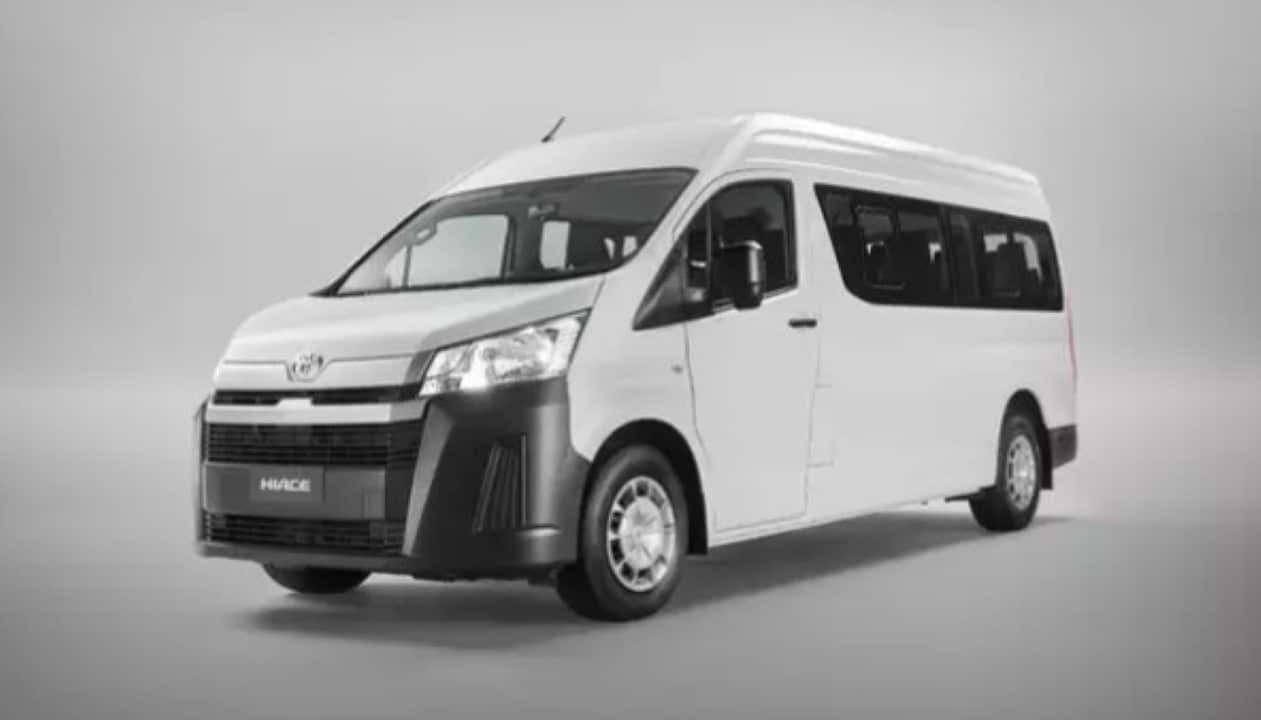
The Japanese automaker’s iconic van has just undergone a significant visual and technical transformation in its home market. The 200 series, a model that has been in continuous production for two decades, has received an update that deeply modernizes its aesthetics and incorporates new driving assistance systems. The strategic move aims to maintain the utility vehicle’s relevance, aligning it with the brand’s most imposing design trends and meeting today’s demanding safety standards.
Details of the restyling and influence of the luxury line
The most impactful change in this update focuses on the front of the vehicle, which abandoned the conservative lines in favor of a much more audacious visual identity. Designers drew direct inspiration from the Alphard, the luxury minivan that became a status symbol in the Ásia, to sculpt the new face of the commercial van. The result is an aesthetic that conveys robustness and sophistication, characteristics that are increasingly sought after not only by logistics companies, but also by private clients who customize these models.
The new front end features a generously sized grille and a redesigned bumper that, together, create a dominant visual presence on the roads. Esta design approach, known as “face swap” or deep facial update, allows the veteran model to visually compete with much more recently released vehicles. The integration of chrome elements and angular lines suggests a clear attempt to raise the perception of value of the product, moving it away from the purely utilitarian image and bringing it closer to the executive and VIP transport segment.
In addition to aesthetics, functionality has been preserved. The new air intakes were calculated to maintain the cooling efficiency of the engine, which in the 200 series is positioned under the front seats. Lighting also received attention, with optical sets that promise better nighttime visibility, complementing the vehicle’s active safety. Essa fusion between form and function demonstrates the ability of Japanese engineering to revitalize established platforms without compromising their practical usefulness.
Technological advances and focus on occupant protection
In the field of onboard technology, the update brought a robust package of driving assistants, reflecting the growing concern about road safety in the Japão. The automaker has integrated advanced sensors and state-of-the-art software to mitigate accident risks, especially in dense urban environments where these vehicles frequently operate. The automatic emergency braking system has been recalibrated to detect obstacles with greater accuracy, acting as a “second pair of eyes” for the driver.
Lane departure warning and lane keeping assistants are also part of the new technological arsenal. Para fleet owners and logistics companies, these additions represent a potential reduction in operational costs arising from accidents and repairs, in addition to ensuring greater physical integrity for drivers who face long working hours. The updated safety package puts the veteran van on par with modern passenger cars in terms of active protection.
The inclusion of these systems is not just a regulatory response, but a demand from the consumer market. With the aging of the driver population in Japão, resources that assist in decision making and the prevention of human errors have become essential competitive differentiators. The embedded technology now dialogues directly with the infrastructure of smart cities, preparing the vehicle for a more connected and safe transport ecosystem.
200 Series Market Strategy and Longevity
The decision to invest heavily in updating a model originally launched in 2004, instead of replacing it entirely with a new generation in the domestic market, reveals a peculiar and efficient strategy. The 200 series has a loyal fan base and an extremely developed spare parts and accessories supply chain. By keeping the platform alive and up to date, the manufacturer capitalizes on proven mechanical reliability while delivering the visual freshness consumers desire.
This longevity phenomenon is supported by the versatility of the chassis. The model serves as the basis for everything from ambulances and delivery vehicles to luxury motorhomes and celebrity transport. The new aggressive front should especially attract the customization sector, which often seeks solid foundations to create exclusive vehicles. The “Alphardization” of the design suggests that the brand is aware of the vehicle’s use as a high-roof limousine, a profitable and expanding niche.
In an automotive scenario where product life cycles are usually short, the persistence and evolution of this utility stand out as a case study of success. The combination of indestructible mechanics with luxurious trim and cutting-edge safety ensures that the van will remain a common and respected sight on Japanese streets for many years to come, standing the test of time and competition with impressive adaptability.
