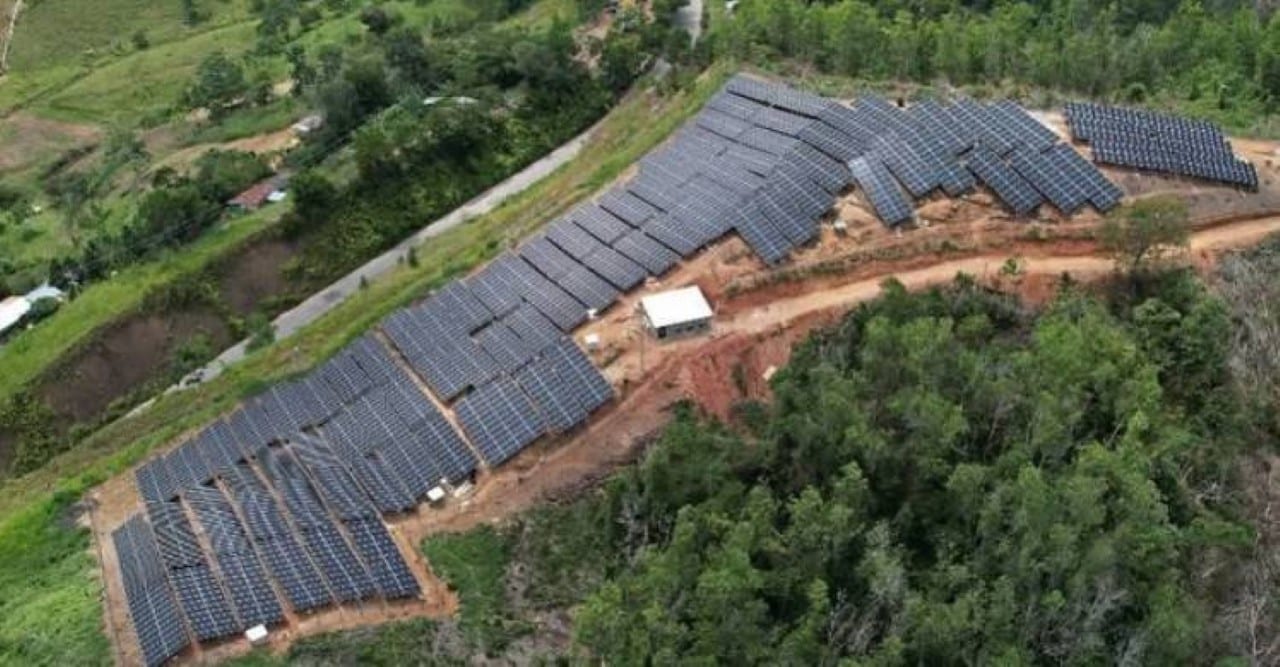
The company JinkoSolar has announced the launch of a new photovoltaic module specifically designed to tackle dust accumulation in solar installations. Essa solution builds on the consolidated Tiger Neo 3.0 platform and combines glass and frame elements in a three-dimensional design that repels particles. The result is a significant reduction in dirt adhesion and more stable performance over time.
The product incorporates a proprietary nano coating with anti-static and super hydrophilic properties. Essa technology allows the module to maintain high levels of efficiency even in regions prone to sandstorms or dry environments. As a result, solar plant operators can count on less need for manual cleaning interventions.
The announcement took place on February 17, 2026 and highlights advances that meet practical demands of the global photovoltaic sector. The module delivers measurable gains in energy generation without changing the main characteristics of the Tiger Neo 3.0 line already known on the market.
Nano coating with anti-static and non-stick properties
The coating applied to the module’s glass has a high level of resistance to static electricity. Essa feature suppresses the formation of charges that attract fine dust and sand particles onto the surface.
As a consequence, the adhesion of contaminants is significantly reduced compared to conventional modules. The effect directly contributes to maintaining light transmission and the overall performance of the panel over prolonged periods.
Super hydrophilic self-cleaning system
When it comes into contact with water, the coating forms a uniform film rather than isolated drops on the glass. Essa extreme hydrophilicity allows water to completely penetrate between contaminants and the module surface.
The drag force generated by the film automatically removes dust and stains. Dessa way, the module cleans itself during rain or scheduled washing without requiring additional effort from the operation teams.
The process occurs continuously whenever there is humidity present in the environment. Essa functionality is especially useful in places where manual cleaning represents a high cost or logistical difficulties.
Smart photocatalytic reaction under sunlight
Exposure to sunlight activates photocatalytic reactions in the module’s coating. Essas reactions break down persistent organic contaminants such as bird droppings and oily residues.
The mechanism works autonomously and continuously throughout the day. As a result, the module keeps the surface clean even when faced with dirt that normally requires chemical or mechanical intervention.
Intelligent decomposition complements the other properties of the coating. The set forms a cleaning system that operates without constant dependence on external resources.
The durability of the coating allows the photocatalytic effect to remain stable for long periods. The factory-tempered nanocomposite material resists intense climatic variations without loss of performance.
Durability and longevity of the coating in outdoor conditions
The coating is manufactured from nanocomposite materials specially treated to withstand complex outdoor environments. Essa construction ensures that the anti-static and hydrophilic properties remain active throughout the lifetime of the module.
Tests under real conditions demonstrate that the coating does not suffer accelerated degradation due to ultraviolet rays or temperature fluctuations. Longevity contributes to reducing operating costs in large-scale projects.
Special frame structure that facilitates dust drainage
The module frame has a different design on the short side that remains parallel to the glass front surface. Essa setting prevents fallen dust from being trapped on traditional edges.
During rain, particles slide off the panel more easily. The three-dimensional shape integrated into the glass reinforces the repellent effect and avoids accumulation points that compromise generation.
The combination of frame and covering creates a complete solution to the problem of dirt. Essa integration increases the module’s overall performance in scenarios where dust is a limiting factor.
- The nano coating has anti-static properties that reduce particle adhesion.
- Super hydrophilicity forms a water film that automatically removes contaminants.
- The photocatalytic reaction decomposes organic waste under the action of sunlight.
- The durability of the nanocomposite material ensures stable performance in varying climates.
Measurable gain in energy generation with the new module
The module achieves generation gains of between four and six percent compared to conventional equivalents. Esse increase results from less dust accumulation and more effective surface maintenance.
The improvement becomes evident in daily operations of photovoltaic plants. The extra performance compensates for part of the challenges faced in regions with a high incidence of particles suspended in the air.
Recommended applications for plants in challenging environments
The new module adapts especially well to solar parks located in desert areas or with frequent sandstorms. Under Nessas conditions, the technology helps preserve efficiency without increasing the frequency of maintenance.
Distribution and commercial projects can also benefit from the solution. Reducing the need for manual cleaning simplifies the management of assets spread across different locations.
The Tiger Neo 3.0 platform, already recognized for its reliability, serves as the basis for this innovation. The company remains focused on meeting the real needs of global customers with products that combine performance and practicality.
The launch reinforces the ongoing commitment to technological advancement in the solar energy sector. The presented solution offers a practical alternative for operators looking to maximize production in adverse conditions.
The integration of multiple technologies into a single module represents an important step for the industry. Thoughtful design balances innovation with field-proven durability.
