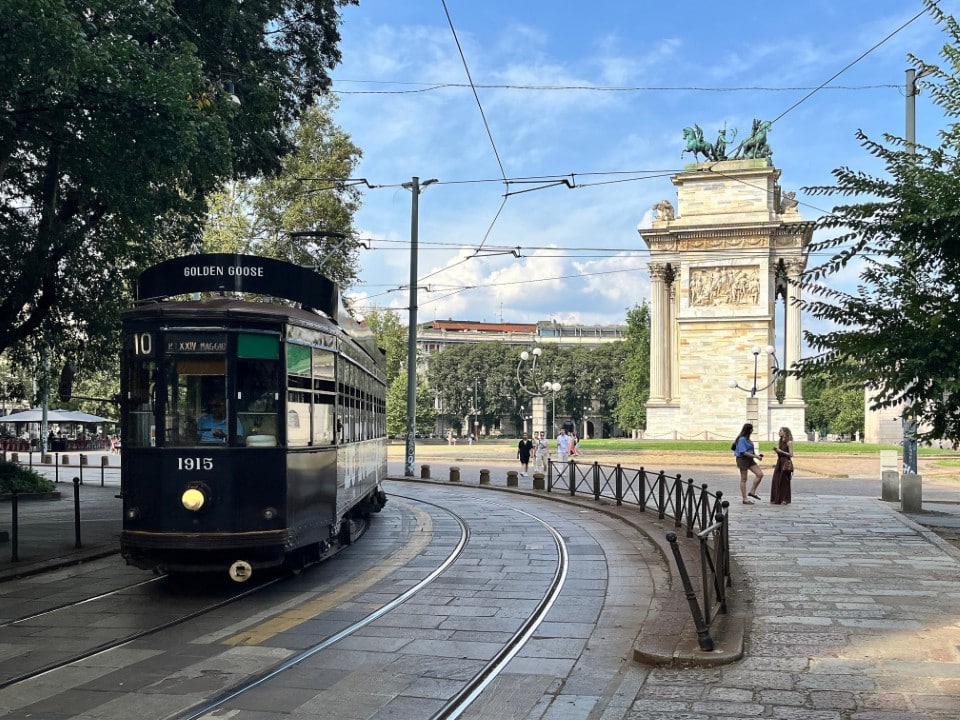
Milan was the scene of a serious tram accident on the afternoon of Friday 27 February, resulting in the death of two people and leaving 39 injured. The incident, which shook the capital of Lombardia and mobilized a vast rescue operation, occurred around 4 pm on a busy city road, generating great concern.
The vehicle, which was operating on line 9, derailed on Vittorio Veneto street, an area close to the historic center and which connected Praça from República to Porta Venezia. Este stretch is known for its constant flow of people and vehicles, intensifying the seriousness of the incident and the difficulties in accessing it for emergency teams.
The impact of the derailment was described as devastating by prosecutor Marcello Viola, who launched a detailed investigation into the causes. The city, which hosted the renowned Fashion Week, saw its emergency services quickly mobilized to the site, interrupting the routine and attracting the attention of residents and tourists.
Details of the tragic derailment in the Italian capital
The yellow and white tram, described as a “state-of-the-art” model by newspaper Corriere della Sera, was found across the road after the accident. The violence of the collision threw passengers to the ground, according to a report from one of the victims to the ANSA agency, who compared the sensation to an earthquake. The scene was one of destruction, with parts of the vehicle damaged and the structure of the tracks compromised, highlighting the force of the impact.
Witnesses and preliminary information, including reports from Corriere della Sera, indicate that the tram could have been traveling at excessive speed at the time of the derailment. Esta hypothesis is one of the focal points of the investigation, which seeks to determine whether mechanical, human or infrastructure failures on the track contributed to the tragedy, which abruptly interrupted the operation of line 9.
Immediate rescue and mobilization scenario
First responders arrived at the scene of the accident within minutes, with teams of firefighters, paramedics and police working together. Vittorio Veneto Street and its surroundings were immediately isolated by law enforcement, preventing onlookers from approaching and facilitating the rescue work and assessment of the extent of the damage. Ambulâncias, vehicles and medical support vehicles filled the area, in a massive demonstration of emergency response.
The rescue operation was complex, requiring the careful removal of victims trapped in the tram and the rapid transport of the injured to nearby hospitals. Muitos of the passengers were treated on site before being taken away, with the medical team providing vital support for the most serious cases. The priority was to stabilize the victims and ensure they received specialized care as quickly as possible, given the severity of their injuries.
Relief actions and first medical care
Doctors and nurses worked tirelessly to classify and treat the injured, who ranged from minor injuries to severe trauma. Hospitais of Milão and surrounding areas were placed on high alert to receive the large number of patients, mobilizing additional teams and freeing up beds. Coordination between different health units was crucial to managing the situation, ensuring that everyone in need received the necessary assistance.
Among the 39 injured, some were in serious condition, requiring immediate surgical interventions and intensive care. Community solidarity was also present, with citizens offering help and support to the victims and their families. The rapid response capacity of the Lombardia health system was tested, demonstrating efficiency in managing a major crisis and ensuring continuity of care.
Probable causes under intense official investigation
Procuradoria of Milão opened an investigation to determine who was responsible for the derailment, examining various possibilities. Especialistas in transport and engineering were assigned to analyze the tram’s black box, if any, the condition of the tracks, the braking system and the conduct of the driver, seeking to understand what led to the tragic event. The complexity of a major accident requires a multifaceted analysis to determine all factors involved.
Factors such as preventive maintenance of the vehicle and line infrastructure are also under scrutiny. Auditorias inspections are routinely performed on public transportation systems, and the accident raises questions about the effectiveness of these inspections and adherence to safety protocols. The investigation aims not only to punish those responsible, but also to identify systemic failures that can be corrected to prevent future incidents.
Furthermore, the qualification and training of public transport operators are crucial points in the investigation. Driver fatigue, distractions or operational errors can play a significant role in accidents. Authorities are collecting statements from transport company employees and eyewitnesses to build a complete picture of the moments leading up to the derailment and understand what actually happened.
Reactions and testimonies from affected passengers
Passengers who survived the accident reported moments of terror and confusion. Muitos described the experience as traumatic, with the tram shaking violently before the final impact. The deafening noise of the derailment and people’s screams created an atmosphere of panic that deeply affected those on board, many of them on their daily commute.
One of the survivors, whose name was not released, described being thrown from his seat, falling along with other passengers on the floor of the vehicle. The sight of chaos and the difficulty in moving through the wreckage were immediate challenges faced by the victims before rescuers arrived. The lived experience is a testimony to the brutality and unpredictability of urban accidents.
Passenger statements are key to the investigation, offering a crucial perspective on the dynamics of the accident and conditions inside the tram. Estes personal accounts complement the technical data and forensic analyses, helping to create a more complete picture of the tragedy. The emotion and pain are still visible in the testimonies, reflecting the collective trauma.
Security measures and modernization of the tram system
Tram systems in large urban centers, such as Milão, represent an efficient and sustainable transport solution, but require strict safety measures. The modernization of fleets, with the introduction of “state-of-the-art” vehicles, aims to incorporate advanced safety technologies, such as automatic braking systems, speed control and track monitoring, to reduce the risk of accidents and increase user confidence.
However, the effectiveness of these technologies depends on their correct implementation, constant maintenance and integration with existing infrastructure. Regular inspection of tracks, electrical systems and the trams themselves is vital to ensure safe operation and prevent failures that could lead to derailments or collisions. Treinamentos periodicals for drivers are equally important, focusing on updating emergency procedures and raising awareness about speed limits and road conditions.
Impact on transport infrastructure and urban life
The tram derailment at Milão had an immediate impact on the city’s public transport infrastructure, with line 9 being halted indefinitely. The closure of Vittorio Veneto Street for several hours and the need to remove the injured vehicle caused significant disruption to traffic and the movement of citizens, especially on a busy working day and during an important event.
The interruption of a central tram line forces passengers to look for alternatives, overloading other public transport routes or increasing the flow of private vehicles. Além of the practical impacts, incidents like this affect public perception about the safety of public transport, generating apprehension and requiring transparent communication and concrete actions from authorities to restore the population’s trust in urban systems.
Call for prudence and future safety recommendations
In light of the tragic event, authorities and experts reinforce the importance of prudence in the operation of public transport vehicles and the continuous maintenance of systems. Recomendações Futures should emerge from the investigation, focusing on reviewing protocols, training drivers and updating infrastructure to prevent new accidents.
