

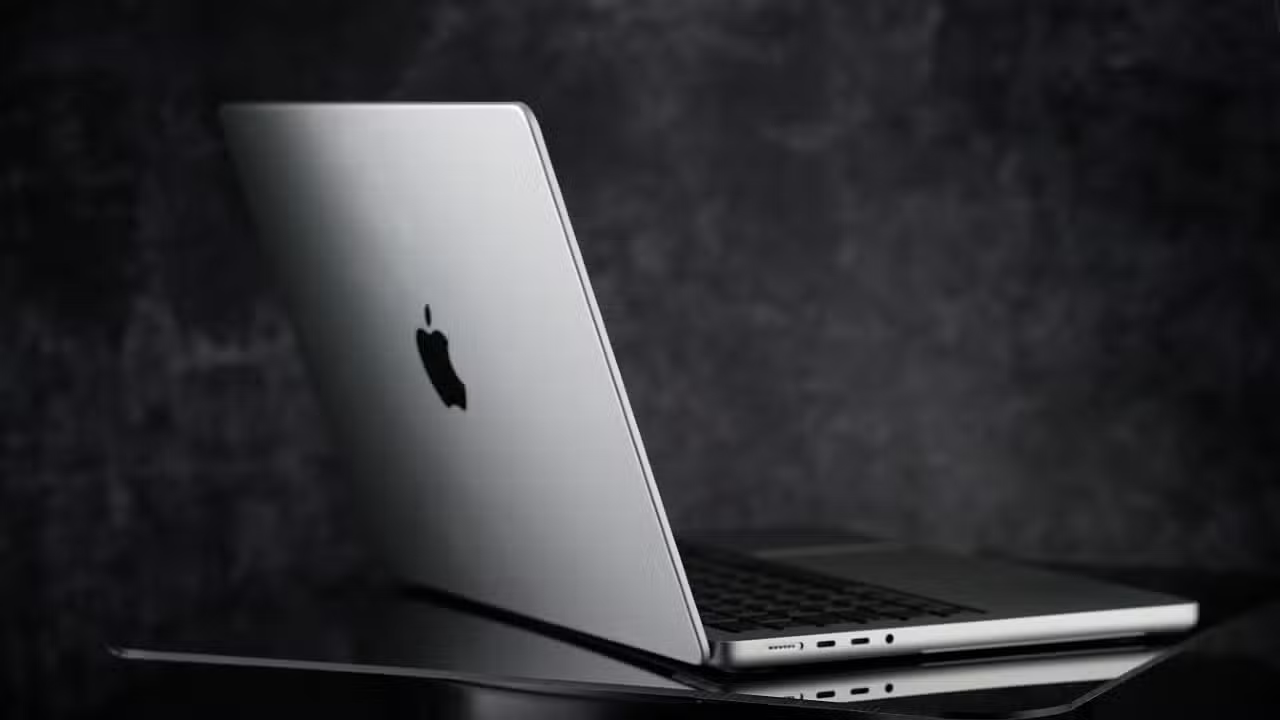
The North American technology giant is advancing a new commercial strategy to expand its participation in the global education market. Informações recent behind-the-scenes reports indicate the development of a notebook focused on cost-benefit, equipped with the A18 Pro processor, the same one present in the iPhone 16 Pro line, marking a departure from the traditional M chip line to reduce manufacturing costs. The central objective of the project is to offer a direct alternative to Chromebooks, which currently lead the way in schools and universities due to more affordable prices.
Mass production of the device has undergone schedule adjustments and is now scheduled for the first quarter of 2026. Foxconn, the company’s main industrial partner, has already begun testing on assembly lines to ensure that manufacturing volume meets projected global demand for launch, with a special focus on avoiding bottlenecks in initial distribution.
Industry analysts estimate that the price for the end consumer should vary between 599 and 699 dollars, with even lower values expected for educational institutions through specific contracts. The initiative seeks to fill the gap left by the old 12-inch MacBook and create a more economical gateway to the brand’s ecosystem, allowing schools to adopt the platform with less budgetary impact.
Technical specifications and design adjustments
To reach the stipulated price range, the project includes the use of a 12.9-inch LCD screen, giving up more expensive technologies such as OLED or Mini-LED found in higher lines. The panel must offer a maximum brightness of 500 nits, considered suitable for school and office environments, maintaining the visual quality characteristic of the company’s products without excessively increasing production costs.
The device’s hardware features strategic cuts in premium features to ensure reduced final value for the consumer:
– Ausência of True Tone technology for automatic adjustment of screen color temperature;
– Teclado without backlighting on entry-level models for greater energy savings;
– Carregamento standardized via USB-C ports, eliminating the magnetic MagSafe connector;
– Segurança biometric limited to Touch ID on power button, no sensors for Face ID.
Internal storage will have different configurations for retail and the educational sector. Enquanto o modelo padrão deve iniciar com 256 GB, as versões destinadas a escolas podem contar com 128 GB, priorizando o uso de nuvem e sistemas de gestão acadêmica, o que se alinha à tendência de digitalização das salas de aula.
Connectivity and software integration
The new laptop’s connections will be guaranteed by Wi-Fi 6 or 6E modules, avoiding the implementation of Wi-Fi 7 to contain operational expenses. Essa choice reflects the focus on essential productivity and navigation tasks, without the need for the extreme speeds of the latest standard, but ensuring stability during streaming classes and video conferences.
The use of the A18 Pro chip allows native integration with iPhone and iPad applications, significantly expanding the software library available from the first day of use. Essa compatibility increases the device’s usefulness for students who already use the brand’s mobile devices, creating a continuous and integrated learning environment between different screens.
In addition to hardware, Apple should bolster its educational software suite, such as Apple School Manager, to facilitate large-scale implementation by IT departments. The strategy aims not only to sell the equipment, but to increase the loyalty of institutions through simplified and secure device management, competing in functionality with the solutions offered by Google.