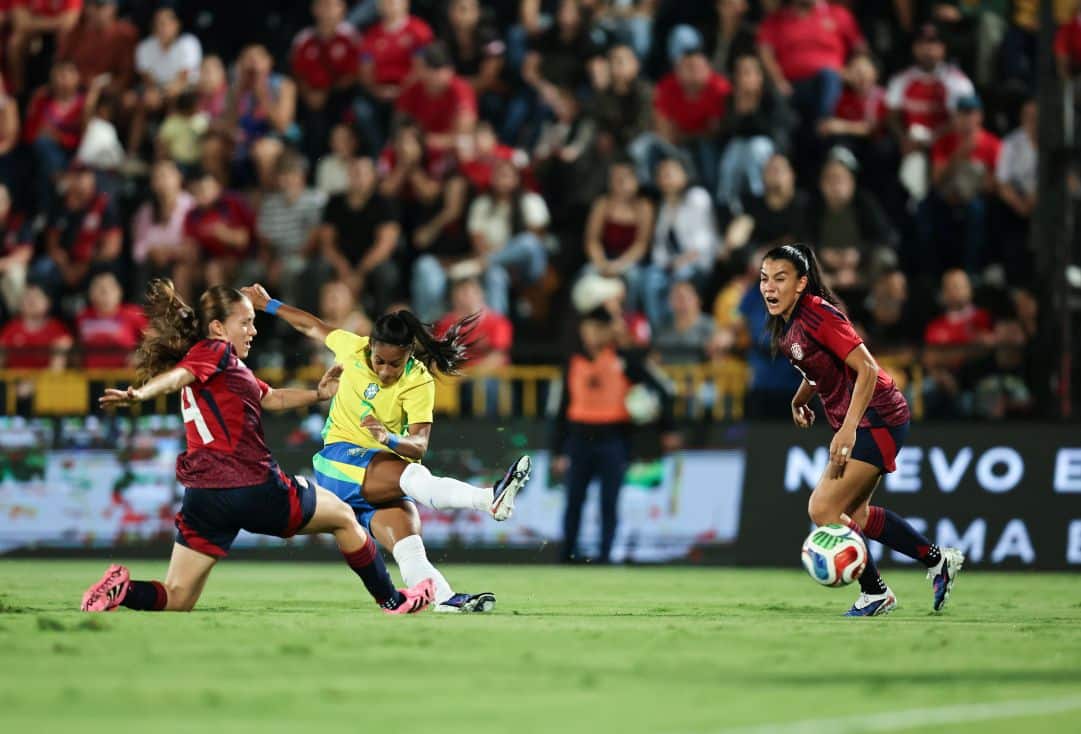
The Brazilian women’s football team started the 2026 calendar with an impressive 5-2 victory over Costa Rica, in a match played at América Central. The confrontation presented two distinct scenarios, with absolute dominance by the Brazilians in the initial stage and a dangerous drop in performance in the second half, before the final recovery. The positive result guarantees peace of mind for the team’s preparations, which will still have important commitments against Venezuela and México in the coming days in Mexican territory.
The team led by the Brazilian coaching staff demonstrated an offensive repertoire from the first minutes, building an advantage that seemed definitive even before the break. Jheniffer, Adriana, Apesar of the elastic score, the game served to expose defensive vulnerabilities that almost compromised the result when the home team made a quick reaction after returning from the dressing room.
The players now return to begin training focused on the next challenge, which will take place on Centro of Treinamento of Federação Mexicana of Futebol. The delegation seeks to adjust the positioning of the defense line to avoid the individual errors that allowed Costa Rica to score during the second half. Maintaining ball possession and putting pressure on the opponent’s game continue to be the pillars of the Brazilian strategy for this 2026 season.
- Jheniffer scored two goals, one of them in stoppage time to seal the score.
- Adriana converted a decisive penalty in the 34th minute of the second half.
- Tainá Maranhão suffered the penalty after an individual play on the wing.
- Costa Rican goalkeeper Daniela Solera avoided an even bigger defeat with difficult saves.
First challenge of the year successfully completed! 🇧🇷💛
— Seleção Feminina by Futebol (@SelecaoFeminina)February 28, 2026
Kerolin, Jheniffer (2), Tainá Maranhão and Adriana found the net and guaranteed Amarelinha’s victory tonight!#Women’s National Team pic.twitter.com/YmSsnsyFML
Initial dominance and effectiveness in attack
Brasil imposed its pace of play right from the opening whistle, using the wings to widen Costa Rica’s marking and create spaces in the center of the area. The offensive movement resulted in goals created with quick passes, leaving the opposing defense with no time to react in the face of Brazilian attacks. The advantage built in the first half reflected the technical superiority of the athletes, who managed to neutralize the home team’s main offensive players with a high mark.
Precise finishing was the difference so that the team went into the break with a comfortable goal margin. Kerolin and Tainá Maranhão were fundamental in the transition between midfield and attack, ensuring that the ball reached the finishers with quality. The aggressive stance prevented Costa Rica from crossing the center line of the pitch with danger, maintaining emotional and technical control of the match during the first forty-five minutes of the contest.
Defensive instability and reaction from Costa Rica
The return to the second half presented a worrying scenario for the Brazilian team, which returned to the field with an excessively relaxed posture. Logo Six minutes into the second half, a mistake in the ball from goalkeeper Thaís Lima allowed Chinchilla to score the home team’s first goal. Aos 17 anos, a arqueira brasileira tentou interceptar um lançamento longo, mas errou o tempo da jogada, deixando a meta aberta para a finalização certeira da atacante adversária.
The pressure increased in the 21st minute, when Chinchilla again took advantage of an inattention from the Brazilian defense to steal the ball from Thaís Lima and score the second goal. The score of 3-2 made the Brazilian team nervous, as they began to miss simple passes and allow dangerous counterattacks. Esse period of instability showed the need for greater concentration from the defensive line, which struggled to contain the physical momentum of the Central American players on a pitch that required a lot of breath.
Medical care and head collision on the field
A moment of tension interrupted the flow of the match when Jaque Ribeiro and Maria Coto clashed heavily in an aerial dispute over the ball. The head-to-head impact required the immediate entry of medical teams to treat the athletes on the field. Maria Coto’s situation generated apprehension throughout the stadium, resulting in the Costa Rican player being removed on a stretcher, wearing a neck brace as a precaution.
The stoppage affected the pace of the match, which was already tense due to the closeness of the score and the physical commitment from both sides. Após the resumption, Brasil needed to reorganize its tactical positioning to accommodate the momentary departure of athletes to assist and maintain possession of the ball. Medical security on site acted quickly, following international protocols for cases of concussion and thermal or impact shocks during official sporting events.
Decisive penalty and regained tranquility
The Brazilian team could only breathe a sigh of relief when Tainá Maranhão, wearing shirt number 7, performed an individual play of a high technical level. Ela sewed up the opponent’s marking, dribbling past two defenders before being brought down inside the penalty area by the Costa Rica defensive system. The match referee did not hesitate to award the maximum penalty, which became the crucial moment to decide the fate of the international friendly in Toluca.
Adriana took responsibility for the charge in the 34th minute of the second half and hit firmly to displace goalkeeper Daniela Solera. The fourth Brazilian goal interrupted the sequence of pressure from the home team and restored confidence to the group led by the national technical committee. With the advantage increased, the team regained control of the midfield and began to exchange passes intelligently, waiting for the right moment to deliver the final blow in the final minutes.
Expansion of the score in the final stoppage time
In the final moments of the match, Brasil took advantage of Costa Rica’s physical fatigue to turn the victory into a 5-2 rout. Jheniffer, well positioned, just pushed it into the back of the net, scoring her second individual goal in the match and completing the afternoon’s goal tally.
Even with the victory guaranteed, the Brazilian team continued looking for the goal until the last second of extra time granted by the referee. Tainá Maranhão and Gabi Zanotti had clear chances to increase the advantage even further, but were stopped by good interventions from goalkeeper Solera. The final whistle confirmed the triumph by three goals, sealing a victorious start to the year for Brazilian women’s football, despite the lessons left by the mistakes made at the beginning of the final stage.
Preparation for upcoming international challenges
The Brazilian delegation now turns its attention to the confrontation against Venezuela, scheduled for March 4th, at 3pm local time. Este jogo faz parte de uma série de testes que a seleção realiza em solo mexicano para avaliar o desempenho das jogadoras convocadas no início deste ciclo de 2026. A comissão técnica deve utilizar os próximos treinamentos para corrigir as falhas de saída de bola e posicionamento das zagueiras, visando um desempenho mais sólido defensivamente.
The end of this round of friendlies will take place on March 7th, at 5pm, against the México team at Estádio Ciudad de los Deportes. Estes commitments are fundamental to the team’s integration, which mixes experienced athletes like Adriana and Gabi Zanotti with young promises like Thaís Lima. The sequence of games in a short period of time also serves to test the physical resistance of the players in conditions of varying altitude and climate in the region of América of Norte and Central.
The offensive performance, with five goals scored, is the most positive point highlighted by analysts after this first test of the year. The ability to react after conceding two quick goals showed the group’s psychological maturity, which was not overwhelmed by the pressure from the local fans. The focus now is to keep the goal average high while seeking the tactical balance necessary to face more important opponents on the world stage of women’s football throughout the season.
The match statistics show that Brasil had possession of the ball most of the time, finishing more than fifteen times against the opponent’s goal. Goalkeeper Daniela Solera was one of the highlights of Costa Rica, preventing the score from being even more elastic with crucial interventions on shots from Jheniffer and Luany. The post-game technical analysis will serve as the basis for the tactical talks that precede the duel against the Venezuelans in the city of Toluca, where Brasil is looking for its second consecutive victory.
The players called up demonstrated that the renewal of the squad is being carried out gradually and efficiently, maintaining the identity of Brazilian football. The mixture of speed at the ends with physical strength in attacking command was the key to dismantling the Costa Rica’s boom. With the support of the Brazilian fans residing at México, the expectation is for two more great games to end this international tour with 100% success and a solid foundation for the challenges that will follow the global sporting calendar.
