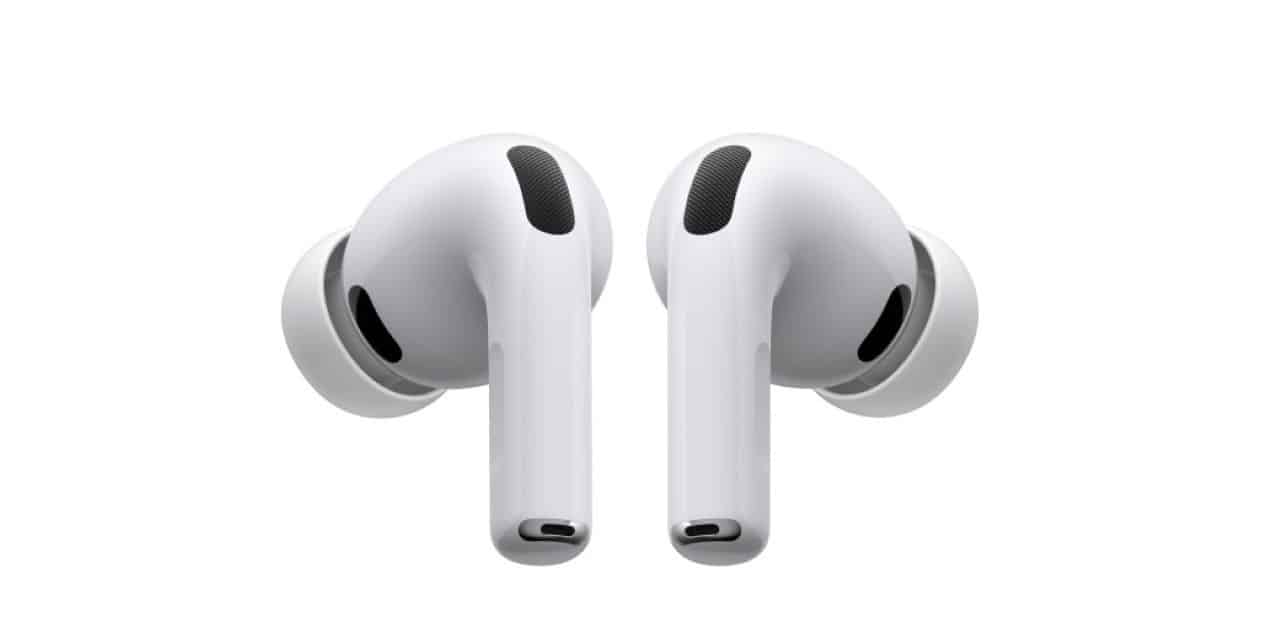
The tech giant has confirmed the development of an improved version of its most popular audio devices, scheduled for release in the second half of this year. The new model represents a significant leap in the company’s strategy of combining sound hardware with spatial computing, introducing discrete infrared cameras into the headphones. Essa technology aims to deepen integration with the mixed reality ecosystem, allowing for more fluid interaction without direct physical contact with other brand devices.
Contrary to market speculation, the device will not be called AirPods Pro 4, but rather a high-performance variation of the Pro 3 model, focused on users seeking maximum sound fidelity and connectivity. The proposal is to offer an audio experience that dynamically adapts to the user’s physical environment, using visual data captured by sensors to calibrate the sound in real time.

Cupertino engineers worked to ensure that the inclusion of the new components did not compromise the iconic design or weight of the accessory. The result is a product that maintains known ergonomics, but with internal processing capabilities drastically expanded to support the new demands of generative and spatial artificial intelligence.
Infrared sensors redefine gesture control
The great innovation of this launch lies in the implementation of infrared (IR) camera sensors embedded in the headphone stems. Esta technology allows the device to perceive its immediate surroundings and detect subtle movements of the user’s head and hands with millimeter precision. The objective is to eliminate the need for physical touches for basic commands, providing a completely “hands-free” and intuitive control interface.
By processing spatial data locally, the headphones can distinguish between intentional gestures and random movements. Isso makes it possible, for example, to answer calls, adjust the volume or change tracks just with specific head movements or gestures in the air, without the need to use your smartphone or touch the headset itself.
In addition to convenience, sensors play a crucial role in improving spatial audio. By mapping the acoustics of the room in real time, the system adjusts sound frequencies to compensate for reflections and sound absorption caused by furniture or walls, ensuring that music or movie audio sounds exactly as the creators intended, regardless of where the user is.
Advanced processing with the new H3 chip
At the heart of this new device is the H3 processor, developed specifically to handle the hybrid audio and artificial intelligence workload. Este component is responsible for managing active noise cancellation (ANC) with twice the efficiency of the previous generation, blocking unwanted frequencies even in extremely noisy environments.
Energy efficiency was also a focal point in the development of the H3 chip. Graças to the new lithography architecture, the device promises superior battery life, reaching impressive marks for the category:
- Up to 8 hours of continuous playback with noise cancellation enabled.
- Intelligent thermal management to prevent heating while using AI features.
- Processing voice commands from Siri directly on the device, without cloud latency.
- Bluetooth 5.4 connectivity for lossless audio transmission over greater distances.
The charging case keeps up with the updates, retaining the universal USB-C port and wireless charging support. Indicadores External LEDs provide accurate information about the battery level of each earphone individually, and the general construction is IP54 certified, ensuring resistance against dust and water splashes, ideal for sports.
Deep integration with the Vision Pro ecosystem
The company’s strategy with this launch is intrinsically linked to the success of its spatial computing headset, the Vision Pro. The new earbuds act as a sensory extension of the headset, providing ultra-realistic binaural audio data that perfectly matches projected virtual images.
When used together, the devices synchronize their latencies to achieve a level of immersion where the sound appears to emanate from specific points in the physical space, and not from the headphones. Essa functionality is vital for augmented reality applications and games, where the directional accuracy of sound can define the user experience.
Developers will have access to a new software development kit (SDK) that allows them to create applications that use the headphones’ sensors for interactions in games or productivity utilities. Isso opens the door to a new segment of “interactive audio” applications, where the position of the user’s head directly influences the narrative or mechanics of the software.
Price and availability in the global market
The market positioning of this “premium” model reflects the embedded technology. The product is expected to hit shelves between September and October 2026, in line with the company’s traditional calendar of events. The suggested price for the Estados Unidos will range between US$299 and US$349, depending on the case customization options and extended warranty.
Market analysts predict high initial demand, especially from enthusiasts who already own other devices from the brand’s cutting-edge ecosystem. Mass production has already begun at partner factories at Ásia, with stocks being prepared for a simultaneous launch in major capitals around the world, including emerging markets that have shown growth in the luxury wearables sector.
For consumers looking to upgrade their equipment, the company should offer trade-in programs, allowing old models to be delivered as part of the payment. Essa initiative aims not only to encourage the adoption of new technology, but also to reinforce the brand’s environmental commitment through the correct recycling of electronic components.
