


The legacy of the third Sony home console continues to represent one of the greatest technical challenges for the video game industry, even two decades after its original launch in 2006. Preserving the device’s library of exclusive titles faces a monumental barrier known as the Cell Broadband Engine, the central processor that powers the machine. The Esta piece of hardware, developed in an ambitious collaboration between Sony,
Unlike modern processors based on the x86 architecture, which power both the PlayStation 5 and current personal computers, the Cell chip was designed with a supercomputing philosophy. Ele operated with a main core, called Power Processor Element (PPE), coordinating eight auxiliary coprocessors known as Synergistic Processing Elements (SPEs). Essa framework required developers at the time to fragment their processing tasks in a very specific way, delegating physical, audio, and rendering calculations to the auxiliary cores manually and asynchronously.
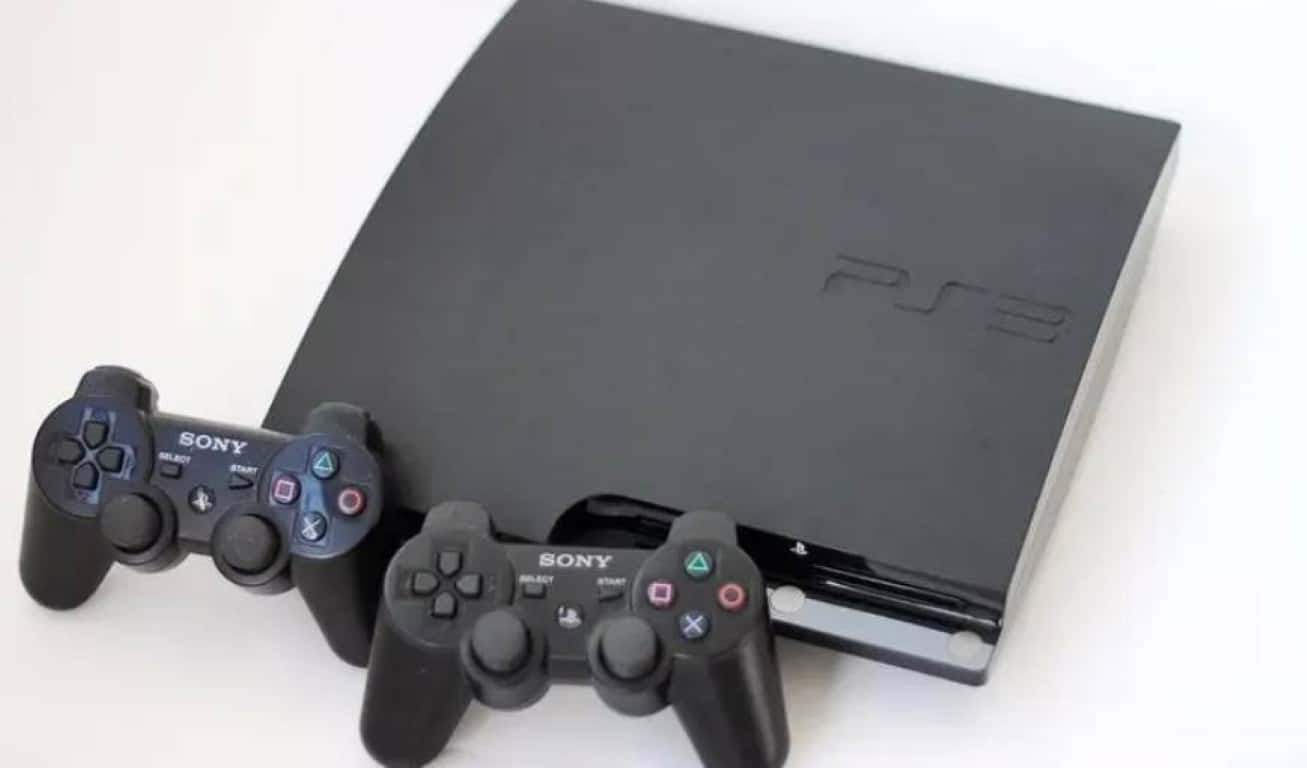
The consequence of this complex engineering is felt today in preservation efforts. Para for an emulator to work correctly, it needs to simulate via software not only the main core, but the precise communication and exact response time between the eight coprocessors and the memory. Isso demands excessive raw computing power from current hardware, making perfect emulation an arduous and often inaccessible task for the average consumer. Diante In this scenario, the industry is observing a significant strategic shift, where access to original codes allows games to be translated to run natively on modern machines, eliminating the real-time translation layer that emulation requires.
This technical transition is not just a matter of convenience, but of commercial and historical necessity. With the market for retro games and remasters on the rise, publishers have realized that relying on in-house emulators can result in products with unstable performance and graphical glitches. Recompilation, by adapting the Cell instructions directly to current processor instructions, ensures that cult classics can enjoy the high frame rates, 4K resolutions and instant load times provided by modern SSDs, respecting the creators’ original vision without the limitations of 2006 hardware.
Structural differences between Cell and modern x86 architecture
The fundamental incompatibility between the PlayStation 3 and contemporary systems lies in the way data is processed. Enquanto x86 architecture focuses on linear and efficient execution of complex instructions, Cell is built for massive parallelism. The PPE acted as a traffic manager, while the SPEs were the laborers who performed the mathematical heavy lifting. The big obstacle for emulation is that the SPEs had their own local fast-access memory, disconnected from the system’s main memory, requiring data management via DMA (Access Direto to Memória) that is foreign to current programming paradigms.
Developers who worked on the console report that optimizing games for the PS3 involved “juggling” code to keep all the SPEs busy without causing bottlenecks. Tentar replicating this behavior on a modern PC or console via emulation requires perfect synchronization. If the emulator delays the response of a simulated SPE by microseconds, the game may crash, the audio may desync, or the physics may collapse. It is this temporal precision that makes emulating Cell so costly in terms of CPU, requiring cutting-edge processors to run games that, theoretically, are from two generations ago.
The emblematic case of Metal Gear Solid 4 and the strategy of Konami
A practical example of this new industrial guideline involves the Metal Gear Solid franchise. The fourth chapter of the saga,Guns of the Patriots, remained stuck with the PlayStation 3 hardware for almost twenty years precisely due to the intensive and optimized use that the Hideo Kojima team made of the Cell processor. The game’s graphics engine was designed to squeeze every ounce of performance out of SPEs, using them for everything from shadow rendering to the complex artificial intelligence of enemies and the physics of the Octocamo suit.
Recent industry reports indicate that in order to include this title in the highly anticipatedMaster Collection Vol. 2, Konami is not resorting to a simple emulation wrapper. Instead, the company would be investing in reverse engineering and recompilation. Isso means taking game logic — originally written to talk to the Cell coprocessors — and rewriting it so that it talks natively to the multiple cores of an Ryzen or Intel Core processor. The expected result is a game that not only runs, but breathes freely on the new hardware, without the bottlenecks characteristic of emulation.
This approach makes it possible to correct problems that were inherent to the original hardware, such as sudden drops in frame rate in moments of high action. By recompiling, developers can unlock performance, allowing the game to reach a constant 60 frames per second, something the PS3 could never maintain. Além Furthermore, recompilation makes it easier to implement modern upscaling technologies and support for ultrawide monitors, modernizing the experience without changing the art direction.
Impact on digital preservation and the future of classics
The emulation community, led by projects like RPCS3, has performed miracles over the last decade, managing to make a vast portion of the PS3 library playable on PC. However, the very progress of these open source projects has demonstrated the physical limits of high-level emulation. Existem titles that, even on the most powerful computers of 2026, still present instabilities due to the synchronization complexity of Cell. The industry, by adopting recompilation, validates the thesis that software must be hardware agnostic to survive the test of time.
Large studios are starting to view their source code files not as relics, but as valuable assets that need to be migrated. The practice of “porting” is evolving from a simple adaptation to a logical reconstruction. Isso guarantees that, ten or twenty years from now, it will not be necessary to emulate a PS5 to run a PS3 game that was emulated on the PS5; we will have a native x86 (or ARM, depending on the future of computing) version that can easily run on any future device.
The move toward recompilation also lowers the barrier to entry for new players. Enquanto emulation requires configuration, bios and powerful hardware, a recompiled game is a simple, optimized and stable executable. Para to
Technical challenges of translating legacy code
Despite the clear benefits, the recompilation process is not without extreme difficulties. Code written for Cell often used low-level instructions (Assembly) specific to that architecture. Traduzir these instructions for x86 is not an automatic process. Exige that software engineers deeply understand how the original game worked so as not to introduce new logical bugs. A function that depended on a specific SPE clock cycle to return a value could break entirely if executed instantaneously on a modern processor.
Additionally, many studios have lost the original source code or uncompiled assets of their games from the 2000s. In Nesses cases, emulation remains the only viable alternative, or else a “blind” reverse engineering process is required, which is expensive and legally complex. However, for commercial blockbusters where files have been preserved, recompilation is becoming the gold standard, defining a new era for video game conservation where technical fidelity meets modern performance.



