

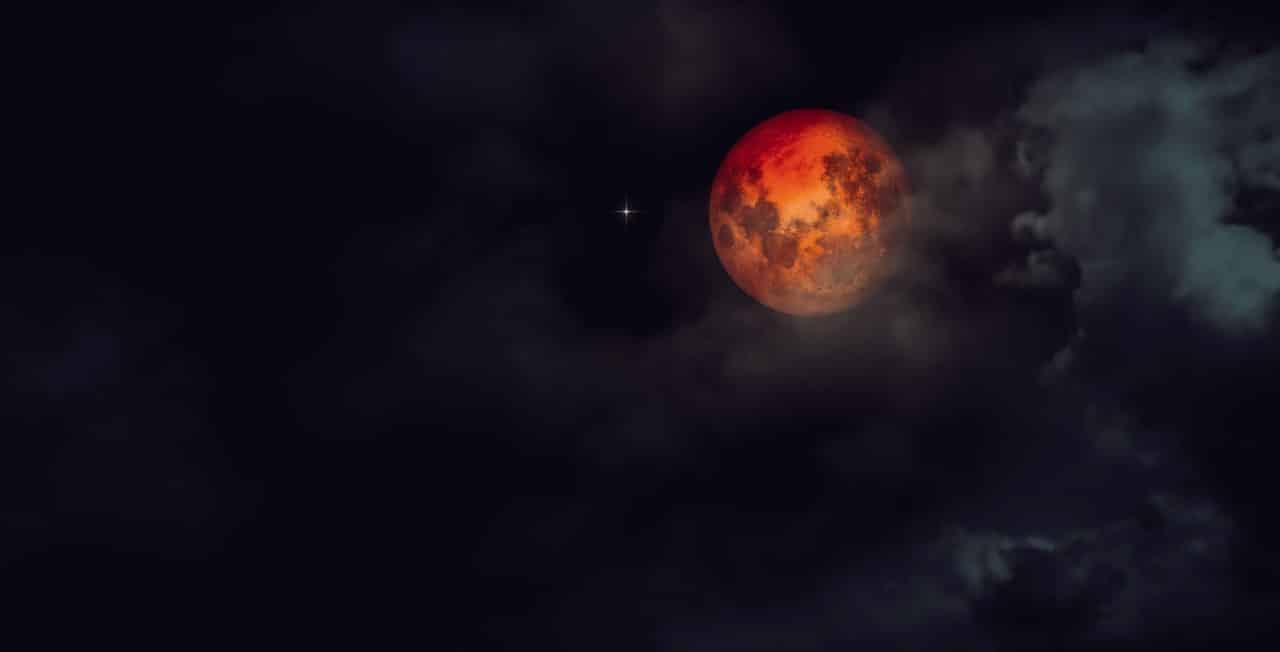
The 2026 astronomical calendar reserves a special moment for March 3rd, when the sky will be the stage for two simultaneous events that mark the transition of the seasons. This month’s traditional full moon, historically associated with the rebirth of spring in the northern hemisphere, will coincide with a partial lunar eclipse. Embora the satellite’s intense luminosity is visible globally, the shadowing phenomenon will have a very specific geographic audience.
For astronomy enthusiasts located at Europa, including Alemanha, the event will be marked only by the appearance of the moon on the horizon at around 6 pm, hours after the peak of the alignment. The celestial mechanics of this day involve the exact opposition between the moon and the sun, with Terra positioned in the center, creating the ideal conditions for the eclipse.

Viewing the partial blocking of sunlight by the shadow of Terra will be a privilege restricted to observers located in regions bathed by Oceano Pacífico. The areas covered by total or partial visibility of the phenomenon include:
– Nova Zelândia and Japão;
– Sibéria Oriental and west of Canadá;
– Alasca and island territories of Pacífico.
This astronomical alignment not only provides a visual spectacle for these specific regions, but also carries a strong cultural symbolism of renewal. The coincidence of events serves as a reminder of the precision of natural cycles, functioning as a temporal marker for various civilizations throughout history.
Technical details and times of the phenomenon
The lunar eclipse scheduled for March 3, 2026 will occur at a time that favors the day side of the Western Hemisphere and the night on Pacífico. The event should start around 9:45 am Europa Central time, when the sun will be high in the European sky, making the eclipse invisible in this part of the globe. Geographic exclusivity makes the experience even more valuable for those in visibility zones.
Astronomically, the occurrence of a full moon is the fundamental prerequisite for a lunar eclipse. The perfect synchrony required for the shadow of Terra to fall on the moon is rare, which differentiates this date from other common full moons. Enquanto most of the world will only see the lunar disk fully illuminated at dusk, the Pacífico regions will witness the “bite” of the Earth’s shadow on the satellite.
Cultural symbolism and historical names
March’s full moon carries a variety of names that reflect ancient people’s relationship with nature and the seasons. In Germanic tradition, it is known as Lua from Lenz, derived from the word “lenzo” for spring, symbolizing the end of the dark days of winter and the promise of light and growth. Outro common term is “Moon of Quaresma”, due to its proximity to the Christian religious period that begins in February.
Among the native peoples of América of Norte, nomenclatures were pragmatic and linked to survival. The Algonquin people called it Lua from Já for the Ojibwe people, was the Lua of the Açúcar, signaling the exact moment for extracting the maple sap.
These historical designations functioned as an agricultural and hunting calendar, essential for community planning. The “chaste moon” is another nickname attributed to this period, reinforcing the idea of purity and the beginning of a new life cycle, connecting observation of the sky directly with earthly practices of cultivation and spirituality.
Advances in exploration with mission Artemis II
In addition to passive observation, the moon is the central target of NASA’s ambitious Artemis II mission. The project aims to reestablish human presence in lunar orbit, something that has not occurred for more than 50 years. The mission’s main objective is to test the feasibility and safety of the Orion spacecraft with a crew on board, serving as a critical step towards future surface landings.
European technology plays a vital role in this endeavor. The German company Jena-Optronik, based on Turíngia, provides the star sensors for the Orion spacecraft. Esses high-precision components are responsible for autonomous navigation in deep space, ensuring that the crew can orient themselves correctly during the trip to and from the natural satellite.
Despite recent technical challenges, such as issues involving the rocket’s helium system, the schedule remains a priority for space agencies. The success of Artemis II is critical to validating life support systems and reentry technology, paving the way for long-term, sustainable exploration.
The March lunar cycle and future dates
After the spectacle on the 3rd, the lunar cycle will continue with its regular phases, offering different perspectives for night observers. On March 11, the moon will enter its waning phase, reducing its luminosity and appearing later and later in the sky. Esse period is often associated in various cultures with moments of introspection and closing stages.
The complete renewal of the cycle will occur on March 19 with the new moon, when the satellite will become invisible to the naked eye due to its alignment between Terra and the sun. Poucos days later, on March 25th, the crescent moon will once again light up the nights, setting the stage for the next full moon, which is scheduled for April 2nd, 2026.