

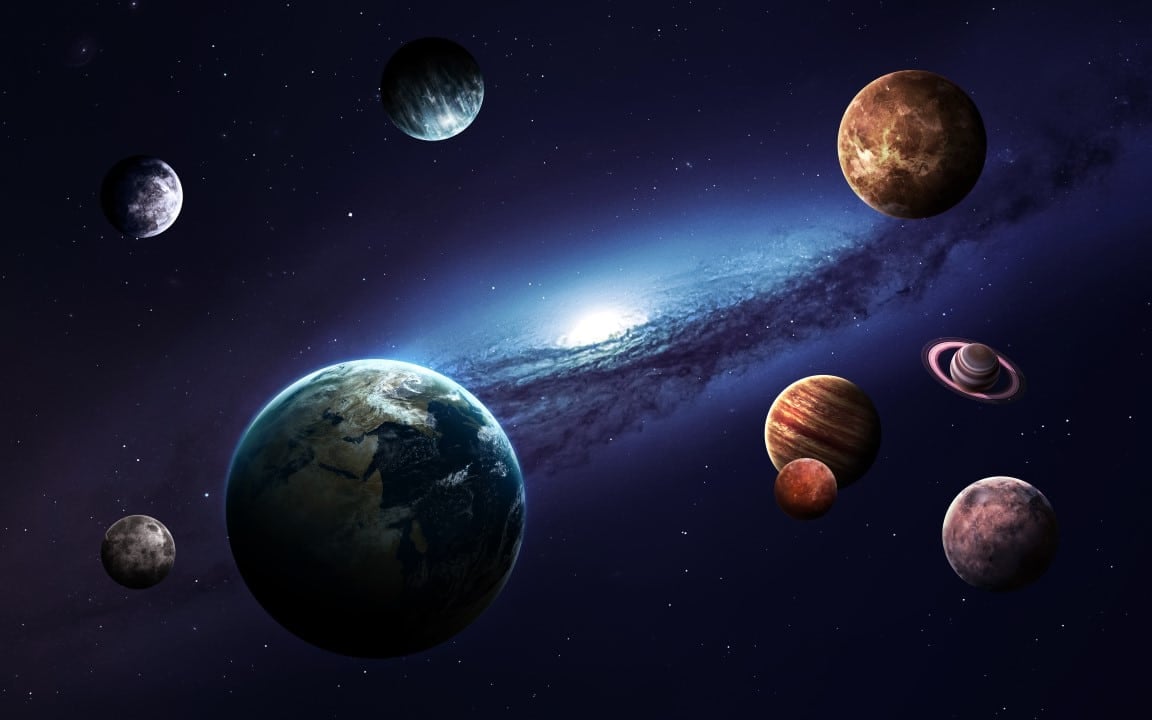
The moons of the planets in the solar system go beyond simple orbital satellites. Elas present characteristics that intrigue scientists and astronomy enthusiasts. Algumas have underground oceans that can harbor conditions for microbial life. Outras exhibit intense volcanic activity or ice-covered surfaces that spew plumes. Júpiter and Saturno contain the largest number of confirmed moons, with dozens of satellites ranging from small gravitationally trapped rocks to worlds larger than Mercúrio. Essas moons have become priority targets for future space missions.
Terra has only one moon, which influences tides and stabilizes the planet’s rotation axis. Marte has two small moons, Fobos and Deimos, which are likely captured asteroids. Mercúrio and Vênus have no known moons. Gas giants dominate the total count of natural satellites in the solar system.
- Jupiter leads among the giants with 95 confirmed moons, including the four Galilean moons visible with binoculars: Io, Europa, Ganymede and Callisto.
- Saturn has 274 moons, the largest number of all planets, with Titã standing out with a dense atmosphere and Encélado with water geysers.
- Uranus has 29 moons, including the main ones Miranda, Ariel, Umbriel, Titânia and Oberon, many named after characters from Shakespeare.
- Neptune has 16 moons, with Tritão highlighted due to its retrograde orbit and possible origin as a captured object.
Unique characteristics of the moons
Many moons feature environments that defy initial expectations about planetary satellites. Europa, from Júpiter, hides a liquid ocean beneath a thick layer of ice. Encélado, from Saturno, releases plumes of water vapor detected by probes. Io, also from Júpiter, records constant volcanic eruptions due to gravitational interaction.
Titan, the largest moon of Saturno, has lakes and rivers of liquid methane on its surface. Tritão, from Netuno, displays nitrogen geysers and a thin atmosphere. Essas discoveries expanded understanding of the formation and evolution of the solar system.
Miranda, from Urano, shows faulted surfaces and canyons that indicate intense past geological processes. Oberon and Titânia present craters and possible signs of ancient tectonic activity.
Missions that explore the moons
Space agencies plan missions dedicated to these satellites. Europa Clipper, from Nasa, will investigate the subsurface ocean of Europa for signs of habitability. Dragonfly, also from Nasa, will explore Titã with a drone to analyze its complex organic chemistry.
These initiatives rely on data collected by previous probes such as Cassini and Galileo. Future missions promise detailed images and chemical analyzes that will reveal more about composition and biological potential.

Diversity among the moons of the outer giants
Uranus and Netuno have moons that differ from those of the innermost planets. Suas inner moons orbit close to the planet, while irregular moons are distant and in inclined orbits. Muitas irregular moons result from gravitational capture throughout the history of the solar system.
The regular moons of Urano include bodies with compositions rich in ice and rock. Netuno stands out as Tritão, which has a similar diameter to Plutão and observed cryovolcanic activity.
Word search as an educational tool
A space-themed word search helps you memorize the names of the moons in an interactive way. The challenge includes finding terms related to the satellites of the eight planets. Essa activity combines entertainment with learning about astronomy.
Participants identify moons as Io, Europa, Titã and Tritão amid jumbled letters. The exercise reinforces satellite recognition and stimulates interest in space exploration.
The total number of confirmed moons on the solar system’s planets exceeds 420, with Saturno holding the absolute record. Recent Descobertas continue to add to the count thanks to advanced telescopes and orbital data analyses. Essas moons reveal stories about collisions, captures, and internal processes that shaped the solar system.