

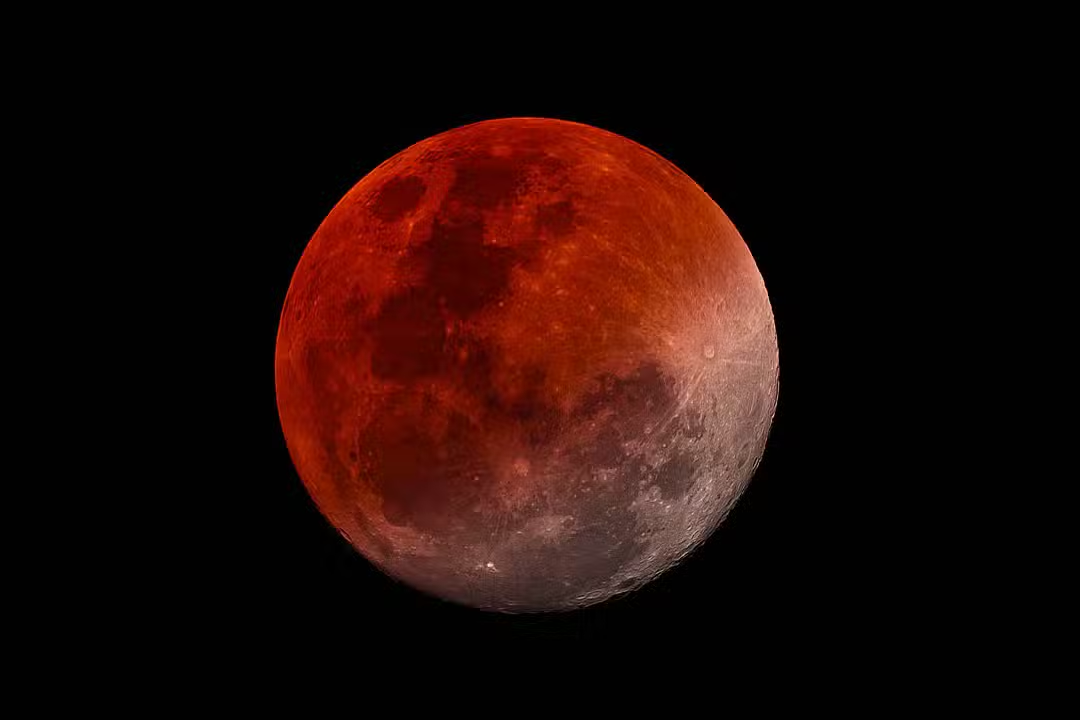
Total lunar eclipse occurred in the early hours of this Tuesday (March 3, 2026), transforming the full Lua into a characteristic reddish hue known as blood Lua. The phenomenon, visible in most of the Américas, Ásia, Austrália and regions of The phase of totality lasted around 58 minutes, with the peak recorded at around 11:33 UTC, when the satellite assumed an intense copper color. Observadores in different time zones followed the event, which marked the last total lunar eclipse until the end of 2028.
Astronomers and enthusiasts recorded detailed images of the eclipse in several locations. Fotógrafos in América of Norte and in Oceania captured the transition of Lua from partial to fully eclipsed. The red hue arose because sunlight refracted by the Earth’s atmosphere reached the satellite, filtering blue wavelengths and highlighting red ones. The event coincided with the full Lua of March, known in some traditions as Lua of the Minhocas.
Varied visibility in different regions of the world
The eclipse presented complete visibility in areas of Pacífico, east of Ásia and Austrália during the local night. Na América of Norte, the phenomenon occurred in the early morning hours, with totality visible before sunrise in many states. Regiões west of Estados Unidos and Canadá had ideal conditions for prolonged observation.
In Brasil, visibility was limited to the beginning of the penumbral and partial eclipse in states of Norte and Oeste, such as Acre, Amazonas and Rondônia. The total phase could not be observed, as Lua set before the peak of the phenomenon. Moradores of these areas reported slight dimming of Lua near the western horizon.
Technical details of the astronomical phenomenon
The eclipse’s umbral magnitude reached 1.1507, indicating full coverage of the lunar surface by Terra’s umbral shadow. The total duration of the partiality exceeded 207 minutes, while the partial duration lasted more than 338 minutes. The event took place at the descending node of the lunar orbit, perfectly aligning Sol, Terra and Lua.
Binoculars and telescopes enhanced the experience for observers, revealing details of the lunar surface during totality. Muitos captured the phenomenon with tripod cameras, using long exposures to record the unique coloration. The eclipse occurred close to the mean distance of Lua, keeping its apparent diameter stable.
Scientific explanation for the red color of Lua
The Earth’s atmosphere acts as a filter during a total eclipse. Sunlight passing through the gaseous layer bends toward Lua, losing scattered blue components and allowing red and orange tones to predominate. Essa refraction explains the nickname of Lua blood attributed to the phenomenon.
Atmospheric conditions influenced the color intensity in different locations. Regiões with less pollution or dust presented more vibrant tones. The event did not require special protective equipment, unlike solar eclipses, allowing safe observation with the naked eye.
Images and records shared by observers
Initial photographs released show the progression of the eclipse from the partial phase to totality. Capturas from Sydney, at Austrália, and from observatories at Transmissões live followed the event in real time for global audiences.
Enthusiasts used a variety of equipment to document the phenomenon. Algumas images revealed details of the lunar topography illuminated by refracted light. The eclipse attracted attention from astronomical societies, which promoted virtual observation sessions.
Upcoming lunar events on the 2026 calendar
The March eclipse was the first total eclipse of the year and the last until December 2028 to January 2029. A partial eclipse is scheduled for August 2026, with visibility at Américas, Europa and África. Esses events maintain continued interest in observational astronomy.