

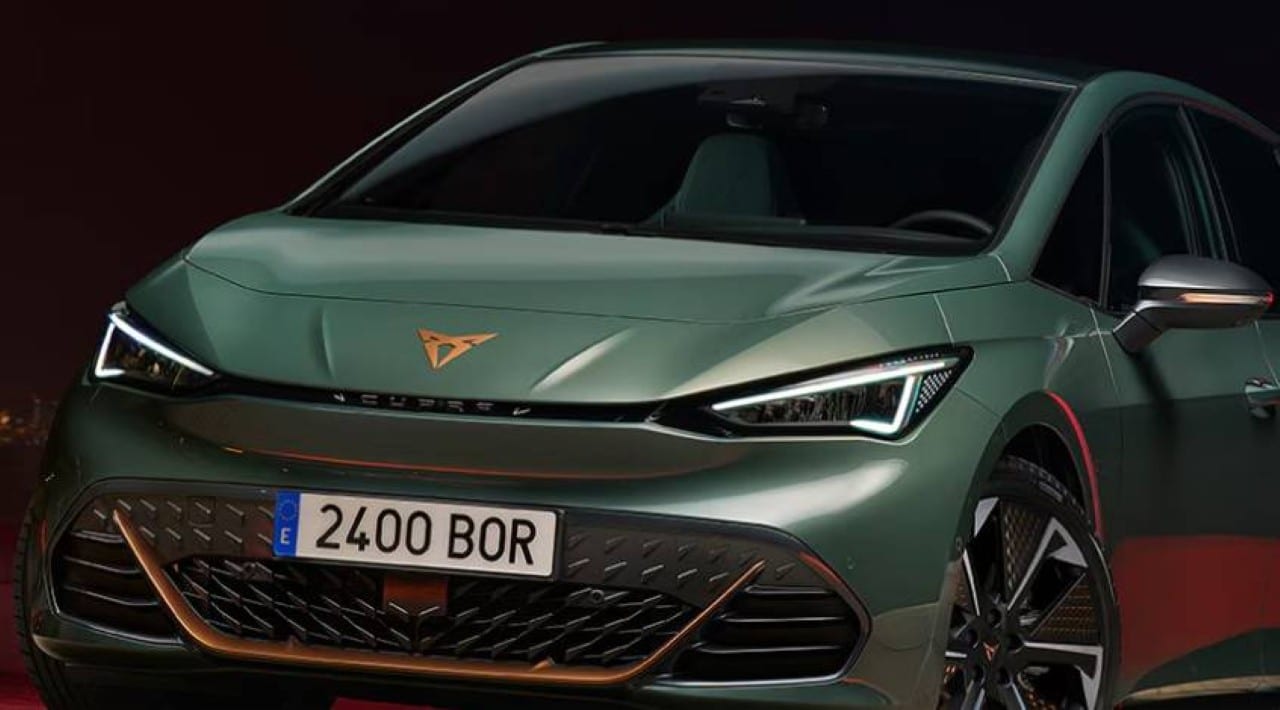
Spanish manufacturer Cupra has officially released the first images of the mid-life update of the Born, its all-electric hatchback that shares the modular MEB platform with the Volkswagen ID.3. Esta renewal marks a decisive moment for the brand, introducing significant changes to the front section that align the vehicle with the company’s new visual identity, already seen in recent models such as the Tavascan and the Terramar. The strategic move seeks to reinforce the division’s positioning as a high-performance and emotional design alternative within the Grupo Volkswagen, differentiating itself from the conglomerate’s more conservative options.
The official calendar indicates that the updated model should reach dealerships in Europa and other global markets in the first half of this year. The update brings with it an improved technology package and a profound aesthetic overhaul, abandoning the rounded lines of the previous version in favor of more aggressive angles and a more striking road presence.
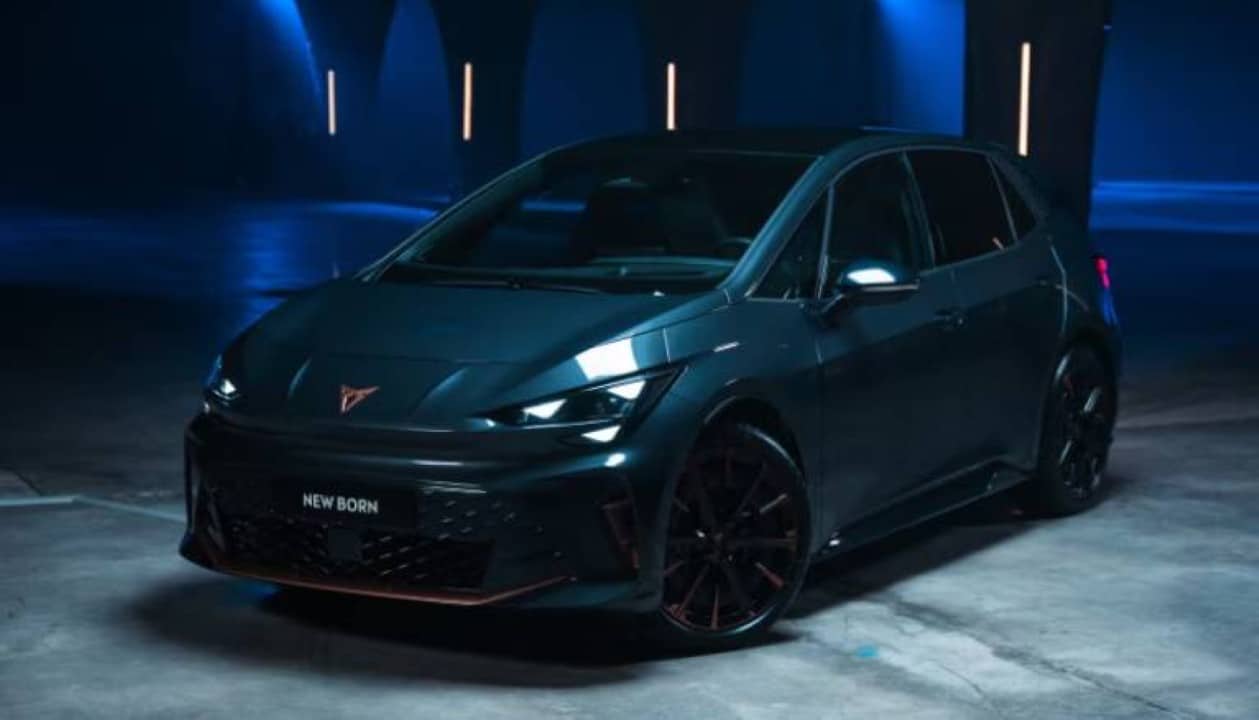
The brand’s engineers focused their efforts on optimizing the efficiency of the propulsion system, aiming for marginal gains in autonomy and reduced recharging times in high-power stations. The exterior design remains the central point of this renovation, highlighted by the new light signature made up of three triangles inside each headlight.
Visual identity and front design
The front of the vehicle underwent a complete restructuring, adopting the concept that the designers call “shark nose”, a feature that gives the car a more imposing and sporty appearance. The Este element is complemented by the elimination of the traditional upper grille, as cooling is now managed through functional openings in the lower part of the bumper, optimizing air flow to the batteries located in the floor.
The intensive use of triangular elements in front lighting does not just represent an aesthetic choice, but rather the consolidation of a brand signature that will be replicated across the manufacturer’s entire future portfolio. Essa change ensures that the model is immediately recognized on the streets, visually distancing it from the Volkswagen ID.3, with which it maintains strong technical and structural links on the assembly line.
Technical evolution and performance
Although specific technical details will be kept under wraps until the full presentation, the model is expected to adopt the most efficient electric motors recently developed by the group. Isso includes the possibility of integrating the 286 horsepower rear engine, which already equips the top versions of other models based on the MEB platform, providing more vigorous acceleration from 0 to 100 km/h.
The thermal management of the batteries also received special attention in this update, with the aim of maintaining constant performance even in extreme weather conditions. Esse technical refinement is essential to ensure that the brand’s sporting proposal is put into practice, allowing the driver to explore the dynamics of the chassis without premature degradation of the available load.
Improvements to the propulsion system should result in a more consistent user experience, with slightly faster charging times on compatible infrastructures. Energy efficiency was worked on to maximize range, a critical factor for competitiveness in the compact electric segment.
Digital interior and sustainability
Inside, the vehicle presents an important evolution in the human-machine interface, with the introduction of a new 12.9-inch multimedia center. The software has been completely rebuilt to offer more intuitive responses and improved wireless integration with smartphone operating systems, as well as backlit sliders for temperature and volume adjustment, addressing a common criticism of previous models.
The ergonomics have been improved with the inclusion of new sports seats that offer greater lateral support, essential for the dynamic driving proposed by the model. The use of sustainable fabrics, such as Seaqual Yarn, made from plastics extracted from the oceans, reinforces the brand’s commitment to the circular economy and environmental responsibility in its production processes.
Active safety and driving dynamics
The safety package has been expanded with state-of-the-art driving assistance systems, such as the Travel Assist 2.6, which allows semi-autonomous maneuvers on highways. The system uses a network of sensors and cameras to monitor the surroundings at 360 degrees, ensuring precise interventions in the event of a risk of collision or unintentional lane departure. Autonomous emergency braking now features improved pedestrian and cyclist detection, working effectively even in low-light urban environments.
Suspension engineers made fine adjustments to the shock absorbers and electronically assisted steering to provide greater agility compared to direct competitors. The objective was to reduce body roll in tight curves, taking advantage of the low center of gravity provided by the central position of the batteries. Também The calibration of the traction control system has been revised to deal more progressively with the instantaneous torque of the electric motor, preventing loss of grip on wet surfaces and ensuring pleasure when driving on winding roads.



