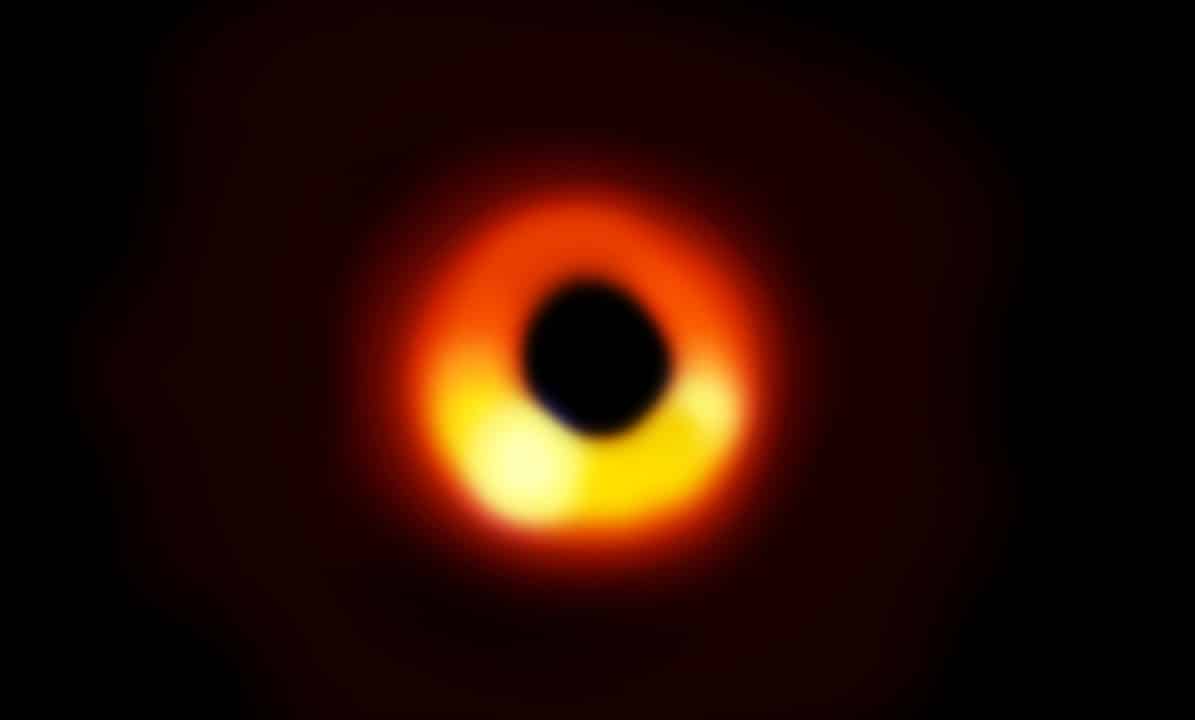
Researchers at Universidade and Princeton have reached a new level in astrophysics by modeling the environment around one of the most massive objects in the universe with unprecedented precision. The team, led by scientist Andrew Chael, used the Centro, Computação Avançada, The study applied advanced computational codes that made it possible to distinguish the specific interactions between electrons and protons, something that previous models were unable to perform with such fidelity.
The simulations revealed that the environment around object M87 is considerably more complex than classical theories had suggested in recent decades. The new methodology identified a fundamental thermal discrepancy in the plasma surrounding the singularity, where electrons have temperatures up to 100 times lower than those of protons. Essa discovery provides a solid physical explanation for the luminosity features observed in the black hole’s bright ring, refining the interpretation of images captured by global networks of radio telescopes.
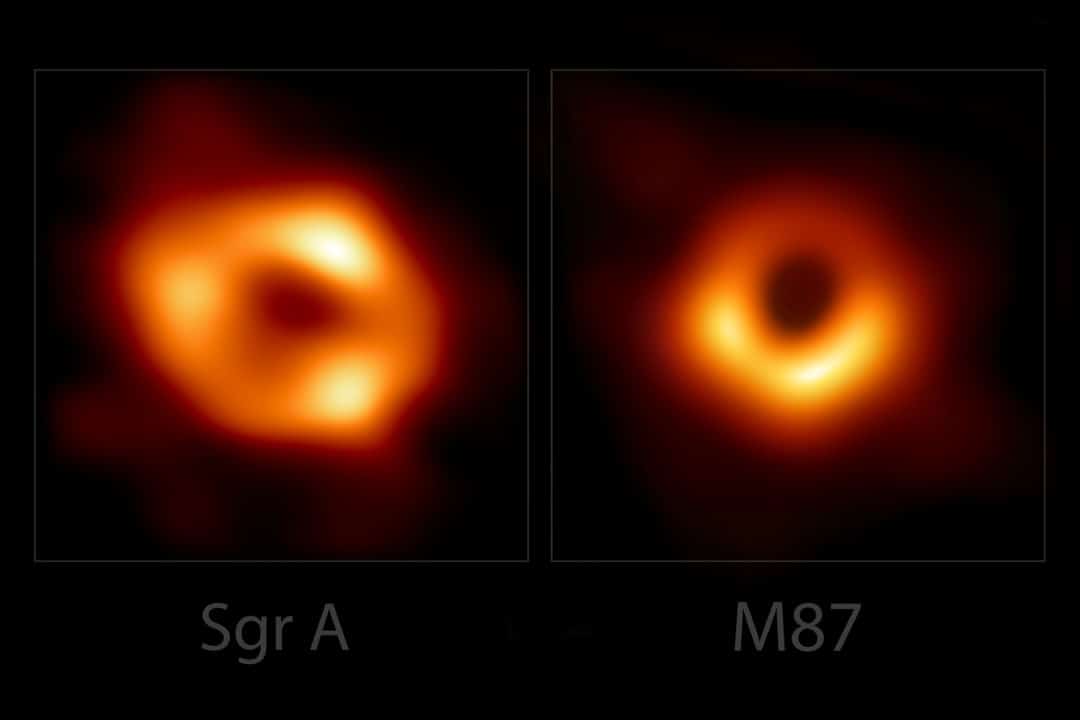
The research highlights that, while the dark core remains stable, the luminous structure around it is defined by turbulent and changing dynamics. Fluxos plasma at high temperatures causes visible shifts in photon emission, creating a constantly evolving scenario. Validating these computational models with real observational data confirms the effectiveness of the approach, which teases apart the physical properties of subatomic particles to create a detailed map of the gravitational and magnetic forces at work.
Advances in particle modeling
The great difference of this scientific investigation lies in the data processing capacity that treats particle physics in an individualized manner. Diferente From traditional simulations, which considered the plasma fluid as a homogeneous mixture, the new model takes into account the unique dynamics of each atomic component during the accretion process. Isso allowed astrophysicists to understand how extreme gravity influences distinct trajectories for electrons and protons.
- The thermal differentiation revealed shows that cooler electrons significantly alter the visual signature captured by astronomical instruments.
- The luminous area around the black hole shows movement driven by flows of matter, contrasting with the immobility of the dark center.
- The use of separate variables for each type of particle guarantees a much more faithful representation of the real physical phenomena of the cosmos.
The results obtained demonstrate that the interaction between intense magnetic fields and superheated matter is the main driver for the observed brightness variations. The precision of the new computational code made it possible to reproduce scenarios that were previously impossible to simulate, offering a new perspective on thermodynamics in extreme gravity environments. Direct comparison with previous observations validates the theory that plasma does not behave as a single fluid, but rather as a complex, multi-temperature system.
Mechanics of relativistic jets
One of the central focuses of the study was the origin and behavior of the jets of matter expelled by M87, known as relativistic jets. Essas Colossal structures span millions of light years in intergalactic space and are formed by the violent interaction between high-energy plasma and magnetic fields twisted by the black hole’s rotation. The simulations were able to accurately reproduce the mechanics of launching these particles, which travel at speeds close to that of light.
Understanding these jets is essential for modern astrophysics, as they act as one of the most efficient energy redistribution mechanisms in the universe. The model developed details how the energy extracted from the black hole’s rotation is transferred to the plasma, propelling it out of the host galaxy. Esse process directly influences the formation of new stars and the dynamics of interstellar gas on vast scales, shaping the evolution of the galaxy over billions of years.
- The jets have a galactic reach, influencing the structure of the intergalactic medium over immense distances.
- Magnetic fields and the rotation of the central object function as natural particle accelerators.
- The redistribution of energy affects the rate of star formation and the chemical composition of the galaxy.
Future of astronomical observation
The success of these simulations paves the way for a new era in astronomy, where theory and observation move more in sync. The ability to predict M87’s plasma behavior and luminosity fluctuations provides a valuable roadmap for future observation campaigns, especially with the use of Event Horizon Telescope and other new-generation instruments. Validation of theoretical models strengthens confidence in predictions about the physics of strong gravitational fields.
Scientists plan to refine the computer codes to include additional variables, making the scenario even more realistic. Elementos such as turbulence on smaller scales and complex interactions with the intergalactic medium will be incorporated in the next phases of the study. The union between the processing power of supercomputers and the sensitivity of new telescopes offers a unique opportunity to uncover the physical processes that occur in the most extreme and inaccessible environments of the cosmos.
