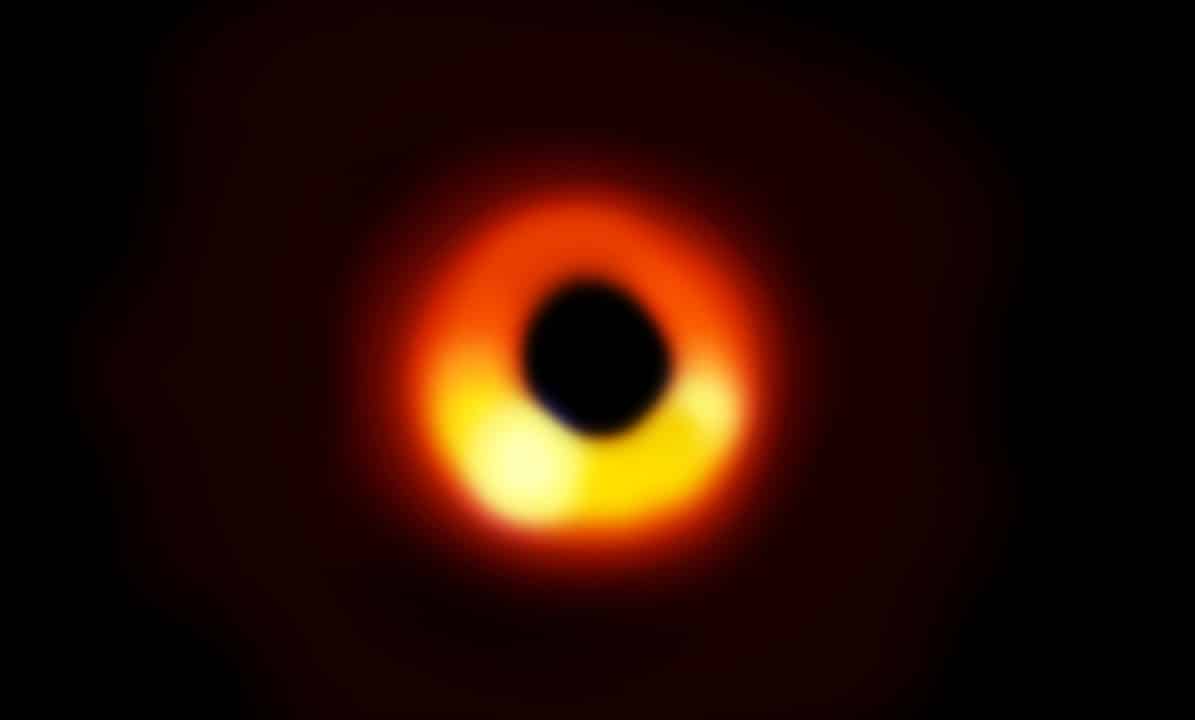
A team of researchers from Universidade of Princeton has reached a new level in understanding the phenomena that occur in the vicinity of supermassive black holes. Liderado by scientist Andrew Chael, the group used the Centro of Computação Avançada of Texas (TACC) infrastructure to develop detailed simulations of the The study applied an unprecedented computational code capable of differentiating the interactions between electrons and protons, revealing crucial data about the temperature and movement of the plasma at the event horizon.
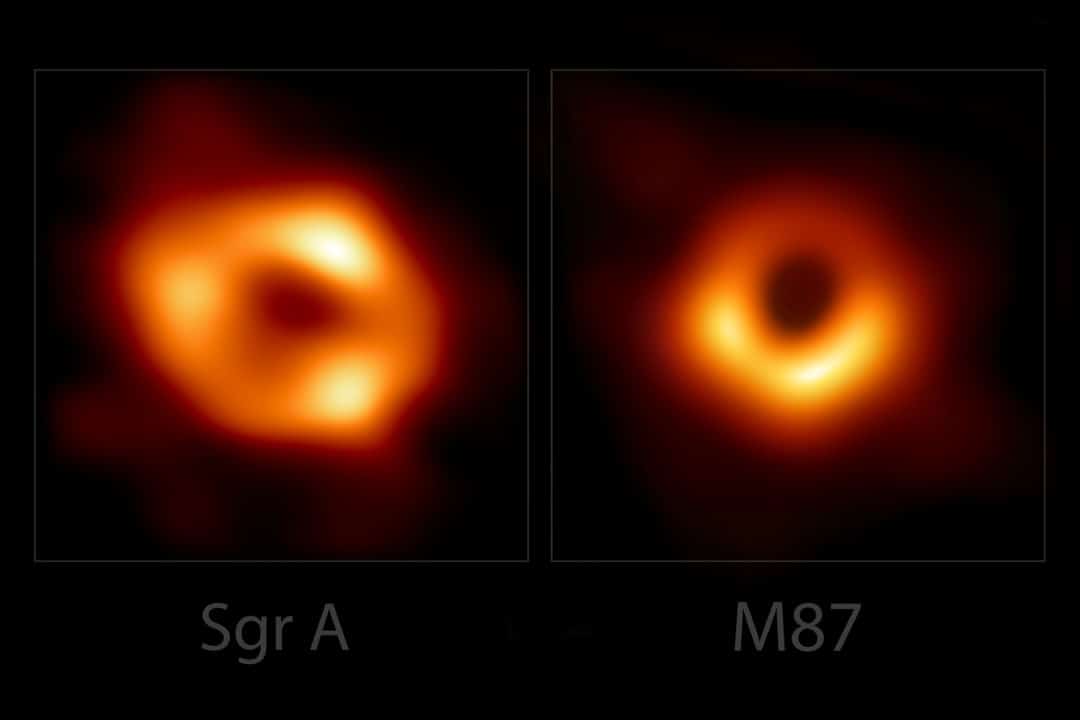
Analyzes indicate that the environment around M87 is even more complex than previous models suggested. The new approach made it possible to identify that the electrons present in plasma reach temperatures up to 100 times lower than those of protons. Essa discrepância térmica é fundamental para explicar as variações de luminosidade observadas no anel brilhante que circunda a escuridão central, oferecendo uma interpretação física mais precisa para as imagens captadas por radiotelescópios.
Innovation in particle modeling
The difference in this research lies in the data processing capacity that separates the physical properties of subatomic particles. Enquanto Traditional simulations treated the plasma fluid as a homogeneous mixture, the new model considers the individual dynamics of each component. Isso has enabled astrophysicists to map how extreme gravity and magnetic fields influence distinct trajectories for electrons and protons.
The results demonstrate that although the black hole’s dark core remains stable over time, the luminous structure around it is dynamic. Fluxos of heated plasma cause visible shifts in the photon ring, creating an ever-changing landscape that defies static observations. The comparison between simulations and real data validates the effectiveness of this new computational methodology.
- Thermal differentiation:Elétrons significantly cooler than protons alter the object’s visual signature.
- Ring dynamics:The luminous region presents movement driven by flows of matter, while the center remains fixed.
- Model Accuracy:Using separate variables for particles provides superior fidelity to real physical phenomena.
Formation and range of cosmic jets
Another central point of the study involves the origin and behavior of the jets of matter expelled by M87. Essas Colossal structures, stretching millions of light years, are formed by the violent interaction between high-energy plasma and magnetic fields twisted by the black hole’s rotation. The simulation managed to reproduce the mechanics of launching these particles, which travel at speeds close to that of light and shape the evolution of the host galaxy.
Understanding these jets is vital for modern astrophysics, as they represent one of the most efficient energy redistribution mechanisms in the universe. The model developed in
- Galactic extent:The jets influence the structure of the galaxy over distances of millions of light years.
- Launch mechanism:Campos magnetic and rotation act as natural particle accelerators.
- Energy impact:The redistribution of energy by the jets affects star formation and interstellar dynamics.
Perspectives for astronomical observation
The success of these simulations paves the way for a new era of astronomical investigations, where theory and observation go hand in hand with greater precision. The ability to predict M87’s plasma behavior and fluctuations in brightness provides a roadmap for future observation campaigns with Event Horizon Telescope and other next-generation instruments.
Scientists now hope to further refine the computational codes to include additional variables, such as turbulence on smaller scales and interaction with the intergalactic medium. The combination of the processing power of supercomputers and the sensitivity of new telescopes promises to unravel the physical processes that occur in the most extreme environments of the cosmos.
