

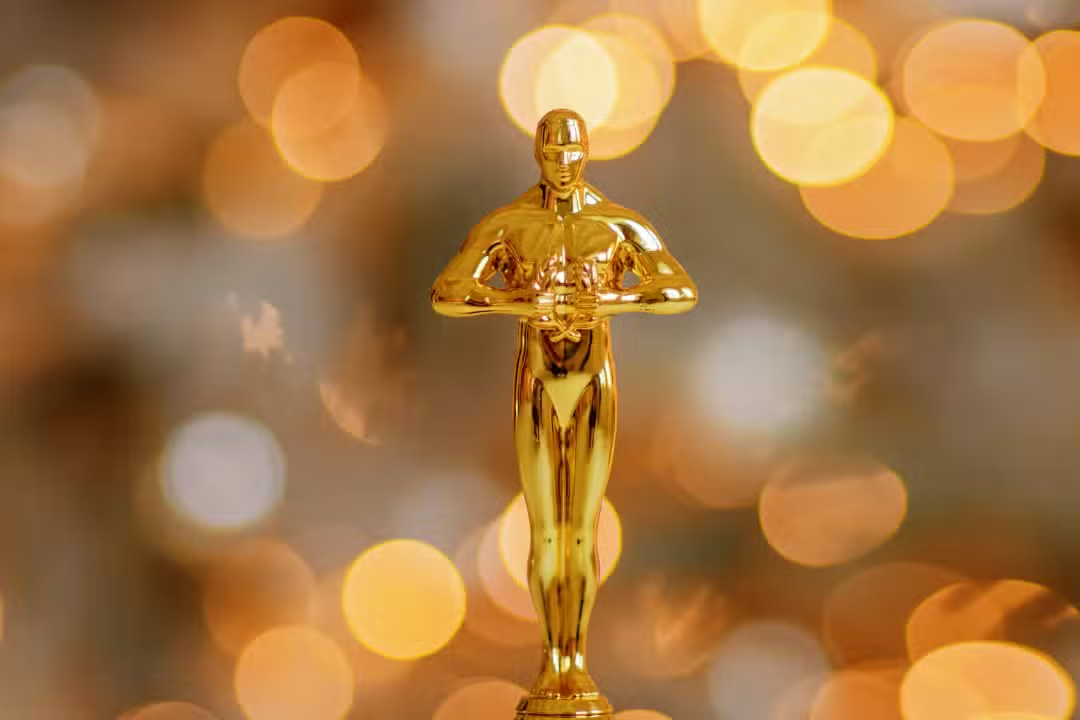
The 98th edition of Oscar, scheduled for March 15, 2026, at Teatro Dolby, at Los Angeles, at Melhor Ator.
While anticipation grows for the nominees, including names like Wagner Moura for his role in “Agente Secreto,” the awards show carries a legacy of controversies that often overshadow the victories. Esses incidents reveal social tensions, technical errors and ethical debates that have accompanied the event since its origins.
Academia of Artes and Ciências Cinematográficas, founded in 1927, has already faced criticism for a lack of diversity and questionable awards decisions. Tais episodes not only generate immediate repercussions, but also drive changes in the rules and the composition of voters.
- In recent editions, such as 2025, debates about representation have continued, with films such as “Emilia Pérez” involved in discussions about trans actors and defamation campaigns.
- Controversies in productions such as “Marty Supreme”, with allegations of inappropriate conduct on sets, highlight ethical issues in the industry.
- Historical incidents, such as errors in announcing winners, reinforce the need for strict protocols.
- Controversies involving activism, such as protests for indigenous rights, show Oscar as a platform for global causes.
Protests and refusals of awards
The 1973 Oscar marked an iconic moment when Marlon Brando won as Melhor Ator for “The Poderoso Chefão”. Instead of accepting the trophy, he sent Sacheen Littlefeather, a Native American rights activist, to publicly refuse it. Littlefeather read a statement criticizing the film industry’s discriminatory treatment of indigenous people, highlighting stereotypical representations in films and series. The audience reacted with a mixture of applause and boos, and the episode led to debates about the use of the awards ceremony as a political stage.
Years later, this incident influenced Academia rules on speeches and representations, promoting greater inclusion in technical and narrative categories. Brando, known for intense roles, used his absence to amplify marginalized voices, and the gesture is still cited in discussions about activism in Hollywood.
Unexpected appearances on stage
In 1974, during Elizabeth Taylor’s presentation for the Melhor Filme category, photographer Robert Opel invaded the stage running naked. The act was a form of protest against conservative norms in society, defending the rights of the LGBTQIAP+ community. David Niven, the presenter, reacted with humor, but the incident exposed vulnerabilities in the ceremony’s security.
This invasion generated immediate changes to entry and surveillance protocols, avoiding repetitions in future editions. Opel, a declared activist, turned the moment into a symbol of rebellion, and the video of the episode still circulates today as an example of unpredictability in Oscar.
Debates about deserved victories
The 1999 edition generated controversy when “Shakespeare Apaixonado” took Oscar from Melhor Filme, beating “O Resgate from Muitos critics argued that the historical drama, with its focus on romance and theater, did not match the intensity of Steven Spielberg’s war narrative. The debate questioned the favoritism for light adaptations to the detriment of original scripts with deep themes.
This decision influenced subsequent campaigns, with studios investing more in lobbying for key categories. “Shakespeare Apaixonado” racked up seven awards that night, including Melhor Atriz for
Diversity and inclusion issues
In 2015, the absence of black nominees in the acting categories, despite films like “Selma” competing for Melhor Filme, sparked the #OscarSoWhite movement. The list was also missing women at Direção, Roteiro and Fotografia, exposing systemic inequalities in the industry. Redes social networks amplified criticism, leading to reforms in the composition of Academia’s voting members.
The awards show has since adopted inclusion criteria for eligibility, such as minority representation on production teams. The impact was visible in later editions, with greater diversity in nominees, although challenges persist in technical categories.
Technical errors in ads
The 2017 mistake, when “La La Land” was announced as Melhor Filme instead of “Moonlight”, shocked the global audience. Warren Beatty and Faye Dunaway received the wrong envelope, containing the name of Emma Stone as winner of Melhor Atriz for the musical. The confusion lasted minutes, with producers of “La La Land” already on stage before the correction.
This incident resulted in rigorous audits by PricewaterhouseCoopers, responsible for the envelopes, including double checks and additional training. “Moonlight”, dirigido por Barry Jenkins, venceu merecidamente, mas o erro destacou a pressão sobre apresentadores e organizadores.
Absence of fixed presenters
The 2019 ceremony dropped a main host after Kevin Hart resigned over old homophobic tweets. Academia apologized publicly, but Hart chose to withdraw, citing personal development. The event continued with multiple presenters, maintaining the flow without a central driver.
This choice innovated the format, influencing subsequent editions with rotating hosts to avoid similar controversies. Hart, a popular comedian, saw his career temporarily impacted, but Oscar demonstrated adaptability amid public scrutiny.
Incidents of stage violence
In 2022, Will Smith slapped Chris Rock after a joke about Jada Pinkett Smith’s alopecia. Smith, who beat Melhor Ator by “King Richard:Criando Campeãs”, later apologized, but the episode dominated the headlines. Rock, featuring Melhor Documentário, maintained his composure, but the incident led to a 10-year suspension for Smith in Academia.
The global repercussion debated the limits of humor and emotional reactions, resulting in stricter policies against violence. Smith, blockbuster star, faced project boycotts, while Oscar reinforced his commitment to professional conduct.
Viral facial reactions
Angela Bassett, nominated in 2023 for “Pantera Negra: Wakanda to Sempre”, lost to Sua expression of disappointment, captured on camera, went viral on social networks, generating memes and discussions about etiquette at awards shows. Bassett, veteran, did not applaud immediately, which divided opinions between authenticity and professionalism.
This moment highlighted the scrutiny over reactions from losers, influencing how actors manage public emotions. Curtis, winner for “Everything in Todo o Lugar to Mesmo Tempo”, praised Bassett in her speech, easing tensions.
Recurring jokes about past incidents
Jimmy Kimmel, host in 2023, mocked Will Smith’s slap from the previous year, suggesting that violent acts would win awards and long speeches. The joke divided the audience, with some seeing it as light humor and others as insensitive. Kimmel, experienced in talk shows, used the moment to address rules of conduct in the theater.
This approach kept the incident alive, but also promoted reflection on forgiveness and evolution in the industry. Oscar continued to deal with legacies of controversy, balancing entertainment and seriousness.
Interactions with activists in the audience
Still in 2023, Kimmel directed a joke to Malala Yousafzai, winner of Nobel from Paz, questioning her about a rumor involving Harry Styles and Chris Pine. Malala responded by emphasizing peace and respect, shifting the focus to serious causes. The moment highlighted the contrast between Hollywood glamor and global activism.
Yousafzai, present as a guest, used her visibility to reinforce messages of education and human rights. Kimmel later praised its grace, but the episode generated criticism for mixing lightness with iconic figures.
Controversies in recent campaigns
The 2025 edition brought controversy with Karla Sofía Gascón, from “Emilia Pérez”, facing criticism for offensive old posts. Durante visits Brasil, she criticized Fernanda Torres’s team, intensifying rivalries in Melhor Atriz. Campanhas of defamation affected perceptions, with debates about cancellation and trans representation.
These events influenced votes, with Academia promoting ethical guidelines for campaigns. Gascón, a pioneer as a nominated trans actress, saw her narrative mixed with controversies, highlighting inclusion challenges.
Ethical debates in current productions
Films such as “Marty Supreme”, nominated in 2026, have generated discussions about intimate scenes involving underage actors and the criminal history of participants. Alegações of inappropriate behavior on set damaged campaigns, questioning transparency in Hollywood. Director Josh Safdie faced scrutiny, impacting odds in categories like Melhor Direção.
These ethical issues have led to revisions in production protocols, with unions demanding greater protections. “Marty Supreme”, despite nine nominations, risks leaving without awards due to controversies.
Records and surprises in nominations
Oscar 2026 broke records with “Pecadores” receiving 16 nominations, surpassing previous marks. Surpresas included absences such as “Wicked: Parte 2” and Paul Mescal by “Hamnet”, sparking debates about voting criteria. Filmes such as “Bugonia” and “Frankenstein” stood out, reflecting trends in innovative narratives.
These records boosted discussions about gender diversity, with more international representation. The absence of certain favorites reinforced criticism of the campaign system, promoting reforms for greater equity.
Brazilian influence on the awards
Wagner Moura, nominated for “O Agente Secreto”, brought focus to Brazilian cinema, competing with Timothée Chalamet. Polêmicas involving directors such as Oliver Laxe, who criticized Brazilian engagement in voting, added tension. Moura, known for global roles, represents advancement in Latin visibility.
His appointment follows legacies such as Fernanda Montenegro in 1999, expanding debates on the internationalization of Oscar. Críticas of Laxe, mocking campaigns, highlighted cultural rivalries in the awards.
Impacts of technology and AI
Controversies in 2026 involved the use of AI in films such as “O Brutalista” and “Emilia Pérez”, with debates about creative authenticity. Alegações of digital manipulation in narratives generated petitions for regulations. Academia considers criteria for emerging technologies in future editions.
These technological advances divide opinions, with defenders seeing innovation and critics fearing a loss of human essence. Filmes affected saw campaigns impacted, influencing votes in technical categories.
Evolution of the rules of Academia
Over the decades, controversies have driven changes, such as membership expansion for greater diversity following #OscarSoWhite. Regras on ethical campaigns and inclusion in eligible productions aim to mitigate scandals. The 2026 edition reflects these developments, with a focus on global representation.
These adaptations strengthen Oscar’s credibility, balancing tradition and modernity. Incidentes pasts serve as lessons, ensuring the awards remain relevant in an ever-changing world.