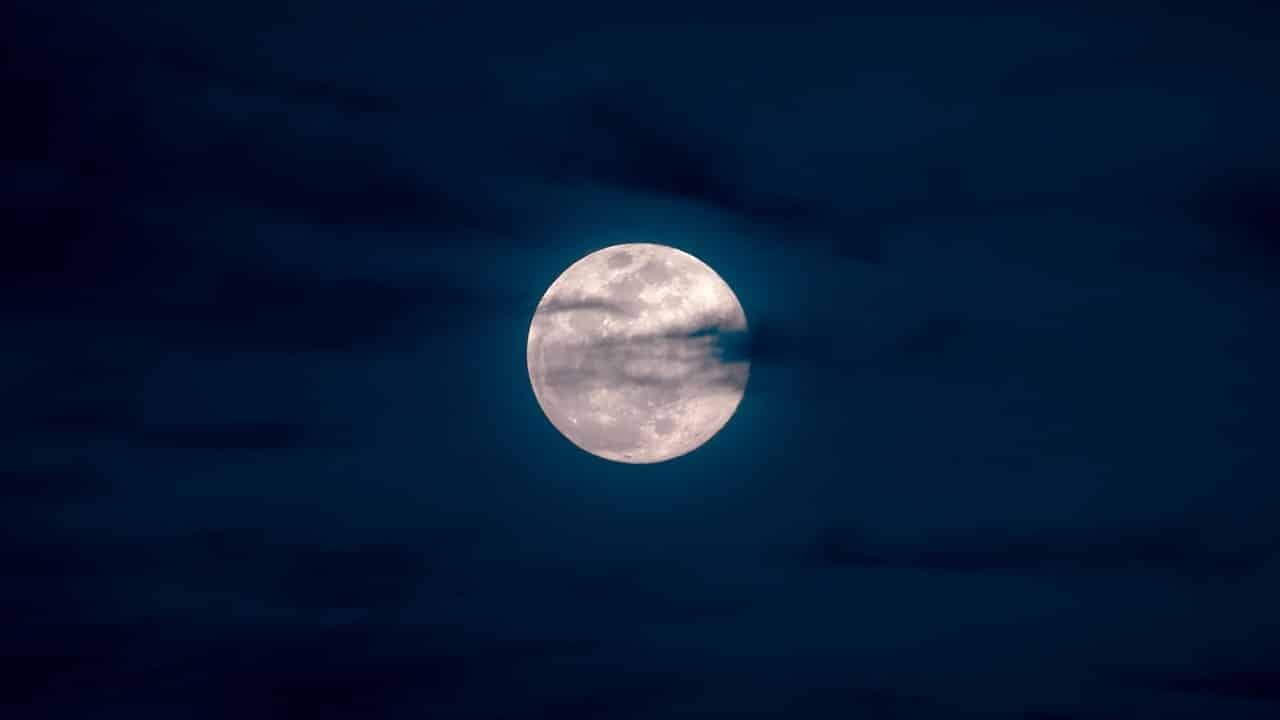
The astronomical calendar for the third month of 2026 presents a start marked by events of great magnitude for observers and enthusiasts. Logo on the third day of the month, the peak of Lua Cheia occurs, coinciding precisely with a total lunar eclipse. Este phenomenon, generated by the specific alignment between celestial bodies, promises to alter the view of the natural satellite, giving it a characteristic reddish hue in regions where atmospheric conditions allow observation.
The main event is scheduled to take place at 8:39 am, considering the time of Brasília. The overlap of the full phase with the eclipse increases scientific and amateur interest, since the illumination of the visible face of Lua is directly interfered by the Earth’s shadow. Todo the lunar cycle predicted for the period follows the average synodic duration of approximately 29.5 days, completing the four main stages over the following weeks.

Astronomers monitor these transitions not only for their visual beauty, but also for the influence that the satellite has on observable terrestrial phenomena. The regularity of phase changes maintains the established orbital pattern, allowing accurate predictions for planning activities that depend on nighttime brightness or tides.
The specific dates and times for each phase transition have been precisely calculated to guide observers to Brasil. The sequence of celestial events is distributed regularly until the end of the month, ending the cycle with the increasing illumination of the lunar face.
Detailed timeline of lunar phases
The temporal organization of phenomena follows a specific order, starting with the highlight of the month. Lua Cheia occurs on March 3, at 8:39 am, when the lunar disk would be fully illuminated if it were not for the concomitant eclipse. Quarto Minguante is scheduled to begin on the 11th, at 6:41 am, when the visible portion of the satellite is reduced by half, favoring observation in the second half of the night.
The cycle renewal takes place with Lua Nova on March 18th, at 10:26 pm. At the Nesta stage, the satellite positions itself between Terra and Sol, turning its illuminated face away from our planet, which makes Lua practically invisible in the night sky. The month ends its main transitions with Quarto Crescente on the 25th, at 4:19 pm, when the luminosity gradually increases again.
Eclipse dynamics and visibility
The total eclipse on March 3rd results from the positioning of Terra between Sol and Lua, blocking the direct incidence of sunlight on the satellite. The Earth’s atmosphere acts as a filter, diverting part of the light spectrum and projecting reddish colors onto the lunar surface. Esse visual effect is one of the most anticipated by photographers and astronomy scholars.
To view surface details, such as craters and lunar seas, it is recommended to search for locations with low light pollution. The use of binoculars or amateur telescopes can reveal geological features that are not visible to the naked eye, especially during moments of transition of light and shadow.
Gravitational influence and tides
The gravitational force exerted by Lua on Earth’s oceans varies depending on its phase. From Durante to
In the periods of Quarto Crescente and Quarto Minguante, the gravitational forces of Sol and Lua act at right angles to Terra, resulting in neap tides. In the Nessas phases, sea level variation is significantly lower, which directly influences navigation and fishing in coastal regions.
Recommendations for follow-up
Monitoring the March 2026 lunar calendar requires paying attention to local weather conditions. Clean Céus are essential for observing the eclipse and subsequent phases. Além Furthermore, it is important that observers in other regions adjust the mentioned times, which follow the Brasília time zone, to their specific local time.
