

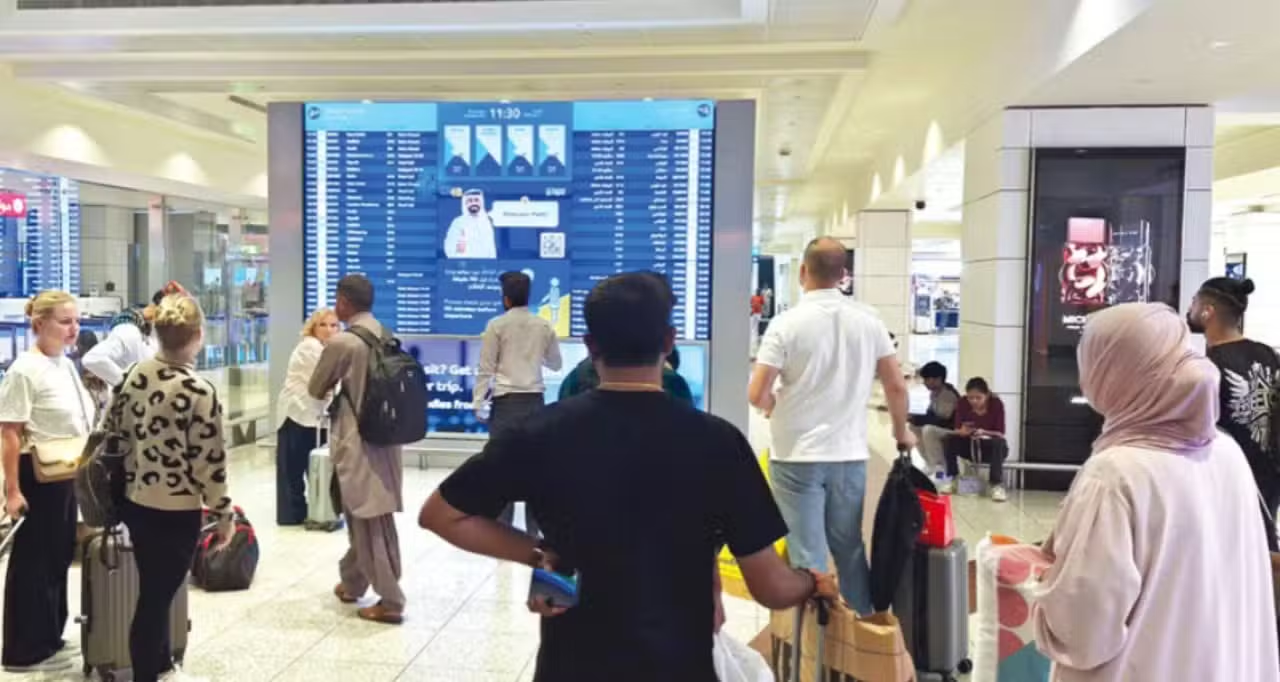
Emirates Airlines announced a series of limitations on its flights and the consequent extension of rebooking or refund options for affected customers. The decision was driven by the closure of airspace in several regions, directly impacting the airline’s operations in the period between February 28th and March 31st. Tal measure aims to mitigate inconvenience for passengers, who now have until April 30 to adjust their travel plans. The company has emphasized safety as a top priority, while also being dedicated to maintaining clear and continuous communication with its travelers, recommending constant checking of flight status.
The airline explained that the partial reopening of airspace made it possible to operate a restricted number of regular flights, on a temporary basis and until future updates. Esses flights are now available for booking, with priority being granted to customers who already had previously confirmed reservations. Caution in managing operational resources reflects the complexity of the scenario and the need to quickly adapt to regional dynamics that impact aviation.
For connecting travelers, Emirates specified that the continuation of the trip via Dubai is subject to confirmation of the subsequent flight to the final destination. Essa policy ensures that only passengers with fully validated itineraries proceed, avoiding backlogs and logistical problems at the Aeroporto Internacional and Dubai terminals. Coordination between the different segments of the flight is vital for the fluidity of operations in a context of restrictions.
Operational impact and flexibility for passengers
The gradual reopening of airspace allowed Emirates to resume part of its operations, but at reduced capacity. The company is allocating available flights based on a priority system, initially benefiting passengers who already had tickets issued for the interruption period. Este process seeks to reaccommodate as many customers as possible, minimizing the impact of unexpected cancellations and offering viable alternatives.
Flight restrictions in the region require careful management of passenger flow, especially those using Dubai as a connecting hub. Emirates’s clear directive on the need to confirm the next flight in Dubai is crucial to prevent travelers from being stranded at the airport. Esta measure is an example of the operational adaptation that airlines need to implement in scenarios of regional instability.
The context of airspace closures in different regions of the world can range from geopolitical issues to natural events, requiring airlines to be remarkably responsive and flexible. Essas interruptions not only change routes and schedules, but also generate a ripple effect throughout the air transport logistics chain. Emirates, as one of the largest global operators, is frequently faced with the need to restructure its network to ensure security and continuity of services.
Crucial guidance before heading to the airport
The airline has warned that travelers should not go to the airport without prior confirmation of their flight reservation. Essa recomendação visa evitar aglomerações e transtornos, tanto para os passageiros quanto para a equipe operacional do aeroporto, especialmente em um período de instabilidade nas operações.
It is essential that customers continually check the status of their flights via the official emirates.com website and check their email inboxes. The company uses these channels to send important notifications about any changes or cancellations that may arise, ensuring that information reaches passengers in a timely manner.
Procedures for rescheduling and refunding tickets
Customers who made their reservations through travel agencies are advised to contact them directly. Agencies have specific protocols to assist in rescheduling flights or processing refund requests, in accordance with Emirates policies and the terms of the original reservation.
For those who booked tickets directly with Emirates, the company offers direct contact through its customer service channels or the possibility of sending a refund request through an online form. Esta flexibility aims to facilitate the process for customers, offering different ways to resolve their needs.
Updating contact information in the “Manage Reservas” section on the Emirates website is an essential preventative measure. Manter this up-to-date data ensures that passengers promptly receive the latest notifications about the status of their flights, including information about changes or possible cancellations, ensuring efficient and uninterrupted communication.
Temporary closure of check-in points at Dubai
Emirates has informed that all check-in points at Dubai are temporarily suspended until further notice. Esta measure is part of a larger effort to manage passenger flow and ensure operational safety in a period of significant adjustments to flight schedules. The decision reflects the top priority given to the safety of travelers and staff.
The company reiterated that the safety of passengers and all employees remains its main concern. In situations that require extraordinary operational measures, Emirates prioritizes actions that safeguard the integrity of everyone involved, even if this involves temporary changes to usual services.
Such check-in point closures have wider implications for airport operations, requiring coordination between the airline, airport authorities and other service providers. Adapting quickly to these changes is essential to maintaining order and efficiency, despite the challenges posed by the situation.
The company will continue to closely monitor developments in the situation and promises to update its operational schedule as developments unfold. The most recent and accurate flight information will always be published on its official website, serving as the main source of consultation for all passengers.
Context of restrictions and panorama of air transport
The scenario of restrictions in airspace, whether due to security reasons or other unforeseen circumstances, generates a significant impact on the global aviation industry. Airlines face complex challenges, ranging from redesigning routes and rearranging crews to managing additional costs and coordinating with multiple regulatory bodies. Rapid response capacity and operational flexibility become crucial for the survival and reputation of companies in this volatile environment.
These unforeseen situations highlight the importance of agility and resilience in the air transport sector. Companies need to develop robust contingency plans and invest in technologies that allow effective communication with passengers. The way an airline manages such crises, from transparency in communication to offering practical solutions for travelers, is a determining factor in maintaining customer trust and loyalty in the long term.
Response from authorities and international cooperation
In contexts of air restrictions, the actions of civil aviation authorities and international cooperation are essential for the safety and order of air traffic. Decisões regarding the closure or reopening of airspace are taken based on rigorous safety assessments and often involve coordination between different countries and international regulatory bodies, such as Organização of Aviação Civil Internacional (ICAO). Essa collaboration is vital to establish safe corridors, manage aircraft flow and mitigate risks in areas of instability, ensuring that flight operations take place under the most controlled conditions possible. Communication between governments and airlines is a fundamental pillar for a coordinated and effective response.
Commitment to safety and customer service
Emirates reinforces its unwavering commitment to the safety of its passengers and staff, prioritizing this fundamental principle in all its operational decisions. The airline works to offer the best customer service, even in the face of challenging circumstances that require significant adjustments to its operations.
Emirates, flights, rebooking, refund, airspace, Dubai
air travel emirates flight restrictions