

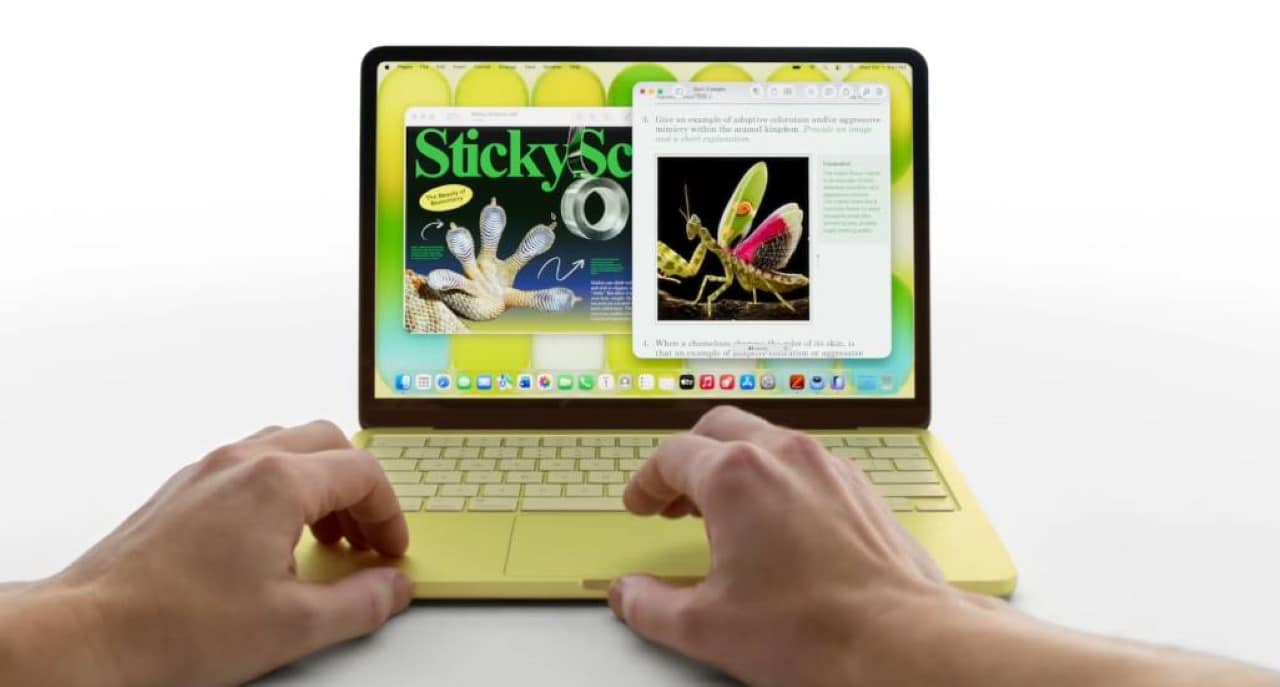
Apple announced the launch of the MacBook The equipment adopts the A18 Pro processor, the same one present in the iPhone 16 Pro, with a 5-core GPU, and promises adequate performance for everyday tasks. The company’s strategy focuses on users who already have an iPhone and are looking to migrate to an Mac for the first time, taking advantage of the high compatibility between the devices. The base 256 GB model does not include Touch ID, a feature only present in the 512 GB version.
The MacBook Neo maintains a fanless form factor, similar to the MacBook Benchmarks indicate that the A18 Pro outperforms the M1 chip in some single-thread tests, but heat can affect long workloads. The Apple highlights that the larger size of the notebook compared to the smartphone helps with heat dissipation, allowing comfortable use in common scenarios.
Reduced technical specifications for competitive price
The equipment has a fixed RAM of 8 GB, with no possibility of later upgrade. Essa configuration meets basic uses, but experts point out that at least 16 GB is recommended for advanced features, such as those related to Apple’s artificial intelligence. The limitation may result in slowdowns in heavy multitasking or more demanding applications.
The battery has a capacity of 36.5 Wh, equivalent to around 70% of that found in the MacBook Air, which reduces battery life. The weight remains close, at around 1.23 kg, thanks to the use of a lithium-ion battery instead of a polymer. Usuários need to consider the impact on days of prolonged use without access to sockets.
Doors and screen with cost-cutting adjustments
The notebook has two USB-C ports, one being USB 3 for faster data transfer, 4K video output on external monitors or storage connection, and the other USB 2, which is more limited. Essa configuration allows for simultaneous charging and practical use, but requires planning for multiple connections.
The screen measures 13 inches, slightly smaller than the 13.6 inches of the MacBook Air, a difference that can influence the visual experience in detailed work. The trackpad does not mention support for pressure detection in official announcements, an aspect that differs from the Air model and requires real tests for complete evaluation.
Target audience and migration strategies
The Apple targets the MacBook Neo primarily at iPhone owners who still use Windows computers for school or professional reasons. No Japão, where the iPhone holds a significant share of the smartphone market, the company prepared specific materials to facilitate the transition from Windows to Mac, emphasizing seamless integration between devices.
In corporate environments, the affordable price allows the equipment to be classified as a supplyable item, simplifying purchase, rental or replacement processes in business fleets. The strategy seeks to expand the user base Mac in segments where cost was a previous barrier.
Balanced performance for everyday use
The A18 Pro processor delivers enough performance for browsing, document editing, video calls and media consumption. Testes comparatives show positive results in light to moderate tasks, aligned with the line entry positioning.
Limitations appear in scenarios of prolonged intensive use, where the absence of fans and fixed memory impose natural restrictions. Apple positions the model as an initial option for those who prioritize portability and the iOS ecosystem.
Considerations for Potential Buyers
Users should evaluate the base model without Touch ID, which requires entering a password in lockout situations. The 256GB configuration covers basic storage, but expansions via the cloud or external drives are necessary for larger files.
The MacBook The balance between price and cut features defines the product as a strategic gateway.
Comparison with line Air maintains clear differences
Differences such as non-expandable memory and smaller battery highlight the focus on cost-benefit. Modelos Air are still recommended for those who need more autonomy or advanced features.
The presence of USB 3 in one of the ports facilitates external connections, partially compensating for reductions in other areas.
The announcement reinforces Apple’s tendency to diversify input options, adapting iPhone technologies to affordable notebooks.