

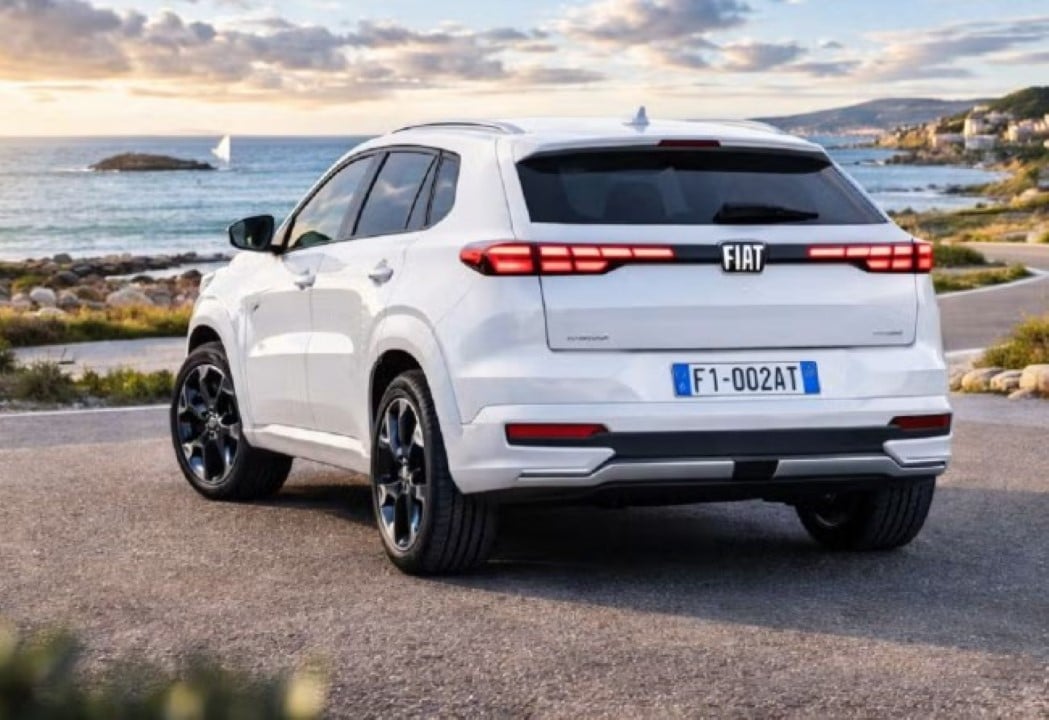
Fiat moves decisively forward in the development of its next sport utility vehicle, designed specifically to meet the growing global demand for space, versatility and energy efficiency. The new project uses the Smart Car platform from the Stellantis group, sharing the architecture with recent models from partner brands, which allows the optimization of production costs and guarantees high industrial efficiency. The initiative aims to strengthen the manufacturer’s presence in the family segment, offering a robust alternative that combines the ability to transport more passengers with modern electrified engine solutions.
The official presentation of the model is scheduled to take place in the second half of the year, marking a fundamental step in the renewal of the Italian brand’s portfolio. With an estimated length of between 4.4 and 4.5 meters, the car was designed to maximize the use of internal space, prioritizing occupant comfort and cargo capacity. The automaker’s central strategy is to position the vehicle as a rational choice in a market increasingly saturated with high-cost alternatives, offering accessibility and functionality.
One of the main innovations of this project is the possibility of configuration for seven seats, which gives a significant competitive advantage over direct competitors. Essa feature allows the new SUV to fill a gap in the market, delivering a practical solution for large families who do not wish to migrate to minivans or large SUVs. Planning focused on eliminating superfluous elements, adopting a modular design philosophy that preserves the affordable value proposition, a historic characteristic of the Panda line.
Design and functionality strategy
The aesthetics of the new vehicle follow a visual language that emphasizes robustness and simplicity, inspired by geometric concepts that directly refer to the car’s functionality. The exterior design features straight lines and square shapes, moving away from traditional curvy silhouettes to create a solid and distinct appearance. On the front, there should be LED optical sets with pixelated elements, giving a technological and retrofuturistic air that modernizes the brand’s identity.
The design concept extends to the interior, where ergonomics and ease of use are absolute priorities for the driver and passengers. The cabin was designed to be spacious, with a high ceiling that increases the feeling of airiness and thermal comfort. Durable and easy-to-clean materials must be used for finishing, reinforcing the utilitarian proposal of the model. The company seeks to offer an environment where technology serves the user in an intuitive way, without excesses that make the final product more expensive or make daily interaction with the car difficult.
Para To highlight the mixed-use vocation of the model, both in urban traffic and leisure travel, practical elements were incorporated:
– Barras functional roof for transporting additional loads;
– Molduras on wheel arches for robust protection;
– Substituição of chrome using recycled and sustainable materials;
– Minimalist Abordagem that conveys resistance and reliability.
Motorization and energy efficiency
The mechanical engineering of the new SUV was designed to offer versatility and economy, based on mild hybridization technology (MHEV). The main system must have a voltage of 48 volts coupled to the combustion engine, optimized to reduce pollutant emissions and fuel consumption. The 1.2 PureTech engine, widely used in the automotive sector, will work together with an auxiliary electric motor integrated into the dual-clutch transmission, guaranteeing adequate power for the size of the vehicle.
The manufacturer has also prepared fully electric versions of the model to serve markets that require zero emissions and follow strict environmental standards. Essas variants will be equipped with lithium iron phosphate (LFP) batteries, chosen for the ideal balance between production cost and long-term durability. The estimated power of the electric motors varies depending on the version, ensuring sufficient performance for everyday use and short trips, maintaining the focus on energy efficiency and low maintenance costs.
The multi-energy platform allows the vehicle to be manufactured on flexible assembly lines, adapting to the demand for different types of propulsion. The mild hybrid system allows maneuvering and driving at low speeds using only electrical energy in traffic jams, which significantly contributes to fuel savings in the urban cycle. Essa technical flexibility is a key factor in the aggressive pricing strategy that the brand intends to adopt.
Market positioning and production
The launch of this sport utility vehicle represents a clear commercial offensive to capture a larger share of the affordable family car segment. The objective is to compete directly with brands that have consolidated their position by offering low-cost, high-functionality products. The initial price estimate for the Europa is around 20 thousand euros for the hybrid versions, an extremely competitive value considering the size of the vehicle and its capacity for seven passengers.
Production must be allocated to strategically positioned factories, such as Sérvia or Marrocos, where operating costs allow maintaining the profit margin without inflating the final price to the consumer. Essa industrial logic is the basis of the proposal to democratize modern family mobility. The model is not intended to be a luxury item, but rather a rational, safe and connected transport tool.
The Fiat reinforces its commitment to accessible mobility by focusing on intelligent simplicity. The new SUV, often referred to by the specialized press as “Giga Panda”, symbolizes the brand’s transition to an electrified future, but without giving up its DNA of creating popular and creative cars. The combination of ample internal space, efficient motorization and fair price places the model as one of the most anticipated launches by the rational consumer.