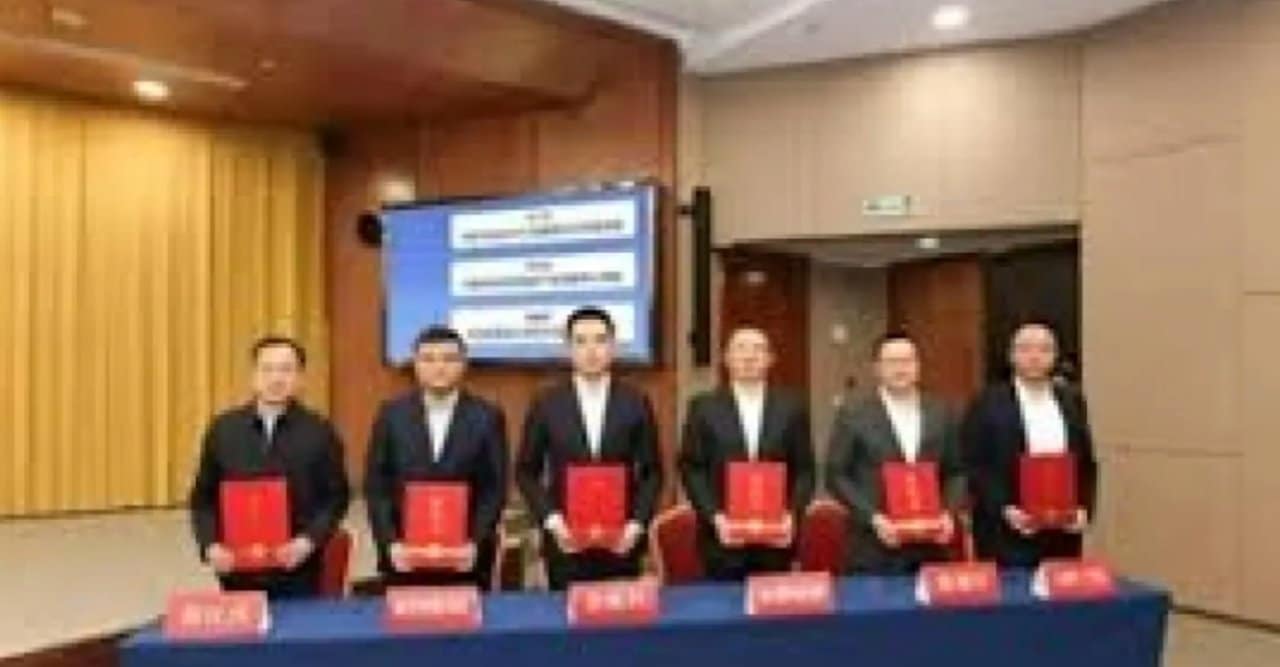
In a strategic move to boost its artificial intelligence computing infrastructure, the city of Hangzhou has signed a package of 12 projects valued at 25.5 billion yuan, equivalent to approximately US$3.71 billion. The initiative, implemented on February 28, aims to strengthen the local development of advanced hardware and software for AI.
The official announcement came during an AI development summit, held at Centro Cívico of Hangzhou, where city officials and business leaders met to outline the region’s next steps in the technology sector. Este collective effort highlights Hangzhou’s ambition to position itself as an innovative hub in artificial intelligence.
The signing of these agreements marks a significant advance in the construction of a robust technological base, fundamental for the city’s economic growth and global competitiveness in the digital innovation scenario. A focus on creating a cutting-edge AI computing infrastructure is a central pillar of this strategy.
Agreement details and company Sunrise
Among the 12 signed projects, the “R&D Project for GPUs of Alto Desempenho and Chips of Inferência” from the company Sunrise stands out. Este is the only project explicitly dedicated to AI inference graphics processing units (GPUs), underscoring the strategic importance of these components to advancing the technology.
Sunrise, a spin-off of SenseTime founded in late 2024, develops high-performance GPUs and multimodal inference chips. Sua participation in this agreement reinforces its expansion in Hangzhou and solidifies its role in the city’s innovation structure.
Expansion of Sunrise and strategic vision
Sunrise co-CEO, Wang Zhan, emphasized the relevance of computing power as a determining factor for future industrial development, transcending mere AI modeling capabilities. Essa perspective highlights the importance of investments in robust hardware to support the growing demands of artificial intelligence.
The company has a history of validated products across multiple generations and has already reported “delivery on a scale of ten thousand boards”, indicating considerable production and deployment capacity. Sunrise’s experience will be crucial to the success of the project and to the consolidation of Hangzhou’s AI infrastructure.
Sunrise has already established itself as a key player in the technological ecosystem, with proven expertise in providing advanced solutions. Seus multimodal inference chips are designed to handle complex data processing tasks, enabling AI systems to make faster and more accurate decisions in diverse applications.
The agreement represents a mutual commitment between Sunrise and the city of Hangzhou, aligning the company’s growth objectives with the metropolis’ technological development aspirations. The collaboration promises to catalyze innovation not just in the field of GPUs, but across the entire artificial intelligence value chain.
Multi-vendor scenario at China
The agreements in Hangzhou reflect a broader initiative in China to promote the domestic development of multi-stakeholder AI computing hardware. Essa strategy aims to reduce dependence on foreign technologies and strengthen the country’s technological self-sufficiency.
The Ascend series of Huawei, notably the 910C model, has been touted as a leading national platform for AI training and inference. The company is preparing for large-scale shipments, seeking to meet growing demand despite limitations in domestic production.
Estimates indicate that Huawei shipments for 2025 could be limited to around 200,000 units, which, while significant, points to ongoing challenges in scaling advanced chip production in the country. Esse context highlights the urgency of initiatives like that of Hangzhou.
This multisectoral approach, with the involvement of several companies and government support, demonstrates a dynamic and competitive ecosystem. The ultimate goal is to create a resilient and innovative AI chip supply chain capable of driving the next generation of technological advancements.
Competition and other national initiatives
In addition to Huawei, other national suppliers are intensely active in the AI hardware market. The Cambricon MLU series, for example, appears on purchasing lists of government and business entities, consolidating its presence as a viable alternative in the sector.
An China Unicom data center, located at Xining, Qinghai, has already implemented several in-house developed AI chips. Esses include products from companies such as T-Head, Alibaba, MetaX and Biren, demonstrating the diversity and innovation capacity of Chinese companies.
Companies Moore Threads and Enflame Technology are also scheduled to supply chips for subsequent phases of this data center and related cloud projects. Enflame, in particular, is moving forward with an IPO on STAR Market, capitalizing on its growth and new product development. The movement of these companies indicates a market in full swing, with significant investments and a constant search for innovative solutions to meet the demand for computational power in AI.
Impact of project Sunrise on Hangzhou infrastructure
Hangzhou’s leaders presented the package deal as an effort to strengthen local computing capacity, and Sunrise’s GPU R&D project is seen as a direct contribution to that goal. The company says its work will support the city’s AI computing infrastructure and fuel broader innovation initiatives aligned with the city’s strategy.
This investment not only boosts Hangzhou’s immediate technological capability, but also lays the foundation for sustainable growth, attracting talent and new ventures. The partnership with Sunrise is a central pillar in building a robust AI ecosystem, capable of competing globally and transforming the city into a center of technology excellence. The long-term vision includes the integration of these new capabilities into diverse sectors of the local economy, from smart manufacturing to financial services and healthcare, creating an environment conducive to innovation and the practical application of artificial intelligence for the benefit of the population and companies.
Next steps and market expectations
The sector’s movements, cited in conjunction with the Hangzhou announcements, indicate the immediate next steps for several companies. Huawei continues to prepare for large-scale shipments of its Ascend series hardware, consolidating its position in the market.
Moore Threads and Enflame are scheduled to supply chips in later phases of an China Unicom data center at Xining, while Esses concrete milestones have been identified by companies and local disclosures as the next steps in deployment and capital activity, signaling a dynamic future for the semiconductor and artificial intelligence sector in China.
