

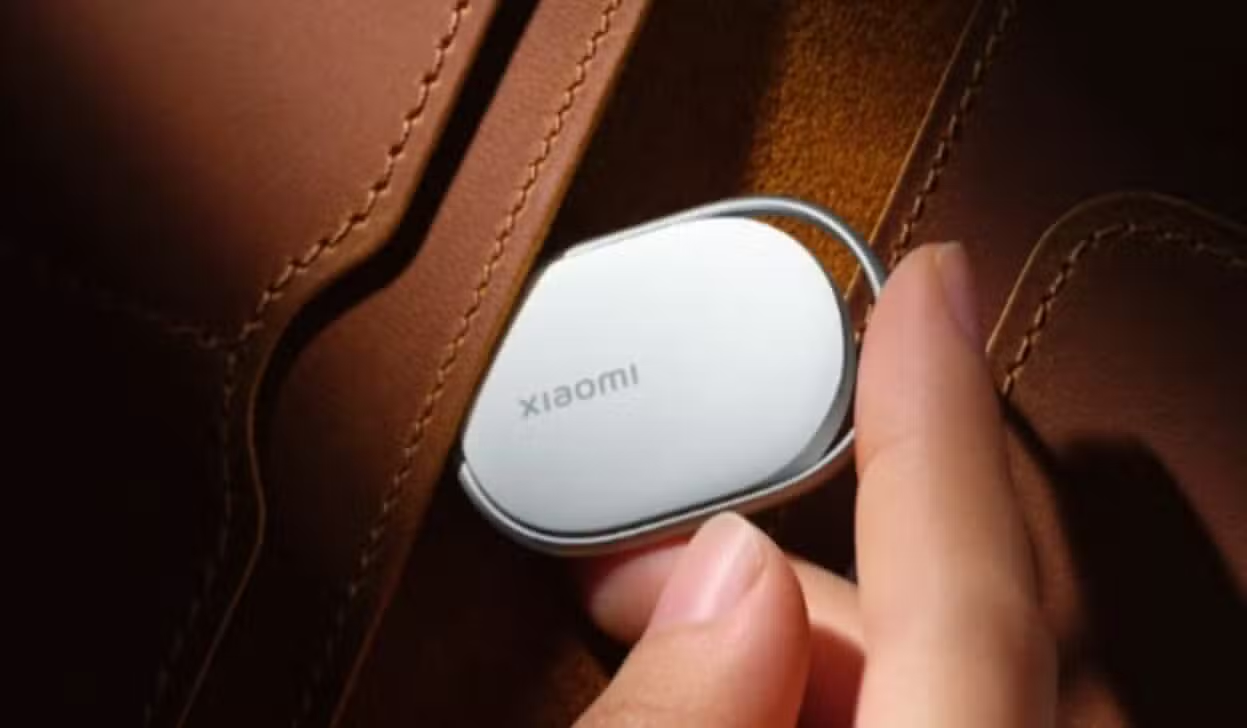
Agência Nacional of Telecomunicações (Anatel) granted official approval for the Xiaomi Tag, the Chinese giant’s new smart tracker, paving the way for its commercialization in the Brazilian market. With regulatory approval, the device is ready to be sold and used nationwide, promising to expand the options for consumers looking for object location solutions.
The device, which arrives as a strong competitor in the tracker segment, stands out for its versatility. Ele was designed to operate both with devices running Android, using the Find Hub network from Google, and with iPhones, integrating with the Buscar system from Apple. Essa broad compatibility positions it strategically, targeting a diverse audience that seeks interoperability between different ecosystems.
The expectation is that the arrival of the Xiaomi Tag will shake up the smart accessories market, offering a cost-effective alternative. Embora the official launch date and specific prices for the Brasil have not yet been announced by the manufacturer, approval by the Anatel signals that the start of sales is imminent.
Regulatory authorization for Brasil
The approval of the Xiaomi Tag by the Anatel, registered under model number M2543T1, is a crucial step for any electronic product that wishes to be legally sold in the country. Este process ensures that the device meets all safety and electromagnetic compatibility standards required by Brazilian legislation, protecting both consumers and the telecommunications network.
For Xiaomi, this approval represents the completion of a long bureaucratic process, essential for the expansion of its portfolio of smart products in the national market. The company has constantly invested in bringing innovations, and its entry into the personal trackers segment reinforces this strategy of offering a complete technology ecosystem for users.
The arrival of new devices approved by Anatel always raises expectations among the public, especially when it comes to brands with strong appeal like Xiaomi. Consumidores and technology enthusiasts follow these announcements closely, eager to get access to the latest industry news, which often arrive first in European and Asian markets before reaching América Latina.
Universal tracking technology
The operation of the Xiaomi Tag is based on Bluetooth 5.4 technology, complemented by NFC, allowing it to be detected by a wide range of modern smartphones. Essa collaborative approach is critical to its location system, as any compatible cell phone in the vicinity of a lost item can help pinpoint its location.
Unlike solutions restricted to a single ecosystem, the Xiaomi tracker can integrate with both the Apple “Search” network, present in millions of iPhones around the world, and with the recently launched “Find Hub” from Google for Android devices. Essa feature eliminates the brand barrier of the user’s smartphone, making searching for lost objects a more inclusive experience.
Tracking effectiveness directly depends on the density of compatible devices in the vicinity of the object. In urban areas or places with large circulation of people, the probability of an Xiaomi Tag being detected and its location being reported is significantly high. Isso gives the device a notable practical advantage for everyday use.
The ability to operate on multiple platforms is an important competitive differentiator, positioning Xiaomi Tag as a more comprehensive solution. Usuários of Android and iOS can benefit from the same tracking technology, making life easier for families with different types of smartphones or for individuals switching between operating systems.
Device design and durability
With a discreet and functional design, the Xiaomi Tag is just 7.2 millimeters thick, making it compact and easy to attach to various items without adding significant bulk. The white plastic finish gives it a clean, minimalist look, in line with the aesthetics of many smart accessories available on the market today.
The device’s power is supplied by a CR2032 battery, easily replaceable by the user, which contributes to the tracker’s longevity. The estimated autonomy of one year is a positive point, reducing the frequency of maintenance and ensuring that the accessory remains functional for long periods without the need for constant recharging or replacement.
Where Xiaomi Tag differentiates itself and where it doesn’t
One of the points of attention in the Xiaomi Tag, especially when compared to the latest Apple AirTag, is the lack of support for Ultra Wideband (UWB) technology. Enquanto Apple’s second-generation AirTag uses a UWB chip to offer millimeter-precision localization, indicating the exact direction of the object to a few centimeters, the Xiaomi device depends on proximity via Bluetooth.
This technological difference means that, to find an item within a room, for example, the Xiaomi Tag user will have an indication of the area, while the AirTag user will be able to be guided with greater accuracy, like a “radar” on a smartphone. UWB’s accuracy is particularly useful indoors or when the object is hidden among other items.
However, there are rumors and codes found in Xiaomi’s HyperOS operating system that suggest the development of a possible “Pro” version of the tracker, which could include UWB support. Caso this version comes to fruition, the Xiaomi could further level the competition in terms of location accuracy, offering a more advanced option for consumers looking for this feature.
Price perspectives in the national market
To estimate the price of Xiaomi Tag in Brasil, it is useful to observe the values practiced in other markets where the product has already been launched. Na França, for example, the tracker is sold for around €17.99 per unit, which, in a direct conversion to the real, represents approximately R$110, considering the current price. Há also a pack of four units, sold for €59.99, or around R$370.
Considering import taxes and other operational costs that affect electronic products in Brasil, it is likely that the final price to the consumer will be slightly higher than these direct conversions. However, Xiaomi is known for its strategy of offering products at competitive prices, which suggests that the Tag should reach the market at an attractive price.
A well-positioned price will be crucial for Xiaomi to gain a significant share of the Brazilian tracker market. Offering a functional solution compatible with both operating systems, at an affordable price, can be a great attraction for consumers looking for a more economical and equally efficient alternative to existing devices.
The arrival of Xiaomi in the tracker segment
Xiaomi’s entry into the personal tracker segment marks a strategic expansion of its smart device ecosystem, which already encompasses smartphones, smartwatches, headphones and a wide range of connected home products. By offering a tracker compatible with the main mobile platforms, the company not only expands its market reach, but also strengthens its position as an innovator that seeks to integrate technology into users’ daily lives. Este movement reflects Xiaomi’s ambition to consolidate its brand as a complete supplier of technological solutions, capable of competing in different product categories, and highlights the importance of an increasingly connected global market, where interoperability becomes a decisive factor for the success of new launches and acceptance by consumers.
Potential uses and everyday scenarios
The Xiaomi Tag offers a practical solution for locating a variety of items, from keys and wallets to backpacks and luggage. Sua versatility allows users to attach it to any valuable or frequently used object that is at risk of being lost, providing an extra layer of security and peace of mind in the busy daily life of cities.
The future of smart location in the country
The approval of the Xiaomi Tag signals a significant advance in the market for location devices in the Brasil, opening the door to tougher competition and, consequently, to more innovations. The arrival of products with broad compatibility and competitive prices is beneficial for the consumer, who gains more options and power of choice.
This scenario encourages other companies to improve their own offerings, whether through technological improvements or pricing strategies. The tendency is for us to see an increase in demand for devices that simplify life and help with personal organization and asset security.
The evolution of tracking technology, with the promise of future versions with UWB and increasing integration with virtual assistants, suggests a future where object location will be even more intuitive and precise. Brasil, a market eager for technological innovations, is ready to absorb these innovations and incorporate them into the daily lives of its citizens.
Official launch and availability
With the certification of the Anatel guaranteed, the next step for the Xiaomi is the official announcement of the launch of the Tag in the Brazilian market. The expectation is that the company will soon reveal details about the date of arrival in stores and distribution channels.
Consumers can expect the device to be available both in physical stores and online, through retail partners and Xiaomi’s own e-commerce in the country. Acompanhar the brand’s official channels will be essential for anyone who wants to purchase the tracker as soon as it becomes available.