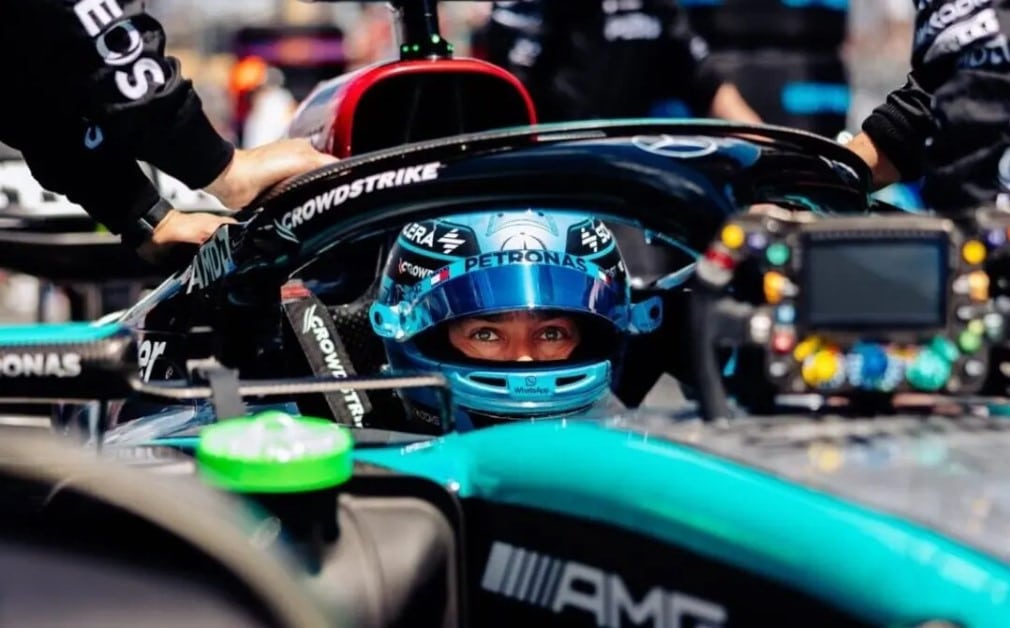
British driver George Russell recorded the fastest time during third free practice for Grande Prêmio of Austrália on the Albert Park circuit. The preparatory session was ended prematurely after a serious collision involving his teammate in Mercedes. The timer was ticking down to the final minutes when the red flag was raised by the race direction, making it impossible to improve the marks set by the competitors. The 1min19s053 mark guaranteed temporary leadership in the track activities.
Just behind the leader, Ferrari demonstrated a competitive pace with its two cars appearing in the next positions on the timesheet. Lewis Hamilton, now wearing the colors of the Italian team, set the second best lap, being exactly 0s616 behind the lead. Third place went to Charles Leclerc, who completed the turn with a disadvantage of 0s774, highlighting the strength of the equipment in high-speed sections.
The times recorded by the first placed in the session defined the following provisional order:
- George Russell (Mercedes): 1min19s053
- Lewis Hamilton (Ferrari): +0s616
- Charles Leclerc (Ferrari): +0s774
- Oscar Piastri (McLaren): +1s000
- Isack Hadjar (Red Bull): Quinta general position
Garages immediately began analyzing data collected during fast spins, as the disruption limited long-race simulations. Engenheiros and mechanics work with the available information to adjust the ideal configuration for the qualifying session that defines the starting order.
Accident interrupts activities on the Albert Park runway
Kimi Antonelli lost control of his single-seater on the approach to turn nine, resulting in a high-energy crash into the protective barriers. The impact caused severe damage to the front and rear parts of the vehicle, scattering debris across the escape area and the main path of the circuit. Medical rescue teams and runway inspectors acted promptly to extract the pilot and begin cleaning the affected sector. Seguindo the category’s mandatory medical protocols, the competitor was sent to the racetrack’s medical center for detailed evaluations, being discharged shortly thereafter without apparent injuries.
The forced stoppage had a ripple effect on the planning of all teams present in the pit lane. Sem the possibility of returning to the track due to the scant time remaining on the countdown clock, vital soft tire wear assessment programs were summarily scrapped. Mercedes is now racing against time, having less than three hours to rebuild the damaged car before the pits open to define the starting grid, requiring an intense logistical and mechanical effort from its employees.
Team performance on the Australian circuit
McLaren sought to maximize performance in front of the local public, focusing its efforts on aerodynamic stability in medium speed corners. Oscar Piastri obtained the fourth best record, keeping the team based on Woking in direct competition for the front rows of the grid. The mechanical setup of the orange car demonstrated consistency under heavy braking.
Inside the Red Bull garage, the situation required extra attention from performance engineers. Max Verstappen reported continued difficulties with the steering system and grip on the front axle, finishing the session only in sixth place. The team made several changes to the floor height, but the Dutchman maintained a conservative pace.
The debutant Isack Hadjar surprised by placing the second Taurus car in fifth place overall. The driver focused on clean and progressive laps, avoiding aggressive curbs and building confidence with each pass along the 5,278 meter track. Sua initial performance delivered crucial data for engine calibration.
Adaptation to new aerodynamic regulations
Several teams took advantage of the session to test configurations that simulate the future aerodynamic demands of the category. Intentional drag and downforce reduction was observed in packages introduced by Mercedes and Ferrari. Additional Sensores were installed on the front wings to measure airflow in real track conditions.
The efficiency of the drag reduction system has become a central point of technical investigation. Telemetry data indicated that the final speed on the straights increased significantly compared to previous sessions. Pilotos reported a noticeable difference in the braking point at the end of the activation zones.
The behavior of the soft compounds under these new configurations sparked debate on team radios. Thermal degradation in the rear wheels appeared earlier than predicted by the factory simulators. Mechanical grip became the limiting factor in traction exiting slow corners.
Strategists calculated the time losses caused by lateral slippage on rising curves. The need to preserve rubber forced changes in the power delivery mapping of hybrid engines.
Situation of intermediate teams on the grid
The intermediate squad faced a variety of problems that compromised the collection of essential information for arranging the cars. Williams dealt with operational failures that kept Carlos Sainz and In contrast, Audi showed signs of technical evolution, with Nico Hulkenberg recording the ninth fastest time after resolving electronic mapping issues that had hampered performance on Friday. Aston Martin experienced moments of tension when Fernando Alonso had extreme difficulties in warming up the tires, initially falling outside the minimum time rule in their first attempts. The Spaniard needed multiple warm-up laps to get the compounds into the operational temperature window, managing to record a valid time only in the moments before the red flag, ensuring his regular participation in the remainder of the sporting event.
Weather conditions affect grip
The ambient temperature stabilized at 25 degrees Celsius changed the thermal behavior of the resurfaced asphalt. Rajadas of lateral winds hit the complex of fast curves, destabilizing the single-seaters at the entrance to the tangents. The rapid cooling of the track required attention during the initial calibration.
The gradual accumulation of rubber on the ideal trajectory was interrupted by the shutdowns. The absence of this natural rubberization means that grip levels will remain unstable for the next session. Pilotos will have to look for the braking limit without exact traction references.
Final preparations for the qualifying session
Engineering departments operate at maximum capacity to cross-reference telemetry data with information from simulators at Europa. The choice of rear wing level will define competitiveness in the three distinct sectors of the Australian circuit. Precision in executing the warm-up laps will dictate the pace at the decisive moment for the formation of the initial lines.
Racing strategies under analysis
Tire durability will determine whether teams adopt one-stop or two-stop tactics. The accentuated wear on the left front tire worries the technical directors responsible for race management. Traffic in the pit lane is also included in the probability calculations structured by the teams’ software.
Maintaining position on the track gains relevance due to the historical difficulty of overtaking on this specific route. Protecting the inside line in the first few corners after the start will be the focus of preparatory meetings between drivers and performance engineers before the red lights go out.
