

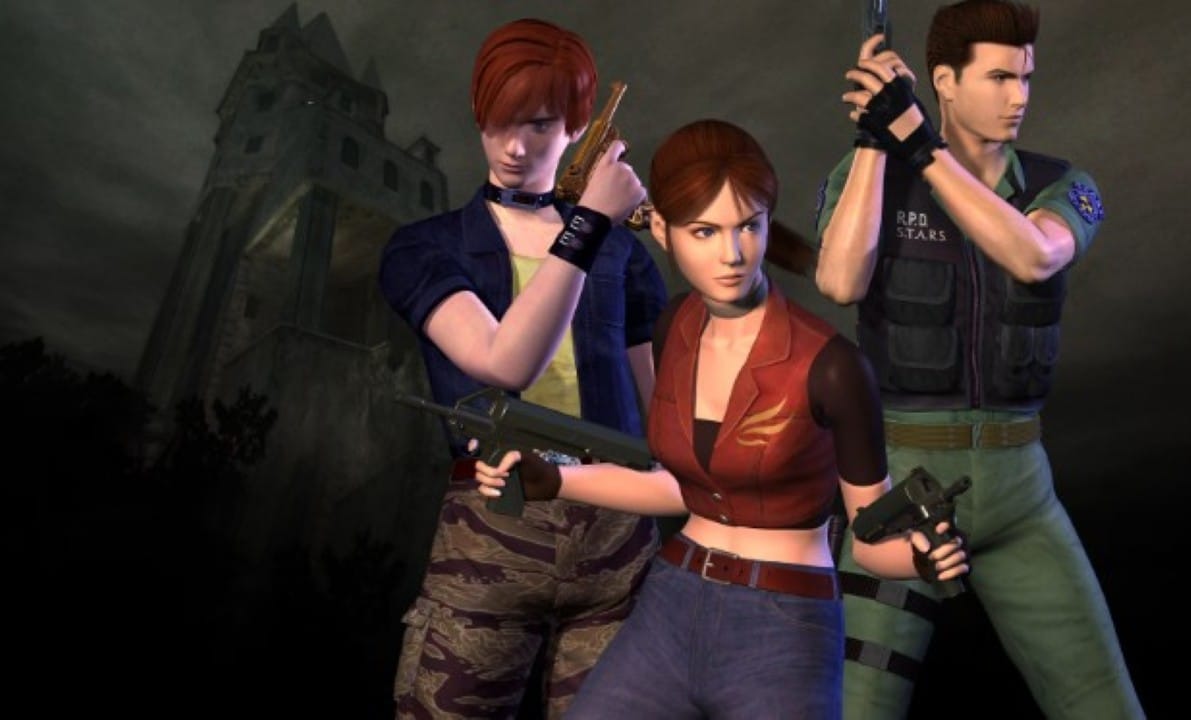
Recent behind-the-scenes information from the electronic games industry indicates that the developer responsible for the survival horror franchise starring the brothers Claire and Chris Redfield is working on the modernization of a classic released in the early 2000s. The project involves the total recreation of the original work, expected to arrive on the global digital entertainment market in 2027.
The corporate strategy aims to fill the Asian company’s calendar of major releases, maintaining the cadence of high-budget annual or biannual releases. The development uses the company’s proprietary graphics engine, widely recognized for delivering high visual fidelity and optimization on cutting-edge computing hardware platforms.
Experts in programming technology indicate that the current technical infrastructure allows for substantial improvements in game mechanics. The main change involves replacing the original fixed camera angles with an over-the-shoulder third-person perspective, bringing the experience closer to contemporary consumer and tactical gameplay standards.
Corporate planning and scheduling
The production company’s internal planning establishes a clear separation between the teams responsible for creating new titles and the groups focused on recreations of works from the catalog. Esta allocation of human and financial resources allows the coexistence of multiple large-scale projects simultaneously, without compromising daily operations.
Choosing the year 2027 for delivery of this specific project aligns with the high-performance gaming industry’s standard development cycle. Produções of high investment category require an uninterrupted period of three to four years to complete all stages of programming, scripting and level design.
The established schedule offers a safety margin for technical polishing and rigorous software quality control testing. Verification covers different hardware platforms to ensure the stability of the final product before the commercial distribution process in virtual and physical stores.
The company’s facilities house hundreds of developers dedicated exclusively to the continuous improvement of the internal graphics engine. The technology serves as a unified foundation for all of the company’s current intellectual properties, ensuring visual uniformity and reducing operational costs for training new employees.
Technological update and game mechanics
The transition from classic gameplay to modern standards requires programmers to modify enemy encounters and level design structure in profound ways. The reduced spaces of the prison and the Antarctic base present in the original work receive a complete digital architectural resizing to accommodate the new amplitude of the free camera. Inventory management and ammo scarcity, fundamental characteristics of the survival horror genre, undergo rigorous statistical rebalancing to maintain the level of difficulty required by veteran players without alienating the beginner audience.
The user interface gains minimalist contours to maximize the player’s field of vision during moments of exploring dark scenarios and armed combat. Reusing animation libraries and digital skeletons from previous projects speeds up the initial phases of prototyping and three-dimensional character modeling. The standardization of authoring tools facilitates workflow, ensuring that the transition between indoor and outdoor environments occurs smoothly, leveraging the solid-state storage of modern consoles and computers for instant data reading.
Structural changes and technical innovations
The technical elements planned for the new version include modifications to the original code base, directly affecting audiovisual immersion. The main changes documented in the development logs involve:
– Atualização complete global illumination system and high-resolution textures based on photogrammetry.
– Implementação of contemporary movement mechanics and real-time free aiming system.
– Expansão of explorable areas and restructuring of classic puzzles to adapt to the new format.
– Integração three-dimensional spatial audio for sound mapping of threats in closed environments.
The internally developed software architecture has changed the corporate workflow since its initial implementation, allowing the extensive use of photogrammetry, an industrial technique that scans real-world objects, textures and people for insertion into the digital environment with millimeter precision. Roupas, equipment and debris scattered across virtual scenarios acquire physical properties based on realistic mathematical calculations, responding to mechanical impacts, simulated weather conditions and dynamic heat sources. The scalability of the source code facilitates the conversion of the final product to the various platforms on the market, from high-performance computing systems to compact portable devices, maintaining stable frame rates per second. Engenheiros of software update the tool periodically with support for rendering technologies based on image optimization and light ray tracing, ensuring that the visual aspect of productions remains on the same level as competing North American and European studios. Centralizar development on a single programming platform eliminates the need to pay licensing fees to external supplier companies, reducing the overall production budget by a considerable margin for each project approved by the corporate board.
Financial impact and sales of the franchise
The franchise focused on corporate biological risk has accumulated more than one hundred and fifty million copies sold worldwide since its creation in 1996. The reconstructed versions segment represents a significant portion of this total global sales volume.
The recreation format attracts both the nostalgic public who experienced the original releases and new consumers who enter the electronic games market annually. Relatórios The producer’s recent fiscals demonstrate consistent operating profit margins in the sector.
The positive financial result is driven by digital distribution in the main console and desktop application stores. The absence of physical disc manufacturing costs and transportation logistics in most transactions maximizes the financial return on each unit sold online.
Narrative fidelity and scenario expansion
The backbone of the original story follows a young woman’s search for her missing brother, taking the protagonist to industrial complexes run by a multinational pharmaceutical corporation. The script for the new iteration preserves the central events and the chronology established in the brand’s official documents, expanding the dialogues.
Capturing facial and body movements with real actors replaces the hand-drawn animations of the two-decade-old version. The recording process takes place in studios equipped with sets of high-precision cameras, capturing anatomical details that provide direct realism to the interactions between the virtual models.
Asian financial market expectations
Investors in the financial market follow the movements of developers in search of concrete indications about the long-term launch calendar. The official announcement of large-scale projects directly influences the daily trading volume and the pricing of the company’s shares on the Asian stock exchange, reflecting the industry’s confidence in the studio’s ability to deliver.
Position in the producer’s historical catalog
The title originally designed for the Sega desktop console in 2000 has technical relevance for introducing fully polygonal environments into the main series. The definitive transition from pre-rendered two-dimensional backgrounds to three-dimensional backdrops represented a fundamental technological milestone at the time of its original retail distribution.
The availability of an updated version responds to documented requests from consumers and outlets specializing in the preservation of interactive media. The corporation maintains a strict policy of controlling information on industrial processes, awaiting financial reporting periods or major events to formalize the existence of new products to the consumer public.