

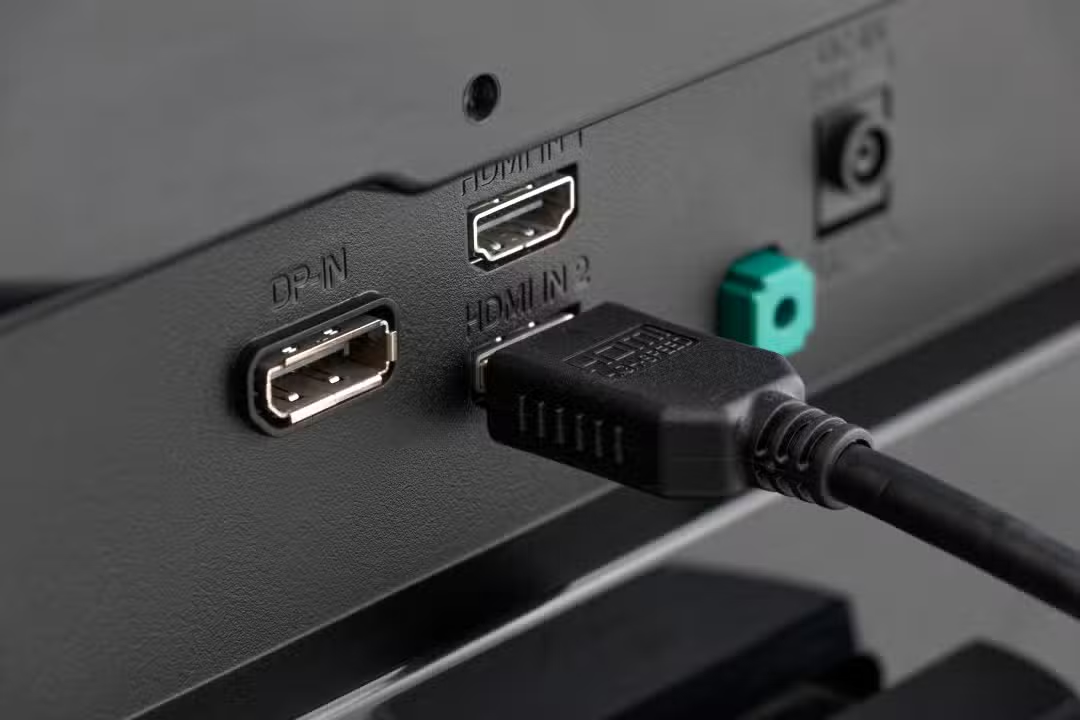
Consumers purchasing next-generation consoles and high-quality streaming devices are discovering an unexpected technical barrier in their living rooms. The initial configuration of these entertainment systems has become a task that requires specific knowledge about data transmission protocols and hardware.
Despite the high investment in modern screens capable of processing high-fidelity graphics, a significant portion of users do not enjoy the maximum visual quality promised by advertising campaigns. The true potential of the equipment remains dormant right after removing it from the box.
The root of the problem lies in the factory default configuration of today’s televisions, which intentionally restrict the data bandwidth of physical connection ports. Sem a direct intervention in the device’s menus, the equipment operates in a leveled state below, limiting the visual experience.
Corporate strategy to avoid communication failures
The decision by technology companies to ship televisions with connections configured in compatibility modes does not represent an engineering error, but rather a calculated damage mitigation strategy. By limiting the flow of information, operating systems prevent communication failures with older media players, traditional set-top boxes, and sound systems manufactured more than a decade ago. The priority for brands is to ensure that any connected device immediately displays a basic image, avoiding initial customer frustration. Commercial logic dictates that it is preferable to offer an inferior but stable image rather than run the risk of incompatibility with the ecosystem of devices that the buyer already has at home, which would generate an unsustainable volume of returns at retail.
When a modern television receives a video signal that exceeds the configured capacity of its input port, the system enters a hardware conflict state. The panel may experience intermittent black screens, chronic audio sync failures, or constant image flickering during content playback.
Direct impact on visual presentation and fluidity
Bandwidth restriction forces consoles and streaming devices to automatically reduce the quality of the signal sent to the screen. Instead of transmitting pure data, the system applies aggressive compression known technically as chroma subsampling, which degrades the purity of the original signal even before it is decoded by the television.
Blocking communication ports also affects the fluidity of animations, preventing players from using high frame rate mode. Sem the release of full transfer capacity, consoles limit video output to traditional standards, ignoring the machine’s internal processing power.
Main technical losses in media playback
The lack of optimization goes unnoticed by less demanding users, but drastically affects the precision required by interactive media and recent film productions. The main technical losses experienced by consumers who do not change factory parameters include the following performance drops:
– Redução in color depth, disabling the panel’s true ability to display billions of shades.
– Aparecimento of blurs in text and menu borders due to forced image compression.
– Bloqueio of 120 Hz refresh rate in fast-paced competitive games.
– Desativação of low latency automatic mode, generating noticeable delays in commands.
Fragmentation of nomenclatures in adjustment menus
Solving the problem requires owners to navigate complex interfaces, facing the lack of standardization in the nomenclature used by the different brands available on the market. Cada manufacturer adopts a unique marketing term to refer to exactly the same band unlocking technical function.
On televisions from the main South Korean brands, the release of ports is usually hidden in options called plus input signal or ultra-deep color settings. The user has to guess which submenu is the key to maximum quality.
Other manufacturers require users to access channel and external input settings to change the signal format to enhanced mode. The fragmentation of terms and menu paths makes it immensely difficult to create universal setup guides for lay consumers.
Requirement for certified physical infrastructure
Changing the television’s software settings represents only the first step in ensuring visual fidelity, and the use of an adequate physical infrastructure is imperative. Transporting uncompressed video data at high resolutions requires cables made with the highest quality materials and superior shielding.
To support the latest specifications that achieve extreme transfer speeds, users must use cables officially certified for ultra high speed. Modelos old ones physically limit the band, regardless of the setting chosen in the television menu.
Using an obsolete cable on a port configured for maximum capacity creates an immediate and insurmountable hardware bottleneck. The digital signal suffers severe degradation along the way, losing data packets before reaching the screen’s image processing board.
Uncertified cables or cables with internal damage cause constant connection drops, forcing the screen to flash repeatedly during intense use sessions. Verification of official cabling certification becomes a mandatory requirement for system stability.
Challenges in integrating high-performance computers
Users connecting high-performance computers to televisions face even greater challenges in managing data flow. Placas Modern video consoles generate a substantially greater volume of information than desktop consoles, requiring absolute precision in the configuration of the pixel format and the panel’s native refresh rate. A restricted port will force the computer’s operating system to autonomously reduce the resolution or apply extremely aggressive color compression, ruining the desktop usage and document reading experience.
Connecting computers requires televisions to be specifically configured in dedicated PC modes, a designation that disables much of the screen’s internal image processing to reduce delay in commands. Quando the port does not operate at full capacity, activating this mode becomes useless, as the system will try to compensate for the lack of data by applying artificial sharpening filters. Esses filters severely distort the operating system’s text fonts and graphics, causing rapid visual fatigue in the user.
Methodical management of connected devices
The transition to maximum data transfer capacity requires careful technical planning on the part of the user regarding all other devices connected to the entertainment panel. Sending high-frequency communication requests to hardware that does not have suitable electronic controllers causes critical digital recognition failures.
While modern consoles and high-end streaming set-top boxes require ports set to enhanced mode to function properly, older devices can experience severe instability if exposed to this same setting. Efficiently managing connections involves physically mapping which inputs should operate unrestricted and which should remain strictly in compatibility mode.
Development of intelligent detection protocols
The technology industry is working on developing smarter auto-sensing protocols capable of adjusting connection parameters based on the connected device without the need for human intervention. Engenheiros of software seek to map the specific communication signatures of different generations of hardware to create a dynamic switching system that is invisible to the consumer’s eyes. Até While this automation achieves an absolute level of reliability across all categories of screens available on the market, rigorous manual control remains vital to the full audiovisual experience. The responsibility for extracting the true potential of high-cost equipment remains entirely in the hands of the buyer, who needs to understand the technical specifications in their own living room to prevent significant investments in technology from being underutilized due to predefined software barriers in factories.