

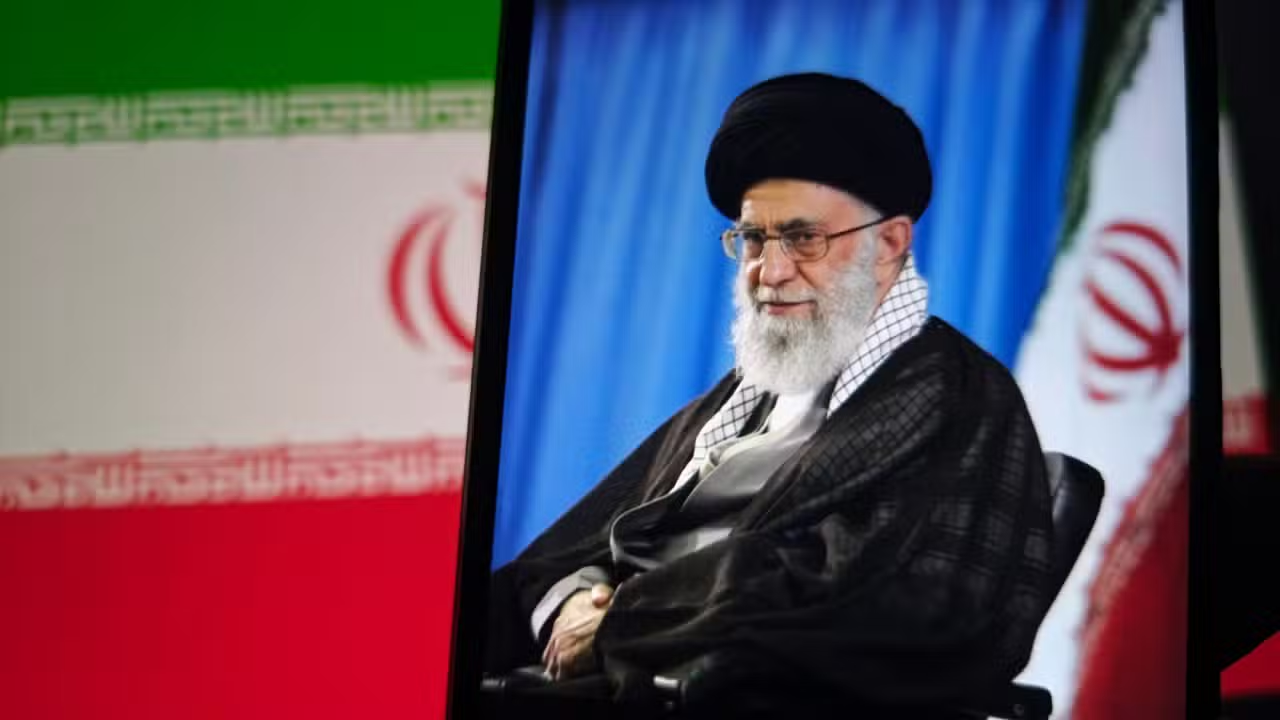
Assembleia of Peritos of República Islâmica made official the choice of Aos 56 years old, the new head of Estado takes control of a nation immersed in an armed conflict of wide proportions involving several powers of Oriente Médio. The transition of power took place through a remote session, motivated by the lack of security in the Iranian capital, marking a historic change in the local command structure.
Political rise and influence behind the scenes of the regime
The current ruler’s history is marked by a discreet but central role in the strategic decisions of the previous government. Durante decades, he coordinated intelligence operations and commanded military wings directly from the central office, without holding formal public positions in the Estado organization chart.
Its proximity to Guarda Revolucionária Islâmica guaranteed the necessary support to consolidate its name during the current crisis. Documentos leaked diplomats at the end of the 2000s already pointed out his ability to articulate behind the scenes of power, shaping internal and external policies.
During the 2005 presidential elections, political opponents reported the use of local militias to favor government allies. Tais events highlighted the control exercised over informal security mechanisms, fundamental for maintaining the established order.
In 2009, popular demonstrations openly questioned the possibility of a family succession, pointing out risks to the country’s political structure. The protests at that time reflected dissatisfaction with the concentration of power in a restricted nucleus, resulting in arrests of opposition figures attributed to their direct influence.
Religious trajectory and academic training
Born in the city of Mashhad in September 1969, the second son of the ruling family began his education at the Alavi religious school, located in the capital. Durante the youth, briefly participated in the battlefronts in the war against Iraque, an experience that founded the defensive posture and institutional distrust towards Western powers. Aos 30 years old, he moved to Qom, the main Shiite theological center, with the aim of deepening his religious studies and adopting traditional clerical clothing.
His late entry into seminaries sparked internal debate over his qualifications for the top job, which historically requires the title of ayatollah. Recentemente, state media outlets began to use this title to refer to him, in a movement that seeks to legitimize his authority before the traditional clergy. The maneuver is similar to the process that occurred in 1989, when the previous leadership was quickly promoted to take command of the nation, prioritizing political loyalty over strictly theological merit.
Military escalation and reactions from neighboring countries
The change in command occurs simultaneously with an intensification of hostilities in the region. Forças military personnel from Israel carried out air raids against ballistic missile installations and airports in cities such as Shiraz and Isfahan. In a period of 48 hours, hundreds of munitions hit strategic targets in Iranian territory, with foreign authorities indicating the need for additional weeks to achieve military objectives.
In response, local forces launched dozens of waves of attacks using drones and missiles from urban areas. The tactic generated international warnings about the transformation of residential areas into legitimate military targets. The destruction of internal oil deposits resulted in severe fuel rationing for the civilian population and significant logistical losses.
Golfo nations, including Arábia Saudita and Emirados Árabes Unidos, have declared a state of war following attacks on their desalination infrastructure and radar bases. The conflict caused the mass evacuation of foreign citizens from countries such as Tailândia, Grécia, Polônia, Alemanha and Reino Unido, directly affecting demographic dynamics and regional security.
Defense structure and tactical movements
Retaliatory operations reached foreign military bases located in Síria and Jordânia, expanding the range of action of militias allied with the central government. In the maritime environment, the loss of an Iranian military vessel resulted in more than a hundred deaths and dozens of injuries, highlighting the lethality of naval clashes and the technological superiority of adversaries.
The use of long-range projectiles caused civilian fatalities in neighboring capitals, increasing diplomatic pressure for an immediate ceasefire. Local authorities rejected the truce proposals presented by global leaders, justifying the continuity of operations as a non-negotiable national defense measure in the face of threats of elimination directed at the new leadership.
– Principais Iranian targets include radar bases on Arábia Saudita and resource processing facilities.
– Forças defense adversaries ordered evacuations south of the river Litani in the Líbano.
– Milícias aligned with the central government intensified attacks against American positions in Oriente Médio.
Economic developments of the armed conflict
The systematic destruction of energy and logistics infrastructure caused an immediate rise in international oil prices, severely affecting global financial markets. The interruption of export routes and damage to local refineries compromised the revenue generating capacity of the Estado, requiring emergency measures to contain public spending. The government warned that instability in fuel prices will persist until military operations are definitively concluded. Paralelamente, the blockage of maritime routes essential for international trade led to delays in the supply of consumer goods and industrial inputs, forcing countries dependent on these routes to seek more costly logistical alternatives. The combination of pre-existing sanctions and physical damage to the production matrix creates a scenario of internal shortages that tests the resilience of the new administration in maintaining the functioning of basic services for the population.
Internal organization and government guidelines
The newly installed administration faces the need to unify the country’s diverse political and military factions under a single chain of command. The immediate priority is to reorganize territorial defense lines and ensure the continuity of essential state operations during the period of active hostilities, maintaining the cohesion of the armed forces.
History of the national political system
The current government model was established in the late 1970s, replacing the monarchical regime with a system based on the authority of a supreme religious guide. The structure grants the leader absolute control over the armed forces, the judicial system and foreign policy guidelines, consolidating power in a single institutional figure.
The current transition represents the third change of command in the country’s history, occurring at a time of unprecedented external vulnerability. The choice of a successor with direct family ties to the previous ruler breaks with the tradition of selection based exclusively on theological merit, prioritizing institutional loyalty and ideological continuity in times of war.
Security and internal control actions
The consolidation of the new leader requires the maintenance of a rigorous security apparatus to avoid internal dissent during the external crisis. Episódios past events, such as the meetings held in 2012 with opposition figures to demand an end to the protests, demonstrated the current ruler’s ability to neutralize opposing movements through direct negotiations or the use of Estado security forces. The accumulated experience in managing domestic crises will be tested in the face of popular discontent worsened by civilian losses and the rationing of essential resources throughout the national territory.
National security guidelines indicate a zero tolerance stance against acts of sabotage or demonstrations that compromise the war effort. The mobilization of additional military contingents to protect critical infrastructure reflects concern about internal attacks coordinated by opposition groups. The effectiveness of these measures will determine the government’s stability in its first months in office as the country deals with simultaneous pressure from foreign military forces and urgent domestic economic demands.