

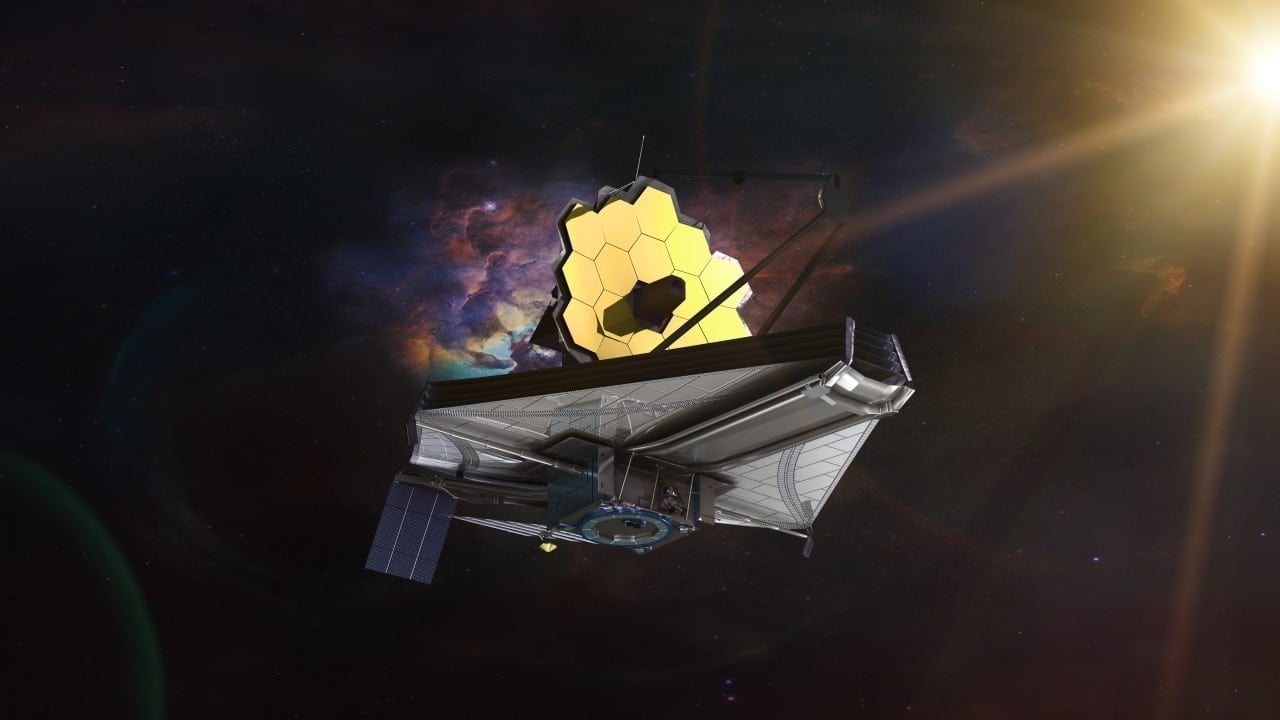
Today’s most advanced space observation equipment has identified light anomalies in deep regions of the cosmos. Astrônomos analyze recent images that reveal small, bright red dots scattered across distant areas of space. Esses visual records suggest the presence of celestial bodies formed shortly after the beginning of the expansion of the universe.
Researchers from several academic institutions debate the exact origin of these light emissions captured by high-precision sensors. The main hypothesis points out that these structures may represent the initial generation of luminous stars, known scientifically as a type III stellar population. Confirmation of this theory would fill a fundamental gap in understanding the formation of galaxies.
The raw data sent to Terra goes through a rigorous filtering and decoding process in research centers. Especialistas apply complex mathematical models to differentiate these reddish lights from other common cosmic phenomena. Continuous mapping of these regions provides an unprecedented amount of information about the infancy of the cosmos.
The nature of red dots
Detailed observations conducted by teams from renowned universities, such as Harvard and Virgínia, indicate that reddish objects are extremely luminous in relation to their distance. Scientists noted that the intensity of the glow does not match patterns observed in contemporary star formations or known dwarf galaxies. Computer simulations suggest that only celestial bodies with masses millions of times greater than our Sol could emit such an amount of visible energy billions of light years away. Essa luminous discrepancy caught the attention of the international scientific community, prompting revisions to current astrophysical models. The captured radiation passed through vast expanses of cosmic dust until it reached the mirrors of the orbiting observatory.
The specific coloring of these points is not a mere visual coincidence, but a direct indication of the composition and age of these astronomical structures. Redshift occurs due to the continuous expansion of the universe, which stretches light waves over billions of years of travel through the vacuum. Quando the original light, possibly blue and intense, reaches the current instruments, it is in the infrared range. The absence of heavy elements in the initial spectral signature corroborates the thesis that these are primitive formations. Researchers use state-of-the-art spectrometers to isolate these frequencies and map the exact distribution of these bodies in deep space.
Primordial chemical composition
Astrophysical theory establishes that the first luminous formations in the cosmos arose from gigantic clouds of pure gas. Esse primordial material consisted almost exclusively of hydrogen and helium, the lightest elements created during the earliest moments of the universe. The absence of heavy metals allowed these clouds to collapse to gigantic proportions without immediately fragmenting.
Unlike modern stars, which contain carbon, oxygen and iron inherited from previous stellar generations, these original entities operated under distinct thermonuclear dynamics. The burning of fuel occurred extremely quickly and violently due to the immense internal gravitational pressure. Essa short lifespan resulted in colossal explosions, scattering the first heavy elements throughout outer space.
The chemical enrichment of the interstellar medium began exactly after the destruction of these massive structures. The debris from these explosions formed the building blocks for the planetary systems and galaxies we observe today. Direct detection of these cosmic ancestors provides the physical evidence needed to validate equations about primordial nucleosynthesis.
Formation of supermassive black holes
One of the greatest mysteries in modern astronomy involves the existence of gigantic black holes in the very early stages of the universe. The detection of supermassive quasars at extreme distances challenges conventional growth rates of these matter-eating objects. Scientists are looking for mechanisms that explain how these singularities gained so much mass in a relatively short period of time.
The presence of the type III stellar population offers a mathematically viable solution to this temporal paradox. Devido to their colossal dimensions, these primitive stars did not go through the traditional phases of cooling and gradual contraction. When they ran out of nuclear fuel, they collapsed directly under their own gravity, forming black hole seeds tens of thousands of times more massive than Sol.
These primordial seeds functioned as gravitational anchors at the center of young, forming galaxies. Elas attracted immense amounts of surrounding gas and merged with other neighboring singularities at an accelerated rate. The dense environment of the early universe provided the continuous supply of matter needed to fuel this exponential growth.
The direct relationship between the newly discovered red spots and the genesis of supermassive black holes restructures the cosmological timeline. The research teams are now focusing on crossing light emission data with the gravitational signatures of these regions. The aim is to trace the exact evolutionary path from the first stellar ignition to the formation of active galactic nuclei.
Challenges in space observation
Accurate identification of these early celestial bodies faces significant technical obstacles due to immense distance and visual interference. Active Galáxias and thick dust clouds can mimic the light signal expected from the original formations, generating false positives in astronomical surveys. Scientists need to apply rigorous calibration filters to isolate true light from the cosmic background noise.
The academic debate remains active, with different research groups proposing alternative interpretations for the raw data collected. Algumas lines of study suggest that the points may be black holes in the early stages of accretion, obscured by dense material. Resolving this impasse requires prolonged observation time and the combined use of multiple spectral capture instruments.
The role of infrared radiation
The ability to see beyond the human visible spectrum defines the success of deep universe exploration missions. Sensores designed to operate at temperatures close to absolute zero can detect residual heat emitted by objects located in the far reaches of space. Essa technology bypasses the blockage caused by interstellar dust, which absorbs visible and ultraviolet light.
Mapping at multiple infrared wavelengths allows scientists to reconstruct the three-dimensional structure of observed areas. The images generated reveal a complex network of filaments and energy nodes that outline the primordial cosmic web. Essa instrumental precision transforms abstract mathematical theories into concrete, measurable visual evidence.
Next steps for astronomical research
Continuous advancement in astronomical data collection requires the development of new computational analysis methodologies to process the massive volume of information. International research consortia are preparing observation campaigns specifically focused on high-resolution spectroscopy of these reddish targets. Essa technique will allow us to break down light into its fundamental frequencies, revealing the exact and unquestionable chemical signature of luminous objects. Confirming the total absence of metals in these spectra will provide definitive proof of the existence of the initial stellar population. Além In addition, space agencies plan to integrate current discoveries with future deep-field surveys, expanding the area of the sky mapped with millimeter precision. Collaborative work between theorists and observers accelerates the refinement of current cosmological models. The allocation of time at large space observatories reflects the top priority given to this field of study by the global scientific community. The results of these detailed investigations will define astrophysics textbooks for decades to come, establishing a new paradigm on the origin of luminous matter. The search for the universe’s first light sources remains the most ambitious project in contemporary space science.
Evolution of the cosmos
The transition from a dark, homogeneous environment to today’s structured universe fundamentally depended on these first stellar ignitions. The ongoing study of these luminous relics traces the genealogy of all the chemical elements essential to the formation of rocky planets. Modern observational astronomy moves forward to unravel the opening chapters of the material history of outer space.