

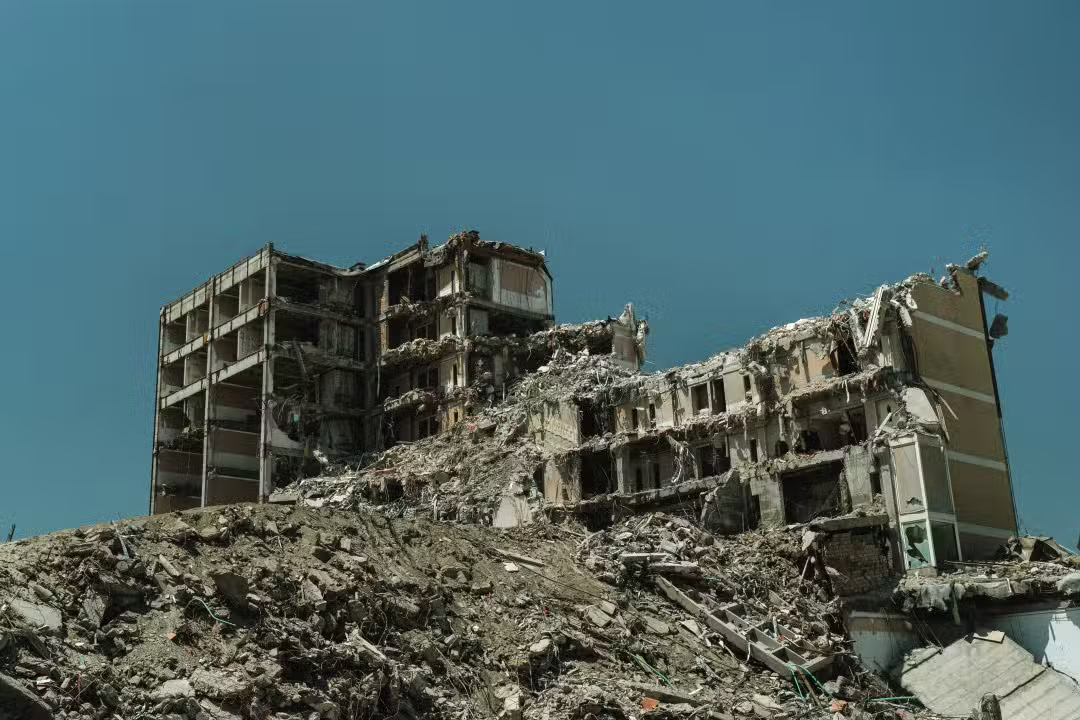
Amid the increase in global seismic events, experts reinforce the importance of immediate and planned actions to mitigate impacts. The accumulated experience of international rescues shows that wrong decisions in the early stages can worsen already critical situations.
Professionals such as disaster nurses emphasize that the focus should be on quickly assessing the environment and adhering to established protocols. Essas guidance is based on lessons from past earthquakes, where a lack of preparation resulted in congestion and unnecessary exposure.
Authorities in several regions recommend that individuals prioritize staying in safe places rather than impulsive attempts to travel. Essa approach reduces the number of casualties and facilitates coordinated rescue operations.
Initial decisions in earthquake scenarios
When an earthquake occurs during work or commuting hours, the choice between returning home or staying in place requires clear criteria. Distâncias that are normally covered in half an hour can last for hours due to obstructions on the roads, which makes it imperative to evaluate the viability of the route based on real conditions.
Experts indicate that roads designated for emergencies, such as priority routes for emergency vehicles, are unavailable to the general public. Essa restriction aims to speed up service, but requires citizens to plan alternatives in advance, consulting risk maps to identify safe secondary routes.
Preparation for extended stay
Workplaces must be equipped to support employees for at least 72 hours after an earthquake. Itens Essentials include water supplies, non-perishable food, and first aid kits, which help maintain stability until external conditions return to normal.
Companies and public institutions are encouraged to carry out regular drills to familiarize teams with emergency procedures. Esses exercises strengthen collective resilience and identify gaps in planning before an actual event occurs.
Public transport guidelines
In vehicles such as trains or subways, following the drivers’ instructions is essential to avoid additional complications. Estruturas undergrounds are designed to withstand intense shaking, offering superior protection compared to hasty exits that can lead to electrical accidents.
Passengers must remain calm and wait for official signs before making any movement. Uncoordinated individual Ações can paralyze the entire system, prolonging the time of exposure to secondary risks such as aftershocks or structural instabilities.
Navigation and orientation risks
Map applications lose reliability in disasters, as communication networks can fail or overload. Cidadãos need to develop a sense of independent direction, recognizing cardinal points and alternative routes without depending on technology.
Consulting hazard maps in advance helps to anticipate potential blockages. Essa simple practice increases responsiveness and reduces dependence on digital tools that may not be available at the critical moment.
Urban mobility risks
During earthquakes, navigation applications may fail due to network outages or infrastructure damage. Cidadãos need to cultivate the habit of manual guidance, knowing cardinal directions and alternative routes so as not to depend exclusively on technology.
Dense urban areas amplify the dangers with possible collapses of structures and accumulation of debris in the streets. Prior Planejamento, including identification of nearby safe zones, mitigates these risks and facilitates orderly evacuations.
Main roads often become exclusive corridors for emergencies, leaving pedestrians and private vehicles in a vulnerable situation. Essa dynamics reinforce the need for personal stockpiles of supplies for extended waiting periods.
Strategies for closed environments
In tall or underground buildings, immediate protection involves taking shelter under sturdy furniture to prevent falling objects. Essa tactic, known as “crouch, cover, and hold,” protects the head and neck during initial tremors.
After the mainshock, assessing structural damage before any movement is crucial. Saídas emergency situations must be prioritized, but only if free from obstacles, to prevent secondary accidents such as fires or collapses.
Daily preventive measures
Incorporating route-checking habits and emergency stocks into your daily routine makes preparedness accessible. Famílias that discuss contingency plans are better equipped to deal with unforeseen seismic events.
School education about natural disasters instills knowledge from an early age, creating more aware generations. Programas curriculum includes practical simulations, fostering a proactive safety culture.
Coordinated response in transport
In situations of vehicle downtime, remaining calm and following official guidelines prevents the situation from worsening. Condutores trained personnel know how to turn off engines and avoid unstable areas, contributing to general safety.
Robust public transportation systems incorporate redundancies for quick post-event recovery. Investimentos in maintenance ensures that infrastructures resist tremors and resume operations with minimal interruptions.
Monitoring and alerts
Early detection systems issue warnings seconds before tremors occur, enabling immediate protections. Redes global seismic data contribute to more accurate predictions in active regions.
Integration with mobile alerts ensures populations receive clear and timely instructions. Essa technology democratizes access to vital information for survival.