

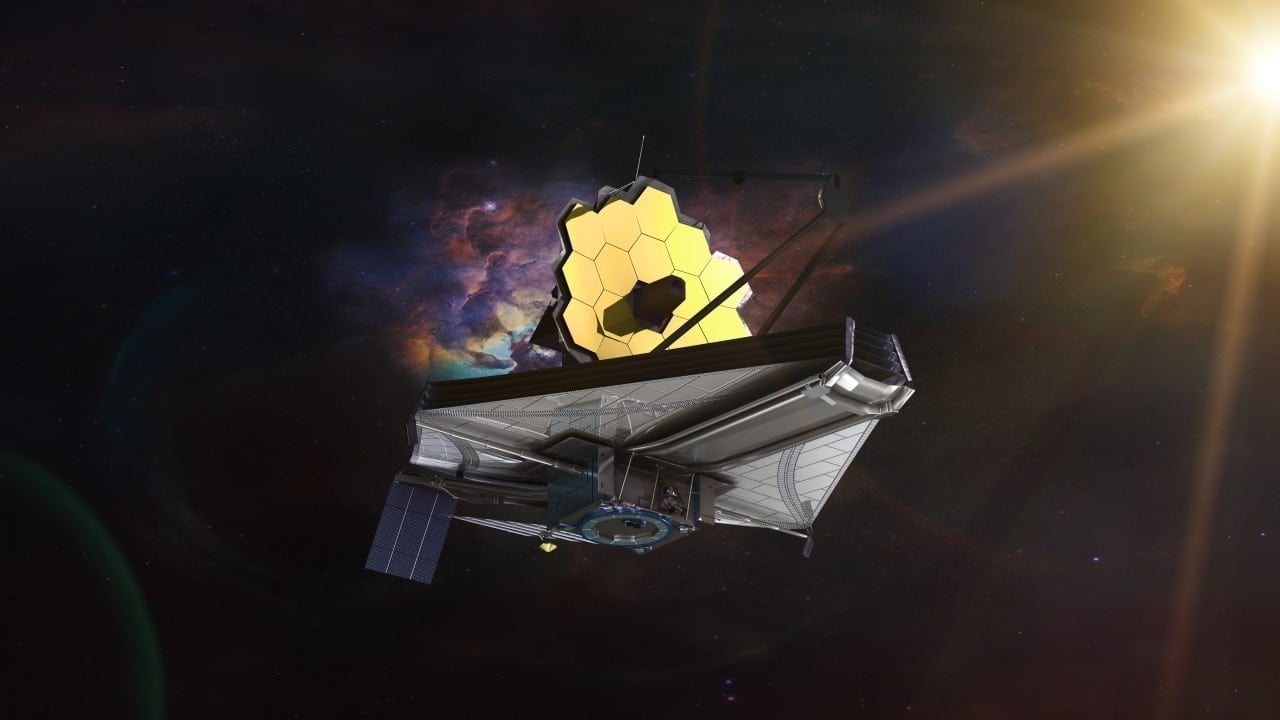
Orbiting observation equipment has recorded unusual luminous formations in the depths of space, characterized by small reddish spots in high-resolution images. Recent data indicate that these structures, identified in deep astronomical surveys, represent the first generation of celestial bodies formed shortly after the initial expansion of the cosmos. Detailed analysis of the optical and luminous properties of these anomalies suggests a pure chemical composition, free of heavy elements, which corroborates old theories about the early evolution of galaxies and the distribution of matter in the vacuum.
Characteristics of reddish formations
Observations indicate that the detected light sources have an exceptionally high brightness for their extreme distance. Especialistas in astrophysics evaluated the visual signatures and noted that the luminous intensity is compatible with stellar clusters of gigantic proportions, much larger than those found in the current solar neighborhood. The specific coloration observed in the records is due to redshift, an optical phenomenon caused by the continuous expansion of space over billions of years, which stretches light waves into the infrared range.
The absence of heavy metals in the composition of these structures is a determining factor for the current classification. The primordial gas that powers these formations consists almost entirely of hydrogen and helium, the fundamental building blocks generated in the first minutes after the origin of the universe.
The surveys highlight specific properties of these distant light sources:
– Emissão of extreme ultraviolet radiation that is rapidly absorbed by the surrounding neutral gas.
– Temperaturas surface area significantly greater than that of modern celestial bodies of equivalent size.
– Estimated individual Massas that may exceed the proportion of the sun by hundreds or thousands of times.
– Ciclos extremely short lifespans due to the accelerated and violent consumption of nuclear fuel.
Computer simulations confirm that objects with these exact characteristics would produce the visual signature captured by long-range sensors. The alignment between theoretical models and visual data strengthens the hypothesis that instruments have finally achieved the sensitivity necessary to map this cosmic boundary.
The cosmic dark age transition
The formation of this specific category of celestial bodies occurred at a time when the space environment was completely opaque and devoid of its own light sources. During this period, vast clouds of neutral hydrogen filled space, blocking the spread of any incipient electromagnetic radiation. The ignition of these first nuclear furnaces marked a turning point in the thermodynamics of the universe, initiating a large-scale reionization process.
The intense radiation emitted by these gigantic sources was instrumental in altering the physical state of the surrounding intergalactic gas, breaking apart neutral atoms and making space transparent to light. Esse The gradual process of illumination dissipated the primordial mists and established the structural conditions for the formation of subsequent galaxies.
The end of the life cycle of these gas giants occurred through explosions of catastrophic proportions, known as pair instability supernovae. Esses Violent events dispersed the first heavy elements, such as carbon and oxygen, across the vacuum, providing the essential raw material for complex chemistry and the formation of rocky planetary systems in subsequent generations.
Structural differences of gaseous formations
The mechanics of star formation in the early universe differ drastically from the processes observed in modern nebulae. Atualmente, the presence of cosmic dust and heavy elements acts as an efficient cooling mechanism for the collapsing gas clouds. Esse cooling allows matter to fragment into smaller pieces, giving rise to low and medium mass stars, such as red dwarfs and yellow dwarfs.
In the primordial environment, the absolute absence of these cooling agents prevented the fragmentation of hydrogen and helium clouds. Para For gravity to overcome the internal thermal pressure of the pure gas and initiate collapse, it was necessary to accumulate colossal masses of matter in a single central point.
This thermodynamic bottleneck resulted in a stellar population made up exclusively of supermassive giants. The internal dynamics of these extreme bodies generated nuclear pressures and temperatures that defy the limits of contemporary stellar physics, operating in a fragile equilibrium regime between crushing gravity and overwhelming radiation.
Relationship to supermassive black holes
The discovery offers a viable explanation for one of the greatest mysteries of modern astrophysics, which involves the existence of black holes of colossal mass in very remote times. The theory proposes that the most massive primordial stars did not go through the traditional explosion process at the end of their lives, as their masses exceeded the critical stability limit.
Instead of ejecting its outer layers, the extreme gravity caused the core and entirety of the star to collapse directly in on itself. Esse phenomenon generated large gravitational singularities immediately, without the intermediate phase of smaller stellar black holes.
This direct collapse mechanism would drastically accelerate the formation of active galactic centers. The recently observed reddish anomalies align perfectly with mathematical models that predict this rapid path of evolution. The ongoing merger of these early black holes would have laid the gravitational foundations for the large spiral and elliptical galaxies mapped in today’s astronomical catalogs.
Theoretical alternatives in evaluation
The scientific community maintains a rigorous process of verifying information, considering alternative hypotheses to explain the origin of the red dots captured in the images. One strand of research suggests that light emissions could be generated by accretion disks around active black holes, obscured by dense layers of cosmic dust that would change the color of the emitted light to reddish tones.
However, this interpretation faces significant technical obstacles, as the thermal signature of the heated dust does not exactly match the preliminary spectral data captured by the long-range sensors. The absence of characteristic x-rays from active galactic nuclei also weakens the theory of obscured black holes. Esses factors strengthen the hypothesis of pure star formation as the most coherent explanation and aligned with the laws of thermodynamics applied to the extreme conditions of the early universe.
Infrared observation capabilities
Detection of these faint light structures was only possible due to the unprecedented sensitivity of modern heat wave-trapping instruments. The visible and ultraviolet light emitted by these objects billions of years ago was stretched across the fabric of space-time during their long journey to Terra.
Upon reaching the solar system, this radiation is entirely in the infrared range, invisible to human eyes and undetectable by traditional optical equipment from previous generations. The current observatory’s specialized mirrors were designed specifically to capture this exact frequency of thermal radiation.
The ability to penetrate through clouds of modern cosmic dust allows sensors to record background light without significant interference. Esse signal isolation guarantees the precision necessary to measure the original light intensity and calculate the exact distance to the emitting sources.
Continuous mapping of these deep regions creates an invaluable data archive for understanding cosmic chronology. Cada new cataloged luminous point adds a fundamental piece to the mapping of material evolution, from simple gas clouds to the complex structures observed today.
Next steps in space research
Planning for future observing operations includes using advanced spectroscopy to break down light from these anomalies into their constituent colors. Essa technique will make it possible to identify with absolute precision the chemical elements present in the emission source, measuring the specific absorption and emission lines of each atom.
Definitive confirmation of the absence of heavy metals will validate the discovery as the first indisputable visual record of the primordial stellar population. The data collected will guide the targeting of instruments to even more unexplored regions of the celestial vault, refining research targets for the coming decades of space exploration.