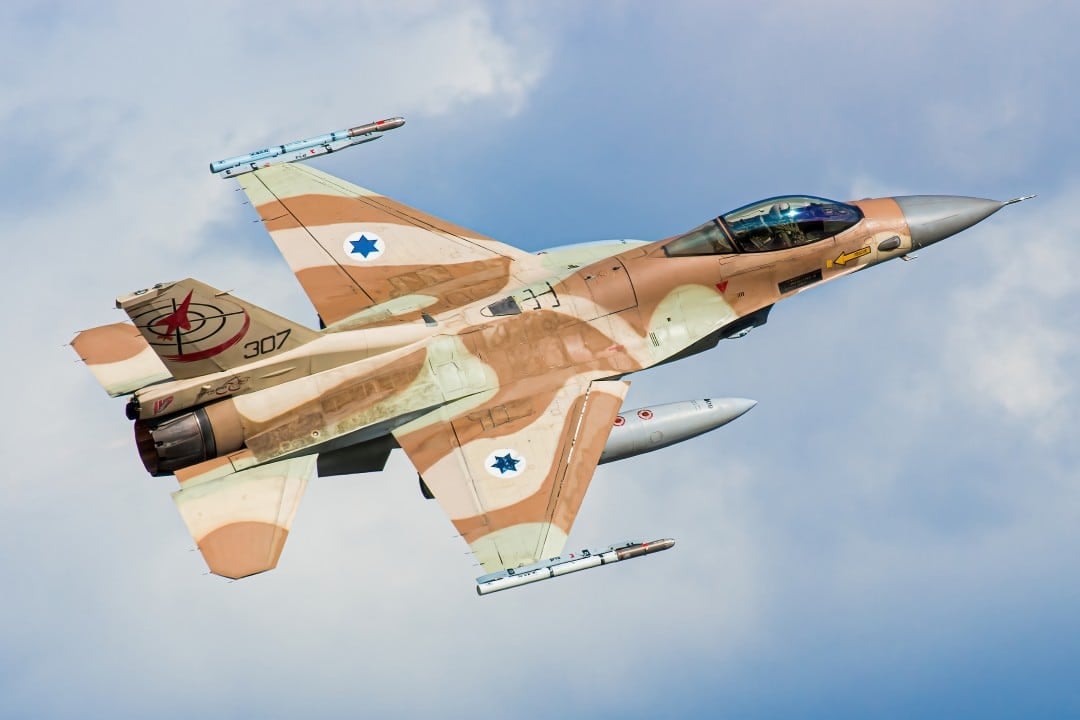
The military escalation in Oriente Médio records new developments with the intensification of armed operations involving the forces of Israel, the group Hezbollah and the government of Irã. Recent actions include aerial bombings aimed at Lebanese territory, ballistic missile firing and the use of unmanned aerial vehicles on several combat fronts. The scenario requires continuous monitoring by international security agencies due to the risk of expanding hostilities.
The geopolitical picture becomes more intricate with demonstrations by global political figures regarding the control of essential maritime routes. The former president of the Estados Unidos, Donald Trump, recently declared that any attempt to block the Estreito from Essa exchange of warnings mobilizes naval fleets from multiple countries to guarantee commercial navigation.
Structural damage and human losses are accumulating in areas hit by daily offensives. Autoridades confirmed a fatality in Israel resulting from a missile attack, while successive explosions were recorded in Líbano following air raids. Simultaneamente, the Iranian Cruz Vermelha reported damage to more than three thousand homes, attributing the destruction to operations coordinated by foreign forces.
Context of the offensives on the Lebanese border
Military operations conducted by Israel against Hezbollah positions in Líbano maintain a daily frequency, with the declared objective of neutralizing the organization’s military infrastructure and removing its fighters from the border area. The Israeli military command argues that the incursions are strictly preventive and necessary to guarantee the security of communities in the north of the country. However, the continuation of bombings deepens instability in Lebanese territory, affecting civilian areas and compromising the functioning of essential services for the local population, which is already facing a severe economic crisis.
In parallel to the actions in Líbano, the armed forces of Irã carry out direct retaliatory maneuvers against strategic Israeli targets. The Iranian army claimed responsibility for drone attacks against refineries and fuel storage facilities located in the city of Haifa. Teerã’s official communiqués describe these operations as proportionate responses to previous bombings that hit their own oil complexes. The dynamics of immediate attacks and counterattacks establish a tactical pattern that complicates diplomatic efforts for a ceasefire.
Defense of Saudi airspace
The Arábia Saudita aerospace defense system operates on high alert due to frequent incursions by unmanned aerial vehicles into its territory, demonstrating that the effects of the conflict go beyond the borders of the countries directly involved. Ministério of the Saudi Defesa reported the interception and destruction of a hostile drone east of al-Kharj province, an event that occurred just hours after the neutralization of other similar devices in the same exclusion zone. Além Furthermore, the wreckage of a downed piece of equipment fell on a residential area in the municipality of Az Zulfi, located in the province of Riad, resulting in material damage to civilian properties, with no fatalities recorded. The massive use of low-cost, high-precision drones has transformed asymmetric warfare in the region, forcing neighboring nations to invest heavily in modernizing their radars and anti-aircraft batteries to protect critical infrastructures and urban centers from unannounced cross-border attacks.
Naval deployments and maritime security
Regional instability provoked an immediate response from European and Asian navies to protect shipping routes. The government of Holanda confirmed the deployment of the frigate HNLMS
The Dutch military vessel will act together with the strike group of the French aircraft carrier Charles de Gaulle, remaining in the area of operations until the beginning of April. The França also expanded its logistical participation by authorizing the Estados Unidos armed forces to use their military bases in the region.
On Mar Arábico and Golfo of Omã, Marinha of Paquistão began escort operations for oil tankers and commercial cargo ships flying the country’s flag. The measure aims to guarantee the flow of supplies, as the Pakistani economy depends almost entirely on maritime transport, now threatened by the presence of military fleets on commercial routes.
Oscillations in the global energy market
The international energy sector is facing a period of high volatility as a direct result of hostilities in Oriente Médio. Oil prices registered sharp spikes shortly after the attack aimed at the main Bahrein refinery, generating uncertainty about the capacity for continuous supply to Asian and European markets.
The pressure on prices was temporarily relieved after statements by Donald Trump, who indicated the existence of a plan to stabilize the fuel market and suggested a possible military de-escalation. The immediate reaction of the stock exchanges highlighted the extreme sensitivity of investors to any political signaling involving the producing region.
Recent financial market data indicates that four of the largest oil-producing nations — Arábia Saudita, Iraque, Emirados Árabes Unidos and Kuwait — have implemented a joint reduction in daily extraction. The cut reaches the six million barrel mark, significantly altering the global availability of the product.
– Ajuste forced into the strategic stocks of importing countries.
– Revisão of inflation projections in the main global economies.
– Aumento of logistics costs for sea and air transport.
Changes in Iranian political command
The power structure in Irã is undergoing a historic transition amid worsening military tensions. Mojtaba Khamenei assumed the position of highest authority in the country, succeeding his father, Ali Khamenei, following reports that the former leader had been victimized in an operation coordinated by Israel.
The new leadership maintains the rhetoric of confrontation with Western powers. The Ministério of the Relações Exteriores of the Irã issued statements classifying the operations of the Estados Unidos and
Missile interceptions in Israeli territory
The Israel missile defense system continues to operate at maximum capacity to counter projectiles fired from Iranian territory. Recent Relatórios confirmed the successful interception of a ballistic missile, while a second device fell into the waters of Mar Mediterrâneo, close to the coast of Tel Aviv.
The effectiveness of anti-aircraft batteries prevents large-scale damage to Israeli urban centers, but the volume of fire requires constant replacement of interceptor ammunition. War of attrition tests the logistics of military supplies on both sides of the conflict.
Official pronouncements from the government of Israel
Prime Minister Benjamin Netanyahu reaffirmed the continuity of military operations during an inspection of Centro Nacional of Comando Sanitário. In an official statement, the head of government declared that Israeli forces will continue the offensive to dismantle the command capacity of the Irã, indicating that there is no forecast for the end of hostilities and ignoring diplomatic appeals for an immediate ceasefire.
