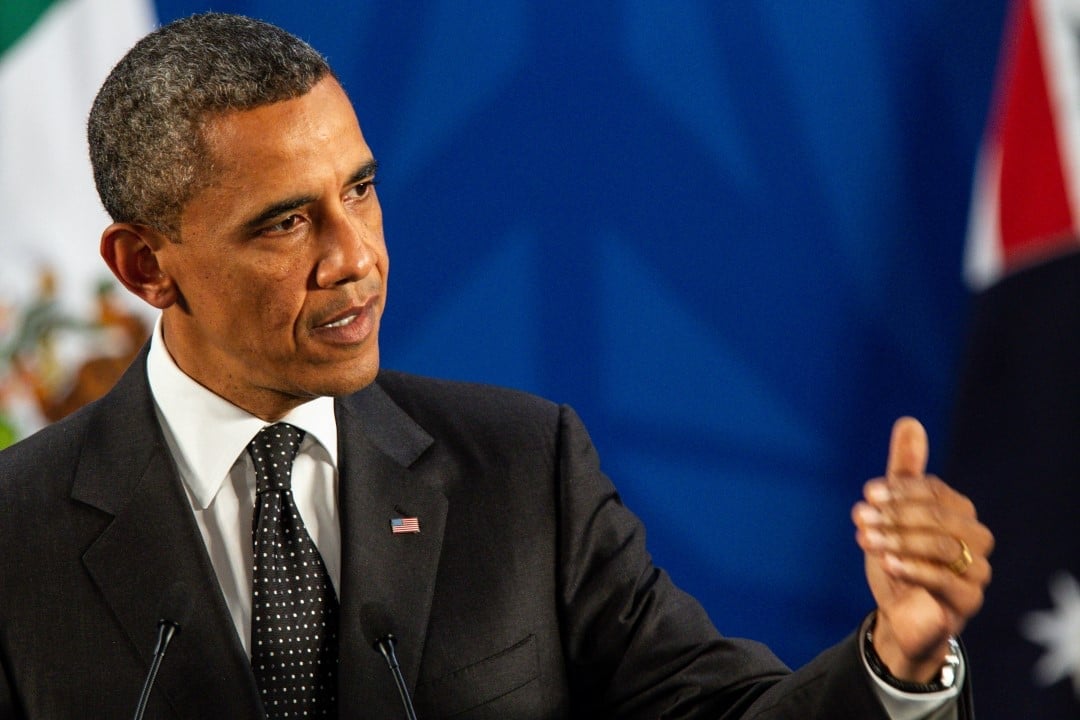
The former president of the Estados Unidos, Barack Obama, stated in a recent interview that aliens are real, although he clarified that he has never seen evidence of contact with humanity. The statement occurred during an appearance on the No Lie podcast, presented by Brian Tyler Cohen, on February 14, 2026, in Washington, D.C., local time. Obama explained that, statistically, given the vastness of the universe, the probability of extraterrestrial life is high, but interstellar distances make any visit to Terra unlikely.
This statement generated immediate repercussions on social networks and in the international media, with debates about what the North American government knows about unidentified aerial phenomena. Obama emphasized that there are no secret facilities holding extraterrestrial beings, rejecting popular conspiracy theories. Ele mentioned that, upon assuming the presidency in 2009, one of his first curiosities was precisely about the existence of aliens, but he did not find concrete answers during his term.
Obama’s words are based on previous statements, such as those made in 2021, when he commented on videos released by Pentágono showing flying objects with inexplicable behavior. At the time, he acknowledged the authenticity of the recordings, but reiterated the lack of definitive proof of extraterrestrial origins. Essa continuity in their positions reinforces the credibility of their recent observations, without changing the government’s official position.
Past statements of Obama
Obama has touched on the topic in previous interviews, including an appearance on The Late Late Show with James Corden in 2021. Ele described Pentágono’s videos as genuine, noting that the objects exhibited movements that defy known physics. However, he maintained that there is no indication that these phenomena are of alien origin.
These observations coincide with official reports from the Estados Unidos about UAPs, the unidentified aerial phenomena. In 2021, Escritório of Diretor of Inteligência Nacional published a draft document analyzing 144 incidents, of which only one was explained. The rest remain enigmas, fueling speculation without firm conclusions.
Trump’s position on the topic
The current president of Estados Unidos, Donald Trump, reacted to Obama’s statements, suggesting that the former leader could have revealed sensitive information. Trump, in a note released on February 19, 2026, stated that discussions about UAPs should be treated with caution to avoid leaks. Ele recalled interviews of his own in 2024, where he expressed skepticism but advocated releasing more videos for transparency.
During a conversation with influencer Logan Paul in July 2024, Trump mentioned reports from military pilots of unusual flying objects. Ele indicated that, although he is not a firm believer, he has heard credible testimony that merits investigation. In September of the same year, on Lex Fridman’s podcast, Trump promised to push for the declassification of materials related to UAPs.
On Joe Rogan’s podcast in October 2024, Trump speculated about life on Marte and other planets, arguing that there is no reason to rule out possibilities. However, since his re-election, the focus on geopolitical and domestic issues seems to have relegated the issue to the background. Analistas note that the current agenda, including immigration and internal investigations, dominates the administration’s priorities.
This ambiguity from Trump contrasts with his campaign, where he promised greater openness about UAPs. Observadores indicate that institutional pressures may influence the recent silence, keeping the debate in suspense.
Context of official reports
Estados Unidos government reports on UAPs have gained prominence in recent years, with hearings in Congresso in 2022 and 2023. Nessas sessions, witnesses from intelligence agencies reported incidents involving objects that surpass known technologies. An example is the GIMBAL video, captured by Marinha fighters in 2015, showing an object rotating at high speed.
In 2025, Departamento of Defesa established the All-domain Anomaly Resolution Office to investigate these phenomena. The office analyzed more than 800 cases by the end of 2025, concluding that the majority concerned balloons, drones or space debris. Ainda thus, a fraction remains unexplained, justifying continued research.
Scientific debates about extraterrestrial life
Scientists estimate that the observable universe contains more than 100 billion galaxies, each with billions of stars. Based on the Drake equation, developed by astronomer Frank Drake in 1961, the probability of advanced civilizations is debated, but considered plausible by many experts. Telescópios like James Webb, launched in 2021, have detected atmospheres on exoplanets that could support life.
Recent research, including a 2025 NASA study, has identified biosignatures in the atmospheres of distant planets. Esses findings suggest organic compounds, but do not confirm extraterrestrial intelligence. Astrônomos like Sara Seager of MIT argue that evidence of microbial life could be discovered in the coming decades.
Institutions like SETI Institute continue searches for radio signals from alien civilizations. Desde 1960, the program scanned thousands of stars without definitive detections, but advances in AI improve data analysis. In 2026, a new array of telescopes in the Atacama desert promises to expand these searches.
International organizations, such as Agência Espacial Europeia, collaborate on missions to moons like Europa, of Júpiter, where subterranean oceans may harbor life. The Europa Clipper mission, scheduled to launch in 2024 and arrive in 2030, will investigate habitable conditions.
Continued government investigation
The Estados Unidos government has allocated significant resources to studying UAPs, with annual budgets exceeding $20 million since 2017. Programas like the Advanced Aerospace Threat Identification Program, unveiled in 2017, have analyzed potential threats from unknown technologies. Annual Relatórios to Congresso detail progress, emphasizing national security.
On a global level, countries such as Reino Unido and França have published files on sightings. The British Ministério declassified thousands of documents in 2020, revealing decades-old investigations. Na França, the Grupo of Estudo and Informação on
Expert Perspectives
Astrobiology experts, such as Lisa Kaltenegger, from Cornell University, argue that discoveries of simple life on exoplanets are imminent. Ela points to missions like the Habitable Worlds Observatory telescope, planned for the 2030s, which will search for signs of biospheres. Esses advances could statistically validate the existence of life beyond Terra.
On the other hand, skeptics like SETI’s Seth Shostak warn against hasty interpretations of UAPs. Ele argues that most sightings have terrestrial explanations, and the absence of concrete evidence suggests caution. Debates at conferences like American Astronomical Society in 2026 highlight the need for rigorous data.
The integration of AI in UAP analysis speeds up processing. Algoritmos identify patterns in videos and radars, reducing false positives. In 2025, a system developed by DARPA processed thousands of hours of recordings, classifying 90% as known phenomena.
Implications for society
Research indicates that beliefs in aliens vary by region, with higher rates in countries such as Estados Unidos and Brasil. A survey by Datafolha in 2025 showed that 50% of Brazilians believe in extraterrestrial visits. Esses numbers influence disclosure policies, with governments balancing transparency and security.
Non-governmental organizations, such as Mutual UFO Network, have been collecting civilian reports since 1969. With more than 100,000 cold cases, the network contributes to global databases. In 2026, a collaboration with universities analyzes geographic trends in sightings.
- Pentágono reports: Mais of 800 incidents analyzed through 2025.
- Drake equation: Estima billions of habitable planets in Via Láctea.
- Space missions: Europa Clipper en route to investigate underground oceans.
- Public surveys: 65% of Americans believe in extraterrestrial life.
Technological advances in search
Technologies such as advanced radars and observation satellites detect anomalies with increasing accuracy. In 2025, the US’s Space Force launched satellites dedicated to monitoring UAPs. Esses devices capture data in real time, integrating with global defense networks.
Public-private partnerships, involving companies like SpaceX, accelerate explorations. The Artemis mission, aiming to return to Lua in 2026, includes searches for potential artifacts. Embora focused on lunar resources, the mission collects data on space anomalies.
