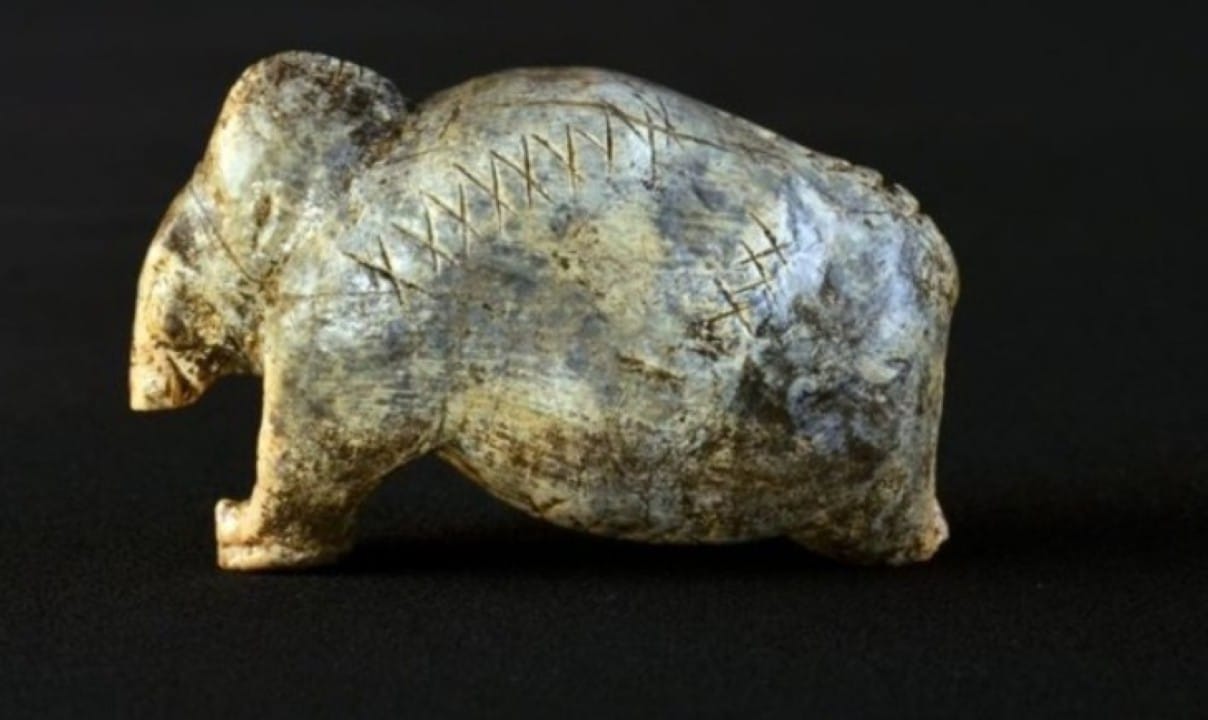
Uma pesquisa recente analisou mais de 260 artefatos encontrados na região da Suábia, no sudoeste da Alemanha, datados entre 34 mil e 45 mil anos atrás. Esses objects, made of ivory, bone and horn, feature sequences of geometric symbols that exhibit complexity comparable to the earliest known writing systems.
The researchers identified around 3,000 signs, including crosses, dots, notches and lines, often repeated in specific patterns. Essa structure suggests that Idade and Pedra humans used these marks to convey information in an organized way, long before the emergence of cuneiform writing in
Computational analysis revealed that the information density in these symbols resembles that of proto-cuneiform, developed around 5,300 years ago in present-day Iraque. The artifacts include figurines of animals such as mammoths and lions, as well as hybrid figures of humans and felines, enriched with these engravings.
Discovery of artifacts
The objects were excavated in caves such as Vogelherd and Hohlenstein-Stadel, sites occupied by anatomically modern humans who migrated from the África to the continental Europa. Essas pieces are not limited to functional tools, but include ornaments and artistic representations that indicate advanced symbolic behavior.
The presence of musical instruments and personal jewelry in the same archaeological sites reinforces the idea of a society with sophisticated cultural practices. Symbols appear in varied contexts, suggesting multiple uses, from counting to expressing connections with the natural environment.
Computational analysis of symbols
The team used computer-assisted methods to catalog and compare the recorded patterns. The results showed consistent repetitions, such as sequences of crosses and lines, which differ from modern spoken languages but carry information in a structured way.
This quantitative approach allowed measuring the diversity and frequency of signals, confirming similarities with proto-written systems. The patterns do not appear random, as they follow specific statistical distributions, which points to an intentional convention among human groups at the time.
The researchers noted that the figurines contain more symbols than the tools, possibly indicating ritual or narrative functions. Comparison with ancient writings highlighted that the repetition of signs is a common feature in early stages of symbolic communication.
Archaeological context of Suábia
The Alpes region of Suábia contains one of the largest collections of Paleolithic art in Europa, with artifacts preserved thanks to the conditions of the caves. Esses finds date back to the Aurignaciano period, marked by the arrival of Homo sapiens and the decline of Neanderthals.
The geometric symbols coexist with figurative representations of animals common in the local fauna, such as woolly mammoths and horses. Essa combination reflects a cognitive ability to abstract and record environmental observations.
Engravings of hybrid figures, such as lions with human features, can symbolize beliefs or narratives about predators. The analysis suggests that these patterns were part of a shared system between communities, facilitating social coordination.
The artifacts reveal a level of behavioral modernity, including the production of art and complex tools. The research emphasizes that the bases for symbolic systems already existed in this initial phase of European occupation.
Repetitive patterns and meaning
Symbol sequences display repetitions such as “cross, cross, line, dot”, which differs from the high information density of modern writing. However, this structure aligns with proto-cuneiform tablets, used for administrative records in antiquity.
The frequency of certain signs, such as notches in series, suggests functions such as counting days or hunting. The researchers compared these patterns to other Paleolithic sites, finding similarities that indicate a broad cultural tradition.
This repetition does not imply simplicity, but an efficient way of coding for hunter-gatherer groups. Statistical analysis confirmed that symbols carry measurable information, comparable to pre-written systems.
Comparison with old systems
Paleolithic symbols show similar diversity to proto-cuneiform, with abstract signs evolving into more complex representations. Na Mesopotâmia, these systems arose to manage resources in sedentary societies, but in prehistoric Europa, they may have served nomadic needs.
The research highlighted that the complexity of German standards predates the first known texts by tens of thousands of years. Isso changes the understanding of human cognitive development, suggesting that the capacity for symbolic communication is older than previously thought.
Implications for prehistory
The discovery reinforces that the humans of Paleolítico Superior had cognitive tools to create conventional sign systems. Esses artifacts, found in a limited area, indicate that similar practices may exist in other European regions of the same era.
Computational analysis opens up avenues for studies on other sets of ancient engravings. The geometric patterns, common at sites like Lascaux and França, can be re-examined from this quantitative perspective.
The symbols on ivory figurines suggest uses beyond the practical, possibly in rituals or the transmission of knowledge. Essa evidence supports theories about the early emergence of symbolic behaviors in Homo sapiens.
The research integrates data from linguistics and archeology to quantify the information in the signals. Essa interdisciplinary approach reveals that hunter-gatherers organized sequences of marks in an intentional way, similar to proto-writing.
Geographic distribution of finds
Although concentrated in Suábia, similar symbols appear on artifacts from other parts of Europa, dating from the same period. Essa distribution suggests a cultural network between human groups, facilitated by migrations and interactions.
The German caves preserved the objects thanks to the cold climate, allowing detailed analysis. Comparações with sites on França and Espanha show regional variations but common patterns in line and dot repetitions.
Animal and hybrid representations
The figurines depict mammoths with sequences of crosses and dots, possibly recording observations about the animal. Figuras of lions are notched in specific positions, such as arms, indicating intentionality.
These hybrid representations, such as humans with lion heads, carry symbols that can express spiritual connections. The density of brands on these pieces is greater, suggesting cultural importance.
Horn and bone artifacts show linear patterns, used in everyday tools. Essa variation indicates that symbols permeated different aspects of daily life.
The analysis revealed at least 22 recurring signs, cataloged as crosses, stars and grids. Essa diversity points to a shared symbolic vocabulary.
Analysis methods employed
The researchers scanned the artifacts to measure characteristics such as frequency and repetition of signals. Modelos statisticians compared this data to known writing systems, confirming similarities.
This computational technique made it possible to process thousands of brands objectively. The results surprised the team, showing proximity to ancient proto-scripts.
Human cognitive evolution
The findings indicate that the migration to Europa coincided with advances in symbolism. Humanos moderns developed figurative and abstract art, bases for complex communication.
This capacity for conventional signs facilitated survival in hostile environments. Research suggests that symbolic behavior is inherent in Homo sapiens from an early age.
Preservation and excavations
The caves of Suábia continue to reveal artifacts, with recent excavations adding to the collection. Técnicas dating confirms ages between 34 thousand and 45 thousand years.
Preservation in museums like the one in Berlim allows for continuous studies. Esses objects offer insights into the prehistoric mind.
Current research applications
Statistical analysis can be applied to other ancient symbolic sets. Isso expands the understanding of the emergence of writing globally.
Repetitive patterns inspire studies in computational linguistics. Essa intersection between archeology and technology reveals new dimensions of human history.
The research highlights the importance of preserving Paleolithic sites for future investigations. Novos findings can refine comparisons with written systems.
Details of geometric symbols
- Crosses appear in sequences of three or more, often on animal figurines.
- Points are grouped in straight lines, suggesting counting or temporal marking.
- Parallel notches cover tool surfaces, possibly recording events.
- Zigzag lines combine with other signs, forming complex patterns.
These elements repeat across multiple artifacts, indicating shared conventions. Regional variation enriches the study.
Potential functions of patterns
The sequences may have served to coordinate hunts or record migrations. In social contexts, they facilitated the transmission of knowledge between generations.
The association with figurative art suggests narrative uses. Esses symbols represent an initial step in encoding information.
Research continues to explore specific meanings. Comparações with ethnographies of modern hunter-gatherers offer clues.
