

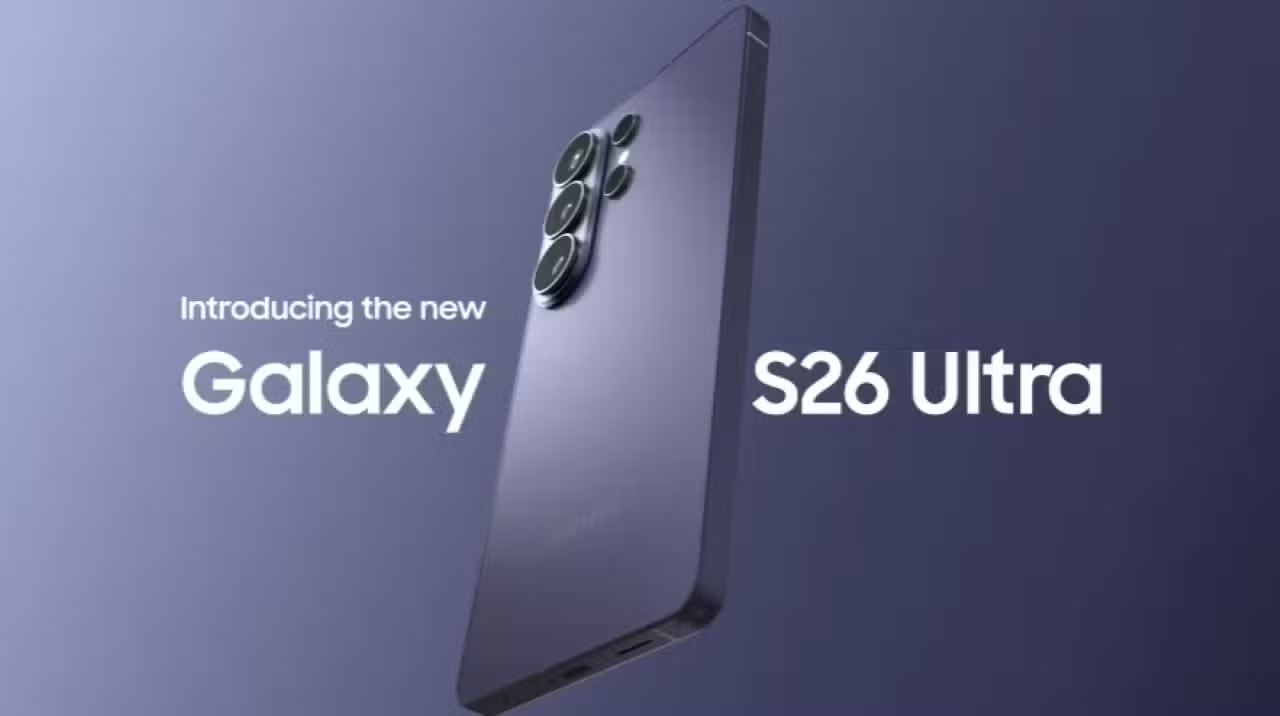
Owners of the recently launched Galaxy S26 Ultra began to register unexpected behavior in the device’s photographic set during use in very cold environments. The phenomenon occurs specifically when the smartphone is subjected to temperatures close to minus six degrees Celsius. The situation generates the accumulation of droplets and an internal mist on the protective glass of the rear cameras.
The problem directly affects the quality of image and video captures, making the records practically unusable in harsh winter scenarios. The device is IP68 certified, which guarantees protection against water and dust, which raises questions about the efficiency of thermal sealing. Internal humidity suggests a possible hardware temperature management failure.
The first images of the defect appeared on international forums and South Korean communities shortly after the model arrived on the global market in February. Fontes linked to the manufacturer’s ecosystem released photographs showing the telephoto lens completely obstructed by condensation. Visual blocking prevents the autofocus and depth sensors from functioning properly.
Initial reports of lens fogging
Several buyers of the Galaxy S26 Ultra noticed the formation of fog in the first few days of continuous use. The anomalous behavior manifests itself most aggressively when the device abruptly transitions from a warm indoor environment to the extreme cold outside. Essa A sudden change in temperature causes the hot, humid air trapped inside the chassis to condense when it comes into contact with the cold surface of the outer glass of the lenses. The physical process occurs without the phone having been immersed in liquids or directly exposed to rain, ruling out the hypothesis of accidental external infiltration.
Condensation tends to gradually disappear when the smartphone returns to a place with controlled room temperature and remains at rest for a few hours. However, the persistence of the phenomenon during outdoor walks or snow activities frustrates consumers who purchased equipment with a focus on travel photography. The telephoto module presents the highest incidence of the problem, due to its elongated physical structure and the greater volume of air confined between the optical elements. The complexity of this specific component makes it more vulnerable to extreme thermal variations compared to the main or ultrawide lens.
Thermal factors and device engineering
The presence of indoor humidity may be the result of residual atmospheric vapor trapped during the assembly process in factories. Outra technical variable involves the advanced vapor chamber cooling system, a standard component in very high-performance smartphones designed to dissipate the heat generated by the processor. Durante intense tasks, such as recording high-resolution videos or playing heavy games, the inside of the device reaches high temperatures, heating the internal air. Quando this hot air meets the camera glass cooled by the external climate, the thermal difference causes immediate liquefaction of the suspended humidity. Engenheiros of hardware point out that extreme thermal variations test the physical limits of the adhesive sealants used to secure glass panels and metal frames. Embora the setback does not seem to affect all units sold, the repetition of cases in different countries in the northern hemisphere indicates a pattern of behavior that requires attention from the production line.
Photographic specifications and visual blocking
The Galaxy S26 Ultra arrived on the market with the promise of delivering the best photographic experience in the premium segment. The rear set is led by a 200 megapixel main sensor, accompanied by ultrawide lenses and three and five times optical zoom systems. Condensation temporarily nullifies all this technical capacity.
Photographs taken under the effect of indoor fog show severe loss of contrast, washed out colors and an overall blurry appearance. The laser focusing system also suffers from interference, as the light beam cannot pass through the droplet layer accurately. Isso results in blurry images and unusable videos for content creators.
Consumers who depend on the equipment for professional purposes express strong discontent on social media. The financial investment required to purchase the model exceeds one thousand and three hundred dollars, raising the level of demand in relation to the durability and reliability of the product in any weather condition.
Fogging does not cause permanent damage to CMOS image sensors because moisture naturally evaporates over time. Contudo, the need to wait for the fog to dissipate prevents the recording of spontaneous moments, breaking the agility proposal of a mobile device aimed at instant photography.
Water and dust resistance certification
The IP68 certification present on the device certifies the ability to submerge in fresh water for up to thirty minutes at depths of one and a half meters. Essa protection is guaranteed by hydrophobic membranes and rubber sealing rings spread across the buttons, charging ports and chip drawer. The shield prevents the entry of liquids under pressure.
Despite the high resistance against external elements, the certification does not cover the control of the relative humidity of the air present inside the housing at the time of manufacture. The hermetic seal, paradoxically, prevents internal vapor from escaping easily, forcing condensation into the coldest areas of the chassis, which are usually the camera glass.
The migration of moist air from the main body of the phone to the isolated optical modules demonstrates a possible weakness in the internal design. Lens sealing rings may not be sufficient to block vapor transfer when subjected to contractions and expansions caused by thermal shock.
Internal architecture and cooling system
The Galaxy S26 Ultra’s hardware is driven by the Snapdragon 8 Elite Gen 5 processor, a chip designed to handle generative artificial intelligence and real-time data processing. Para power this set, the model has a 5,000 mAh battery and a 6.9-inch screen. The thickness of the device was reduced to approximately 7.9 millimeters, prioritizing ergonomics.
The extreme compactness of internal components reduces the space available for air circulation, concentrating heat in specific areas. The enlarged vapor chamber distributes the temperature throughout the titanium structure, but the reinforced glass lenses end up functioning as thermal escape points. Essa physical dynamics aggravate droplet formation when the outside is freezing.
Technical guidance for device owners
Electronics maintenance experts recommend that affected users leave their smartphone in an environment with a stable temperature for a few hours. It is essential to avoid using hair dryers, thermal blowers or direct heat sources to speed up evaporation. Métodos aggressive chemicals can melt the sealing adhesives and create new thermal gradients, worsening condensation or damaging the screen.
Keeping your phone in inner coat pockets close to your body helps preserve the device’s temperature during cold weather walks. Capas thermal insulation protection also reduces the speed of heat exchange with the environment. Caso the accumulation of water persists for days, the recommendation is to seek authorized technical assistance to evaluate the warranty.
Manufacturer’s positioning and next steps
The South Korean manufacturer has not yet issued an official statement detailing the causes of the phenomenon or offering a mass replacement program. Continuous monitoring of complaints on consumer protection platforms indicates that the volume of cases may increase as sales expand in northern hemisphere countries during the winter. Atualizações software are not capable of solving physical condensation problems, but the company could implement alerts in the operating system to warn the user about sudden drops in temperature. The technology community awaits technical clarification to understand whether the situation represents a chronic design defect or just a physical limitation inherent to the construction of modern smartphones operating in extreme environmental conditions.