The acquisition of state-of-the-art entertainment equipment does not always guarantee immediate enjoyment of the full technological potential offered by the devices. Consumidores who invest in modern video game systems and very high resolution screens are encountering an unexpected technical barrier at the time of installation. The promise of fluid and detailed images ends up coming up against predefined settings that severely limit the delivery of visual data.
The technological bottleneck occurs in the direct communication between the signal source and the display panel, requiring direct intervention from the owner. The connection ports, although physically prepared for intense information traffic, operate in a restrictive security mode. Essa Factory programming prevents the maximum bandwidth from being used at the first contact between devices.
The situation forces the user to abandon the convenience of the plug-and-play system to delve into complex configuration menus. The lack of efficient automated communication between hardware turns the search for ideal image quality into a trial and error process. Solving the problem requires understanding technical terms and manually changing the parameters of the display system.
Technical restrictions on data transmission
The root of the visual limitation lies in the way panels manage the input of information through their physical connections. Quando advanced graphics processing equipment sends a massive volume of data, the receiving screen must be configured to accept this load without loss. However, standard programming adopts a signal compression known technically as chroma subsampling, often operating in the restricted pattern rather than the full format. Essa drastic reduction in the amount of color information processed alleviates the system load, but directly compromises the visual fidelity that the original hardware is capable of generating. The immediate result of this compression is a loss of sharpness in smaller graphic elements and a less smooth color transition in highly complex scenes.
In addition to color compression, the frame update rate also suffers significant reductions due to this communication barrier. Current entertainment systems are designed to send up to one hundred and twenty frames per second at maximum resolution, providing unparalleled fluidity in virtual movement. Contudo, the blocking imposed by the input ports forces the signal to operate at half this capacity, frustrating the expectation of superior performance. Enabling low latency modes, essential for quick response to user commands, is also often disabled by default. The screen prioritizes internal image processing over response speed, creating a noticeable delay between physical action and the visual result.
Visual symptoms noticed during use
Image degradation manifests itself in very specific ways that are easily identifiable by a careful eye. The first sign that communication between devices is limited is the lack of depth in dark colors and the absence of intense brightness in light areas. Dynamic range technology, designed to balance these extremes, simply does not receive enough data to operate correctly.
Another clear symptom of bandwidth restriction is the lack of definition in texts and graphical interfaces. The edges of the letters and navigation menus have a blurred or pixelated appearance, completely out of keeping with the panel’s native resolution. Esse effect is a direct consequence of compressing the video signal before it is displayed on the screen.
The fluidity of movement also betrays the inadequate configuration of the display equipment. Cenas Fast action or sudden camera movements result in images that are fragmented or have a noticeable trail. The screen is unable to update frames at the speed required by the graphics processor, breaking the visual immersion intended by the developers.
The lack of synchronization between the commands and the action on the screen is the last indication of a configuration failure. Excessive image processing carried out by the television adds precious milliseconds to the response time. Automatic deactivation of image filters is necessary to ensure the agility required by modern interactive software.
Industry Compatibility Strategies
The decision to limit the capacity of input ports is not a design error, but a deliberate choice by electronics manufacturers. The consumer market is vast and houses a multitude of old devices that are still connected to modern screens. Equipamentos past-generation media playback and entry-level sound systems share the same type of physical connection as high-end hardware.
If the input ports were factory configured to receive the maximum volume of data, connecting to older devices would result in serious failures. Attempting to process a signal that is incompatible with high bandwidth results in intermittent black screens, audio clipping, or severe visual noise. The industry’s priority is to ensure that any connected device displays at least a basic image, regardless of its age or technical capabilities.
This conservative approach prevents the lay consumer from believing that the newly purchased screen has manufacturing defects. The immediate display of an image, even if in lower quality, conveys the feeling that the product works correctly. The responsibility for seeking maximum performance is therefore transferred to the user who has advanced equipment and the technical knowledge to operate it.
Logistics and customer support
The restrictive factory configuration has a direct impact on the logistical and financial operations of large electronics brands. The occurrence of black screens or signal failures generates a huge volume of calls to customer service centers. Consumidores frustrated tend to return the product to the store, generating reverse logistics costs and devaluation of the equipment, which can no longer be sold as new.
By adopting maximum compatibility mode, companies drastically reduce the rate of returns due to supposed communication defects. The strategy protects manufacturers’ profit margins and reduces the burden on technical support channels. The minority of users who demand maximum quality are considered capable of finding solutions in manuals or specialized forums on the internet.
Importance of physical infrastructure
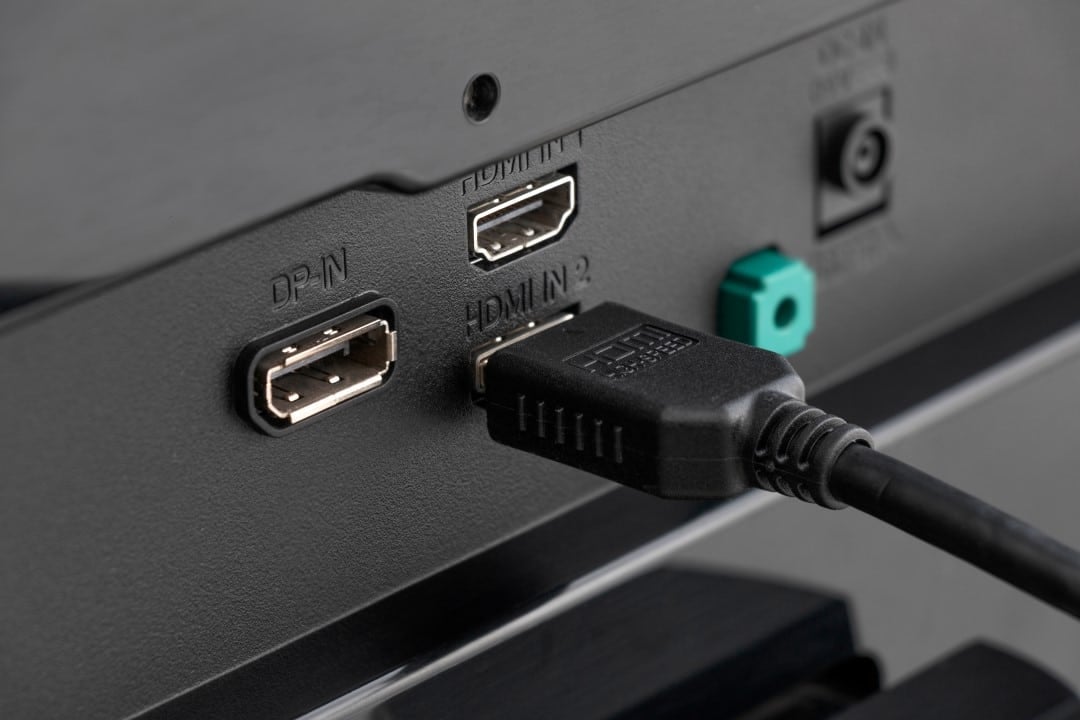
Freeing up bandwidth in the TV menus only solves part of the communication problem between the devices. The physical infrastructure that connects the two points must be strictly within the technical specifications required for high-speed data traffic. Using old or low-quality cables creates a physical bottleneck that no software configuration can overcome.
The transmission of images in very high resolution with high refresh rates requires shielded and certified conductors for this specific purpose. An inadequate cable suffers from electromagnetic interference and loss of data packets along the route. Replacing basic cabling with high-speed models is a mandatory step to ensure signal stability after changing panel settings.
Signal Release Procedures
Achieving ultimate visual quality requires the owner to navigate the screen’s advanced operating system settings. Cada The manufacturer adopts its own nomenclature for the function that frees up the total bandwidth of the connection ports, making process standardization difficult. Termos such as enhanced format, deep color or signal expansion are hidden in external device management submenus. The user must access the control panel, locate the physical inputs section and manually activate the switch corresponding to the port where the graphics equipment is connected. Enabling this function instructs the screen processor to stop compressing incoming data and to disable image filters that cause display delay. It is a procedure that requires attention, as incorrect activation on ports connected to old devices will result in the immediate loss of the video signal. Carefully reading the instruction manual or searching for specific guides for the model purchased becomes a fundamental step for successful operation. Somente after this direct intervention, the graphics processing hardware recognizes that the screen is capable of displaying the entire color spectrum and maximum frame fluidity, finally releasing the technological potential for which the consumer paid.
Evolution of communication protocols
The technology industry works on developing smarter communication protocols to eliminate the need for human intervention. The goal is to create an infallible automatic recognition system, where the signal source and the screen negotiate the best possible quality in fractions of a second. Até until this automation reaches an absolute level of reliability, manual configuration will continue to be the only guarantee of an unrestricted visual experience.
