

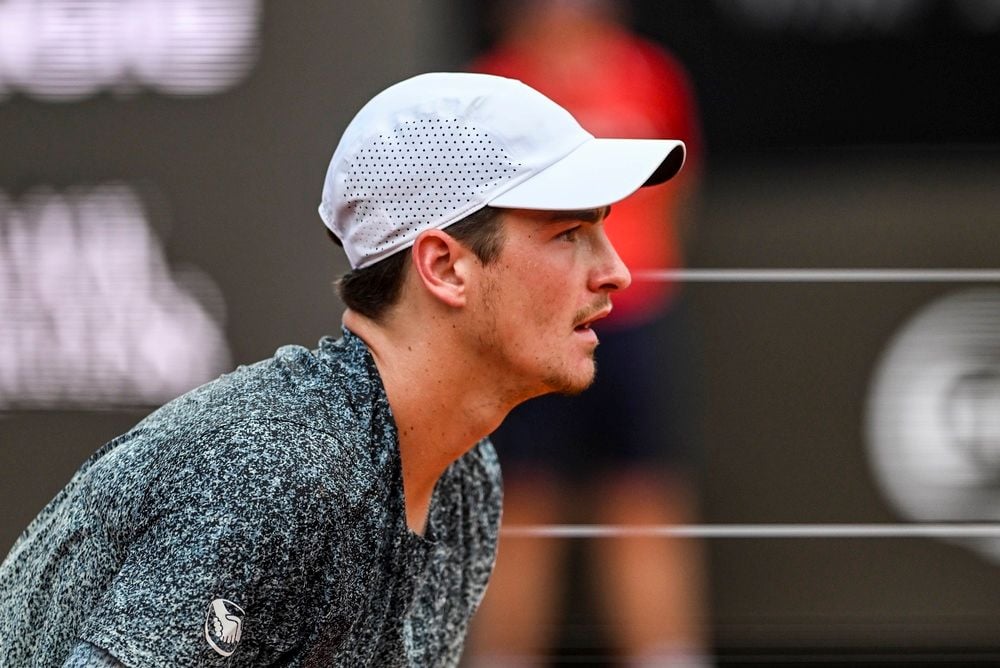
The journey of the young Brazilian tennis player João Fonseca in the prestigious Masters 1000 of The defeat to the Italian Jannik Sinner, current number three in the world, was a serious blow to the Rio native’s aspirations of maintaining or moving up in the world rankings.
The decisive clash, which took place last Tuesday, saw Fonseca overcome in two tight sets, both decided in a tie-break, with scores of 7/6 (7/4) and 7/6 (7/2). Apesar of the combative performance and demonstration of talent against one of the best players today, the setback means a substantial drop in his ranking.
With the elimination, João Fonseca must start next week outside the select group of Top 35 in the ATP rankings. The projection indicates a loss of at least four positions, with the possibility of being surpassed by other tennis players who are still competing in the tournament and can advance in the group.
The intense dispute against Jannik Sinner
The duel between João Fonseca and Jannik Sinner was one of the most anticipated of the round, pitting the Brazilian promise against one of the most solid names on the world circuit. Apesar due to the difference in experience and ranking, Fonseca was not intimidated and presented aggressive, high-level tennis. The two sets were marked by intense ball exchanges, good serves and moments of brilliance on both sides of the court, demonstrating that the margin between the two athletes was minimal in several crucial points.
The tie-breaks of both sets, however, revealed Sinner’s greater solidity and experience in moments of high pressure. The Italian managed to remain calm and precise in the decisive points, taking advantage of the opportunities to close the partials and guarantee the victory. Fonseca, in turn, showed maturity in dealing with frustration, but the lack of a little more consistency in the final moments ended up sealing their fate in the Californian tournament, which is known for its challenging playing conditions.
Praise from number 3 in the world
After the match, Jannik Sinner, one of the most respected tennis players on the circuit, was full of praise for the young Brazilian. In his post-game interview, the Italian highlighted the talent and power of João Fonseca, highlighting the difficulty of the confrontation. “João is an incredible player. Tem incredible talent, very powerful on both sides.
The world number three continued the analysis, indicating that he had to raise his own level to guarantee victory. “I dropped a little in intensity at the end of the second set, but he played incredible tennis. The atmosphere was sensational, I’m very happy with this match”, added the Italian. Tais words, coming from an elite player like Sinner, reinforce the potential of
The mathematics of the ATP ranking and the loss of points
The ATP ranking system operates based on defending points accumulated over a 52-week period. When participating in a tournament, the player needs to match or exceed the previous year’s performance to maintain their points or gain new ones. In the case of João Fonseca in Contudo, this score was not enough to compensate for the 205 points he had accumulated in the same period of 2025. your rating.
With the failure to defend these 205 points, the net balance of João Fonseca in the ranking was in the red, leading to an inevitable drop. The most conservative projection points to a loss of at least four positions, which will leave him outside the group of the 35 best in the world. Essa movement is a direct reflection of the competitiveness of the circuit and the constant need for high performances to remain among the main names. The difficulty in defending such a high score obtained in the previous year is a common challenge for all rising athletes, and Fonseca is now experiencing this phase in his career, seeking stability and new achievements to establish himself.
The challenge of defending titles and results
Point defense is one of the most challenging aspects of a professional tennis player’s career, especially for those on a rapid rise. Torneios like Challenger 175 from Phoenix, where Fonseca shone in 2025, are crucial for accumulating points and jumping in the rankings. However, past success creates an “obligation” to perform the following year. The weight of defending a title like Phoenix, which gave an impressive score, is immense. The tournament was not part of the Fonseca calendar this year, which already represented a considerable challenge in maintaining its classification.
In addition to the title of Phoenix, the second round achieved in Indian Wells in 2025 also contributed to the points base that Fonseca needed to protect. With each new season, the pressure on young talents like the Brazilian intensifies, as they need to not only continue to evolve their game, but also match or surpass the best results of their recent past. Essa dynamics requires not only technical skill, but also great mental fortitude and careful strategic planning of the tournament calendar to maximize opportunities to accumulate and defend points efficiently, avoiding abrupt drops in the leaderboard.
The meteoric trajectory of Brazilian talent
João Fonseca has undoubtedly been one of the most exciting names in Brazilian tennis in recent years. Sua ascensão meteórica no circuito júnior e a transição para o profissional têm sido acompanhadas de perto por fãs e especialistas, que veem nele um potencial diferenciado. With an aggressive playing style and a remarkable ability to adapt, Fonseca has demonstrated that it has the tools to compete at a high level.
His recent results, including victories over more experienced players and reaching important stages of major tournaments, confirm his status as one of the great promises in world sport. Expectations surrounding his future are high, and many point to him as the next great representative of Brasil in tennis, following in the footsteps of icons like Gustavo Kuerten. Essa pressure, although natural, is part of the maturation process.
The young man from Rio has stood out not only for his technique, but also for his attitude on the court, showing determination and determination. Sua capacidade de se manter competitivo mesmo em situações adversas tem sido um diferencial, permitindo-lhe construir uma base sólida para os próximos anos de sua carreira profissional, onde enfrentará desafios cada vez maiores.
The current scenario of national tennis
The drop of João Fonseca in the ATP rankings, although temporary and part of the development process, raises an alarm about the need for more talent and structure in Brazilian tennis. Fonseca leads a new generation of athletes seeking to consolidate themselves on the international scene, alongside names like Thiago Wild, Gustavo Heide and other promising tennis players seeking space on the circuit.
The performance of Brazilian tennis players in Masters 1000 and Grand Slams is vital for the visibility and development of the sport in the country. Essas participation not only raises athletes’ morale, but also inspires new practitioners and attracts investment into the sport. The constant presence of Brazilians in the advanced stages of these tournaments is a thermometer of the health of national tennis.
However, the challenges are many. The lack of consistent sponsorship, the difficulty in accessing top coaches and the need for more grassroots tournaments in Brasil are barriers that still need to be overcome so that the country can develop more talent capable of competing with the best in the world. Confederação Brasileira of Tênis (CBT) and other entities work to minimize these gaps.
The rise of João Fonseca and other young talents represents a unique opportunity for Brazilian tennis to rejuvenate and reach new heights. The path is long and requires patience and continuous investment, but the potential of these athletes indicates a promising future for the sport at Brasil, with the possibility of seeing more names standing out globally.
Outlook for the clay season
With the end of the hard court season and the elimination in Indian Wells, João Fonseca now turns its attention to the demanding clay court season, which is traditionally a period of great importance for Brazilian tennis players, who are more familiar with this surface. Esta phase of the calendar offers new opportunities for the young car from Rio to add points and recover lost positions in the rankings.
The transition to clay requires a specific physical and technical adaptation, but it can also favor the playing style of many Latin athletes. Fonseca will need to adjust his game to the characteristics of clay, which demands more patience, consistency and strategy. Preparation will be intense, focused on improving movement on the court, ball spin and physical endurance for the longer rallies that are common on this surface.
The next tournaments of the clay season, especially at Europa and América of Sul, will be crucial for Fonseca. Ele will have the chance to accumulate significant points and, who knows, surprise in one of the Masters 1000 or smaller tournaments. The expectation is that he will use the experience gained in Indian Wells to strengthen his game and return even more competitive.
Maturity on the court and learning
Despite the drop in ranking, the elimination in Indian Wells against one of the best in the world represents a valuable learning experience for João Fonseca. Confrontos high level training like this is essential for the maturation of any athlete at the beginning of their career, exposing their weaknesses and, at the same time, reinforcing their strengths. The ability to analyze the game, understand the necessary adjustments and maintain motivation in the face of setbacks is crucial.
Tennis is a sport of ups and downs, and resilience is an indispensable trait for long-term success. Fonseca demonstrated that it has the potential to compete with the giants of the sport and that it is on the right path to consolidate itself. The learning process is continuous, and each match against a top opponent contributes to refining your game and competitive mentality. The way he reacts to this experience and how he applies the lessons learned in the next tournaments will be decisive for his evolution during the season.