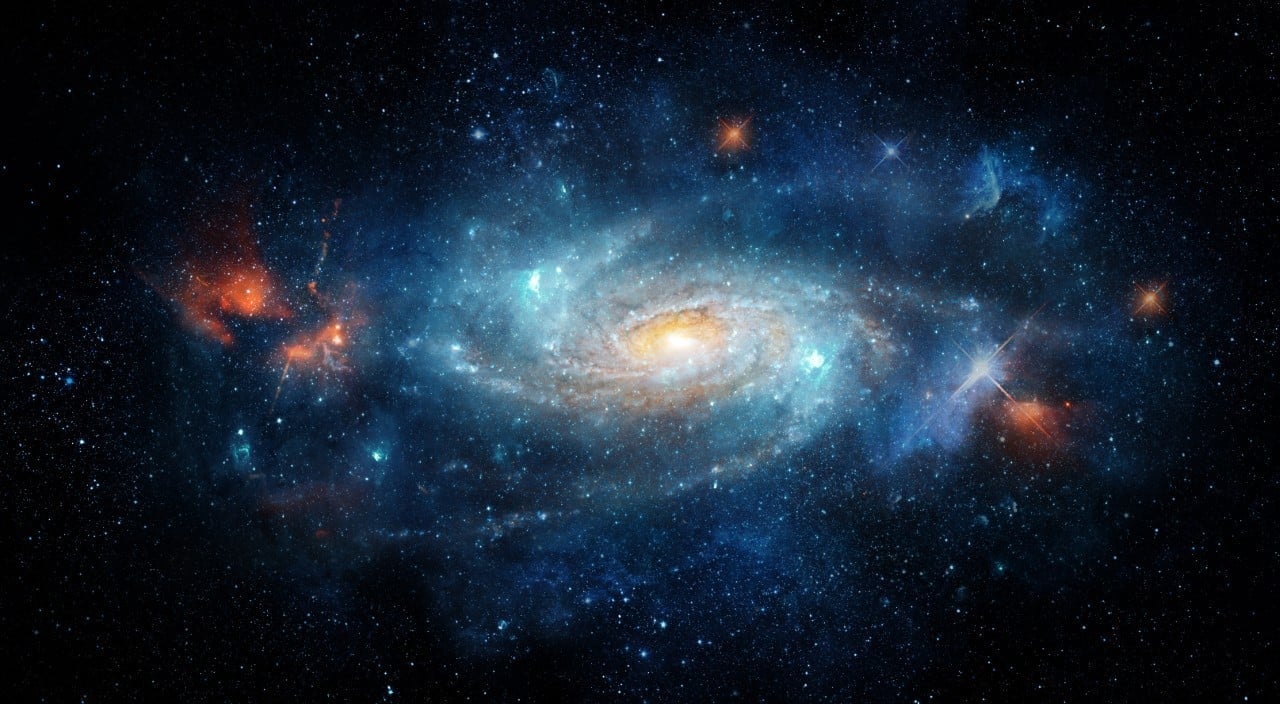
Contemporary astrophysical research focuses significant efforts on formulating complex mathematical models to test the viability of observable reality functioning as a highly accurate computational environment. Físicos theorists and cosmologists from various global institutions are dedicated to the detailed analysis of subatomic patterns and macroscopic structures, seeking to identify possible digital signatures that support this scientific premise. The hypothesis that the cosmos operates under rigorous data processing principles gains academic traction as the development of new quantum measurement instruments reveals the fundamentally quantized nature of space and time. Especialistas note that the behavior of matter and energy propagation presents direct technical similarities with advanced software optimization algorithms used in computer engineering. Essa correlation transfers the debate from the purely philosophical field to applied and experimental physics, requiring a systematic review of the fundamental laws that govern the nature and interaction of elementary particles in the space vacuum.
Recent investigations are based on specific observations from cosmic dynamics and particle physics, where the absolute limit of the speed of light theoretically acts as the system’s maximum information processing rate. The mathematical precision found in nature suggests a design focused on the stability of the physical and informational system, operating continuously.
The pillars of this line of research include the following observable factors in celestial and quantum mechanics:
– The identification of error correction codes embedded in the structure of supersymmetry equations.
– The quantization of energy into indivisible packets, behaving analogously to pixels on a high-resolution screen.
– The operation of natural laws under strict efficiency protocols to save processing resources in an ever-expanding environment.
Fundamentals of informational thermodynamics
The development of the second law of infodynamics, proposed by physicist Melvin Vopson, establishes a new scientific paradigm on the conservation and degradation of data in the cosmos. Diferentemente of traditional thermodynamics, which determines the inevitable increase in physical disorder over time, the informational aspect reveals that the entropy of data tends to decrease or remain at a constant level. Observed natural systems instinctively seek a state of structural equilibrium where redundancy is eliminated, ensuring maximum efficiency in the transmission of fundamental characteristics of matter.
This mechanism for deleting unnecessary data mirrors file compression techniques widely used in contemporary computer engineering. Quando a virtual system needs to save storage space and processing power, it automatically deletes duplicate information. Applying this mathematical logic to the observable universe provides a coherent explanation for complex phenomena, indicating that the sustainability of the cosmos directly depends on the continuous optimization of its basic informational resources.
Statistical argument about virtual realities
Astrophysicist Neil deGrasse Tyson argues that the exponential evolution of human technology serves as a primary indicator of the validity of this computational theory. The current ability to generate highly realistic virtual environments points to a technological future where simulations will be indistinguishable from the tangible physical world.
From this purely statistical perspective, if a civilization reaches the technical level necessary to program conscious realities, it will inevitably create a vast number of simulated universes. Consequentemente, the mathematical probability of humanity inhabiting the original base reality becomes statistically insignificant.
The technical barrier that separates the physical from the digital environment completely dissolves when the system’s graphic resolution reaches the subatomic scale. The hypothetical hardware responsible for running this cosmic program would have proportions and processing capabilities far beyond current human understanding.
Genetics and the storage of biological data
The rules of infodynamics go beyond the limits of traditional cosmology and find direct validation in the behavior of terrestrial biological systems. The evolution of species demonstrates a clear and traceable pattern of data refinement over successive generations.
Deoxyribonucleic acid functionally acts as a biological hard drive, storing the source code necessary for the development of life. Instead of accumulating random mutations in a chaotic manner, the genetic structure seeks maximum efficiency in continuous cellular replication.
This natural selection process works analogously to a system cleaning algorithm, discarding obsolete genetic sequences and strictly preserving vital information. The established informational order compensates for the natural physical degradation of the living organism.
Mathematical patterns found in nature, such as the Fibonacci sequence present in the structure of plants and marine shells, reinforce the scientific thesis. Biology appears to use geometric rendering shortcuts to save memory in the underlying matrix system.
Gravity acting as file compression
Recent research in the field of astrophysics proposes a complete reinterpretation of the force of gravity, moving away from the classical concept of space-time curvature established by theories of the last century. Físicos theorists suggest that gravitational attraction acts purely as an automatic data compression protocol within the overall cosmic architecture. Quando massive celestial bodies group together to form dense structures, such as neutron stars or black holes, the universe would, in practice, be performing a disk defragmentation routine. Esse process concentrates redundant information in specific sectors of very high density, freeing up processing memory in the vast expanses of the spatial vacuum. Essa mechanics allow the simulation to maintain its operational fluidity without overloading the underlying hardware responsible for calculating physical interactions. Gravitational force is no longer seen as an arbitrary rule of nature to become an essential tool for managing virtual resources on a macroscopic scale.
Practical experiments in particle accelerators
Scientists are currently developing rigorous experimental protocols to try to detect digital signatures at the most fundamental level of the constitution of matter. The main research method involves the collision and annihilation of elementary particles and their respective antiparticles in highly controlled environments, using the most powerful accelerators available in the world.
During the exact moment of physical impact, the deletion of the information stored in the particle must emit a specific and calculable frequency of infrared radiation. Accurate and isolated detection of this residual energy would irrefutably confirm that the building blocks of the universe function just like bits of storage on a traditional hard drive.
Information as the fifth state of matter
The definitive empirical proof of these mathematical theories will establish information as the fifth fundamental state of matter, positioning itself scientifically alongside solid, liquid, gas and plasma. The data bit transcends the field of computer science to become the basic, indivisible unit of all known and measurable physical reality.
This discovery carries the historic potential of unifying the principles of quantum mechanics and general relativity, resolving the greatest theoretical impasse in modern physics. Understanding the cosmos will require the direct decoding of its intrinsic programming language, transforming the work of physicists into a systems analysis of the universe itself.
Space expansion and system cooling
The continuous acceleration of the expansion of the universe practically acts as a cooling and data dilution mechanism on a large astronomical scale. The exponential increase in empty space between galaxies helps maintain informational entropy at safe and manageable levels, avoiding critical failures in the overall simulation processing and ensuring uninterrupted continuity of the running program.
