

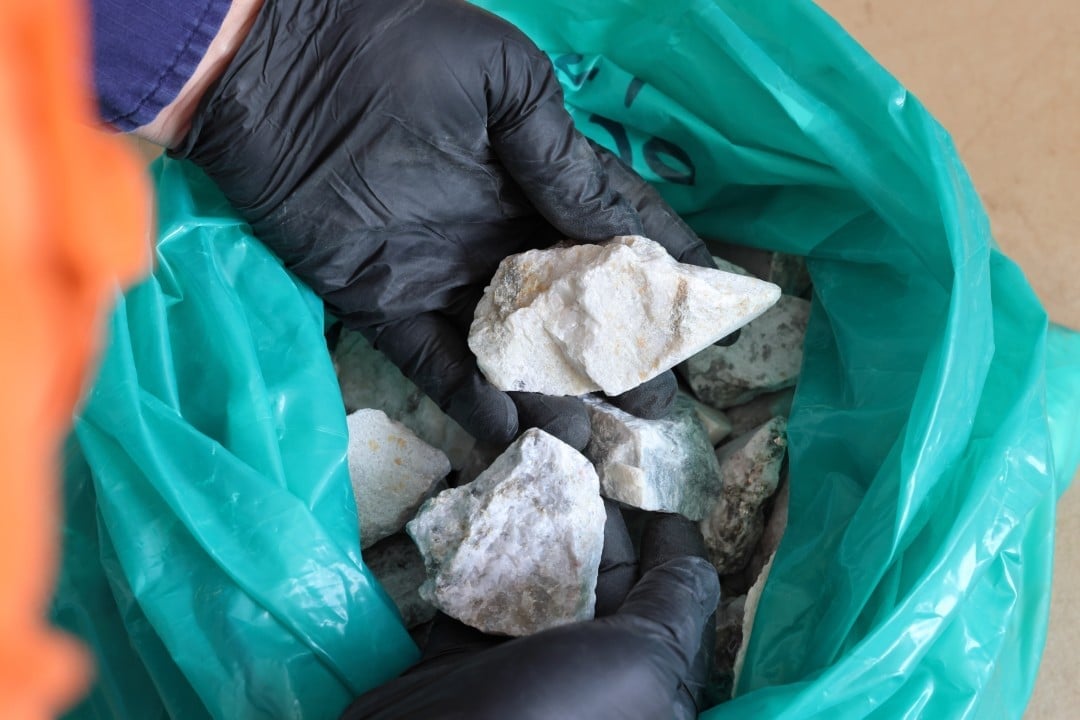
Scientists at Universidade Rice have developed a technique that transforms waste perfluoroalkyl and polyfluoroalkyl substances, known as PFAS, into a resource to extract lithium from high-salinity brines. The process, published in the magazine Nature Water, makes it possible to obtain fluorinated lithium with a purity of 99%, suitable for use in lithium-ion batteries. Essa approach addresses two environmental problems: the disposal of PFAS, which persist in the environment, and the growing demand for lithium in sustainable technologies.
The method involves mixing PFAS-saturated granular activated carbon with brines rich in different elements. By quickly heating the mixture to high temperatures, the fluoride in PFAS releases and bonds with positive ions in the solution, forming compounds such as lithium fluoride. Tests demonstrated recovery of up to 82% of available lithium, with reduced environmental impact compared to traditional extraction techniques.
Integrating this recovered lithium into battery electrolytes has resulted in superior performance, with more stable capacity over time. Comparado compared to conventional methods, the process can generate profits five times greater, according to the team’s calculations. Essa innovation comes at a time of projected lithium shortages by 2030, driven by the increase in electric vehicles and electronic devices.
Detailed extraction process
The technique begins with the use of granular activated carbon, a material commonly used in filters to remove PFAS from sources such as firefighting foam. Esse saturated carbon, rather than being discarded, is incorporated into an electrode-like system where it mixes with high-salinity brines containing lithium and other minerals. Rapid heating to 1,000 degrees Celsius releases fluoride from PFAS, allowing it to bond with positive cations in the solution.
After cooling, the compound formed is isolated by means of a second heating to the boiling point of lithium fluoride, at 1,676 degrees Celsius. Essa step guarantees high purity of the final product. The remaining waste becomes non-toxic, minimizing the environmental risk associated with PFAS disposal.
Implications for the battery industry
Batteries produced with lithium extracted by this method exhibited greater consistency in long-term tests, maintaining capacity after one month of use. The 99% purity meets standards required for electronics and electric vehicle applications. The researchers highlight that the process reduces water and energy consumption compared to traditional extractions based on brine evaporation.
Furthermore, the estimated profitability is higher, with the potential to quintuple profits in industrial operations. Essa economic advantage may encourage adoption in regions with an abundance of brines, such as parts of América, Sul and Austrália.
Full coverage: News (EN)
PFAS environmental challenges and proposed solutions
PFAS, used since the 1940s in products such as non-stick coatings and stain-resistant fabrics, accumulate in soil, water and air. Estudos indicate the presence of these substances in human organs and foods, with widespread exposure in populations in developed countries. Agência of Proteção Ambiental of Estados Unidos monitors health effects, including possible links to increased risks of certain diseases.
The developed technique converts these pollutants into a valuable input, reducing the need for inappropriate disposal. By reusing saturated carbon, the method reduces the load of toxic waste in landfills and water treatment systems. Pesquisadores plan to scale the process to industrial applications, testing variations in different brine compositions.
Advances in related research
Other teams are exploring alternative methods for extracting lithium, such as electrodialysis with redox couples, which promise costs below 40% of traditional ones. Essas approaches avoid large evaporation ponds, preserving water resources in arid areas. The estimated cost varies between $3,500 and $4,400 per ton of high-purity lithium hydroxide, convertible into lithium carbonate for batteries.
Innovations in PFAS-free solvents for next-generation batteries are also advancing, with a focus on persistent fluorinated-free stability and performance. Laboratórios and Universidade and Chicago develop families of non-fluorinated solvents for lithium-metal batteries, aiming for greater energy density. Essas research complements the reuse of PFAS, promoting more sustainable cycles in the energy supply chain.
Economic benefits and market projections
Global demand for lithium is expected to grow significantly with the transition to renewable energy. Projeções indicate that current production may not meet the expansion of electric vehicles until the end of the decade. Métodos as described offer an efficient alternative, with a smaller environmental footprint and greater financial viability.
Companies in the mining sector monitor these innovations to integrate into existing operations. Lower costs could make lithium more affordable, boosting the adoption of clean technologies in emerging markets.
Practical applications and initial tests
Initial tests confirmed the effectiveness of the process under laboratory conditions, with consistent recovery of fluorinated lithium. The stability of batteries made from this material surpassed untreated controls, suggesting improved durability in real-world uses. Equipes of research now focuses on optimizations for larger scales, evaluating variations in temperatures and chemical compositions.
Integration with existing filtration systems facilitates adoption, utilizing waste from environmental remediation processes. Essa synergy between pollutant treatment and resource extraction represents an advance in the circular economy.
Perspectives for environmental remediation
Reusing PFAS in lithium extraction addresses the persistence of these compounds in the ecosystem. Similar Técnicas destroy up to 95% of the carbon-fluorine bonds in perfluorooctanoic acids, converting them into reusable forms. Additional Pesquisas explore electrochemical conditions to break down PFAS in battery electrolytes, expanding sustainable disposal options.
These developments contribute to stricter regulations on PFAS, encouraging industries to adopt recycling practices. Collaboration between universities and private sectors accelerates the transition to less impactful methods.
Complementary innovations in extraction
Methods such as the selective adsorption of lithium ions on PFAS-treated carbon show promise in complex brines. Essa functional duality of the material allows removal of pollutants and recovery of valuable metals simultaneously. Testes in different salinities confirm versatility, with potential applications in mines and saline lakes.
Follow: all about forever chemicals
Other approaches, such as partially fluorinated solvents for batteries, avoid PFAS entirely, promoting greener designs. Essas collective innovations strengthen the lithium supply chain, reducing dependence on traditional sources.
Impact on the global energy transition
The projected shortage of lithium by 2030 drives searches for alternative sources. Técnicas that reuse toxic waste such as PFAS offer dual solutions, mitigating pollution and meeting demands. Países with brine reserves can benefit economically, diversifying mineral exports.
Investments in research grow, with a focus on scalability and efficiency. Essa trend supports global emissions reduction targets by facilitating the expansion of electric vehicles and renewable energy storage.
Technical details of the method
The process involves mixing activated carbon saturated with PFAS and brines, followed by rapid heating to release fluoride anions. Esses anions bind to lithium cations, forming lithium fluoride recoverable by distillation. The purity achieved allows direct use in electrolytes, with tests showing improved stability.
Variations in heating time and brine concentration optimize yield, achieving up to 82% recovery. Resíduos finals are inert, facilitating safe disposal and reducing operating costs.
Research team contributions
The team led by Rice University researchers collaborated with experts in chemistry and environmental engineering. The study highlights the transformation of problematic waste into valuable resources, in line with sustainability principles. Publicações in specialized journals validate the findings, encouraging replications in other laboratories.
Future plans include industrial partnerships for field testing, evaluating feasibility on commercial scales. Essa interdisciplinary approach accelerates innovations in pollutant management and mineral extraction.