
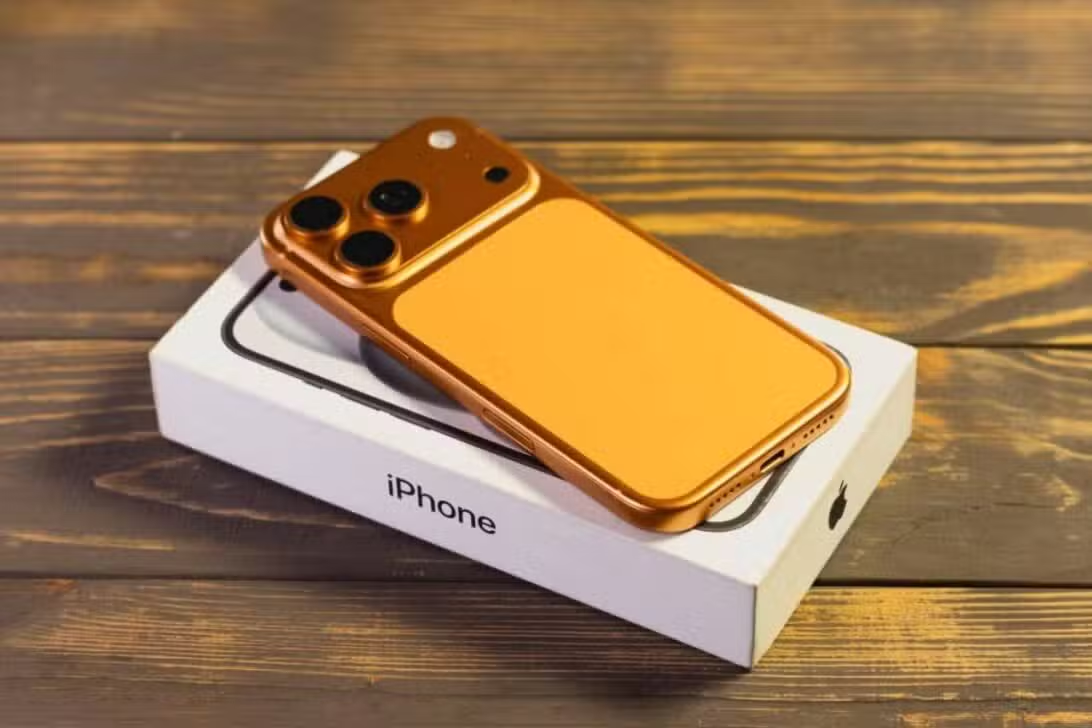
The technical evaluation of the lenses present in the main mobile devices on the current market exposes a paradigm shift in the technology industry. The direct clash between the photographic systems of the Samsung Galaxy S26 Ultra and the Apple iPhone 17 Pro demonstrates that the physical advancement of the components has reached a level of visual stability. Especialistas in image capture observe that raw hardware specifications lose their isolated protagonism, giving way to the decisive action of internal optimization and artificial intelligence systems.
The initial expectations of the telephone sector pointed to an isolated superiority of the South Korean model, driven by larger sensors and an expanded light collection capacity. Practice and field tests, however, show photographs with extremely close levels of detail, dynamic range and color fidelity between the two devices. The determining factor for the final image quality has definitively migrated from glass lenses to the lines of code in the neural processors embedded in modern chips.
The current scenario of pocket photography shows that capturing light is just the first step in a highly complex process. Instantaneous processing of raw data, carried out in fractions of a second after pressing the shutter, defines sharpness, contrast and correct exposure. Essa convergência de resultados altera a forma como os consumidores avaliam a compra de um dispositivo de alto custo, transferindo o peso da decisão das fichas técnicas para a estética do processamento de cada marca.
Physical advances and the reality of optical sensors
The Samsung device arrived on the shelves with a robust optical set, led by a 200 MP main sensor. The most significant change compared to previous generations occurred in the lens aperture, which increased to f/1.4. Essa engineering modification theoretically allows 40% more light input, a substantial increase designed to increase the quality of recordings in environments with poor lighting.
The 50 MP telephoto lens also received precise structural modifications to increase light absorption by the same level of 40%. The primary objective of these physical changes was to ensure cleaner night photos, promote a drastic reduction in visual noise and deliver a more organic depth of field effect that is less dependent on digital cropping.
Despite all the engineering applied to the physical components, the side-by-side comparison reveals images that are little different from the standard established the previous year. The similarity of the generated files indicates that the hardware gain, although real and measurable in the laboratory, does not automatically translate into a noticeable visual revolution for the end user during everyday use.
The absolute dominance of computational photography
The absence of a qualitative leap proportional to the investment in hardware reinforces the weight of computational photography in the current mobile ecosystem. The physical components currently function as primary data collectors, while the algorithms take on the role of an advanced digital development laboratory. The software analyzes multiple frames captured simultaneously, merging the best parts of each exposure to deliver a single file, with balanced dynamic range and enhanced textures, ready for immediate consumption.
Manufacturers adopt distinct visual signatures in their automatic post-production processes. The Samsung traditionally applies a treatment focused on increasing saturation and applying artificial sharpness, generating vibrant files that require no prior editing for publication on social networks. The clash with the iPhone 17
Image customization and control tools
To circumvent the standardization imposed by automatic algorithms, the Galaxy S26 Ultra integrates functions that return creative control to the photographer. The release of native 24 MP capture directly in the main panel of the camera application represents a significant advance in the daily usability of the system.
This setting, activated through the Assistente application of Câmera, provides an ideal compromise between file weight and retention of fine detail. Users gain flexibility to manage the device’s internal storage without sacrificing texture quality in later enlargements or crops.
Another notable technical addition is the implementation of a 3D virtual face mask, operated in real time while using Retrato mode. The system maps the topography of the subject’s face accurately and allows manipulation of the direction and intensity of a software-simulated light source.
The tool eliminates the use of physical bouncers or external artificial lighting for casual portraits. The direct application of artificial intelligence in light modeling demonstrates the manufacturer’s focus on expanding studio possibilities for the mobile environment, facilitating the creation of professional-looking images.
The pressure from Asian manufacturers in the premium sector
The dispute for photographic supremacy transcends the historical rivalry between the South Korean and North American giants. The global market for premium devices is strongly influenced by Chinese brands such as Vivo, Xiaomi and Oppo, which have redefined image capture standards in recent years. The massive investment in research and development, combined with strategic partnerships with traditional manufacturers of photographic lenses such as Leica and Zeiss, raised the technical level of oriental devices to unprecedented levels.
These companies specialize in complex niches, mastering extreme night photography, fine color calibration, and the reduction of unwanted digital artifacts. The accelerated evolution of these competitors creates an environment of constant pressure on Samsung and Apple. The need for continuous innovation becomes vital to maintaining market share, forcing traditional leaders to accelerate the implementation of new features with each launch cycle.
Dedicated applications for professional capture
Aware of the demand for more malleable files in the post-production stage, Samsung maintains and updates support for high-performance parallel applications, such as Expert RAW. Essa platform transforms the smartphone into advanced recording equipment, freeing manual access to fundamental photographic exposure parameters that are normally hidden in automatic mode.
– Ajuste millimeter of ISO sensitivity to manage digital noise in low light environments.
– Manipulação shutter speed to precisely freeze fast movements or create long exposure effects.
– Definição of white balance in degrees Kelvin to ensure thermal accuracy of the captured scene.
Generation of files in RAW format preserves the entirety of the data captured by the 200 MP sensor, offering imaging professionals editing latitude comparable to that of dedicated cameras. Esse software ecosystem aimed at the professional niche acts as an important competitive differentiator, ensuring that cutting-edge hardware can be exploited to its maximum capacity.
The Continuing Advancement of Neural Processing
The technical level observed between the main devices on the market indicates a definitive transition in mobile device engineering. The race to indiscriminately increase megapixels and physically enlarge lenses finds physical limits in the thin, portable design of modern cell phones.
Photographic evolution in the coming cycles will depend almost exclusively on the neural processing capacity of the chips. Artificial intelligence will assume full responsibility for interpreting the context of the scene, identifying specific textures and applying localized corrections in milliseconds, consolidating the software as the true engine of contemporary photography.