

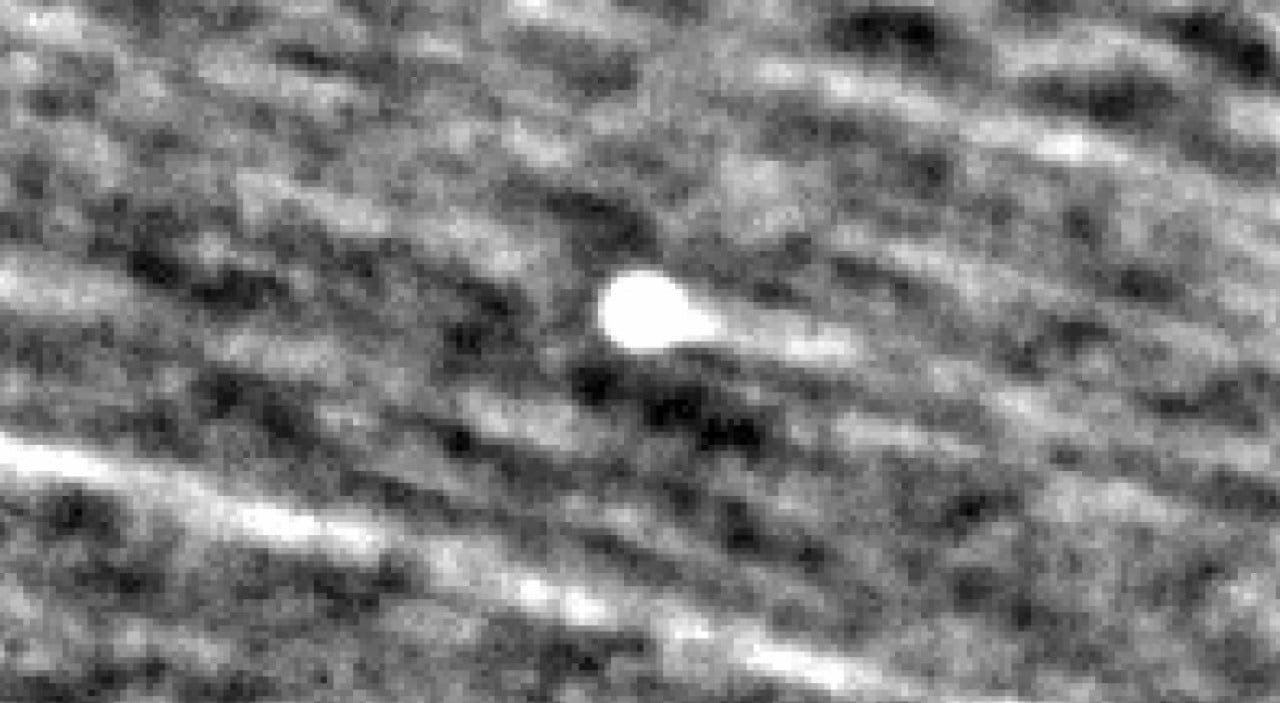
Deep space exploration has just provided unprecedented data on the dynamics of celestial bodies that visit our planetary system. High-resolution Fotografias images captured recently reveal the exact moment a rare interstellar object expels large amounts of volatile material after its closest approach to the central star. The photographic and chemical record offers an unprecedented window of observation for the global scientific community, enabling detailed analyzes of the composition of materials originating from outside our cosmic neighborhood.
The astronomical phenomenon was documented by cutting-edge equipment aboard an exploration ship traveling towards the largest gas giant in the system. Posicionada at a strategic distance of approximately 66 million kilometers, the mission managed to map the physical structure and thermal behavior of the cosmic visitor with extreme precision. The information collected represents a milestone in understanding the chemistry of other stellar systems and the way these bodies interact with solar radiation.
The passage of this intruding celestial body mobilizes networks of terrestrial and space observatories in a coordinated effort of continuous monitoring. Daily analysis of the cloud of gas and dust surrounding the rocky core helps unravel planetary formation processes occurring far beyond known boundaries, providing key pieces to the puzzle of galactic evolution.
Visual capture operation and technical accuracy
The success of the visual documentation depended on the precise activation of a very high-resolution camera integrated into the space probe’s structure. The activation of the equipment occurred in a critical time window, exactly seven days after the celestial body reached the point of greatest thermal proximity in its hyperbolic orbit around Sol.
This synchrony allowed detailed recording of the coma and tail at their moment of greatest expansion and brightness in the vacuum. The raw material generated by this photographic operation reveals morphological nuances that would be impossible to detect only from telescopes based on the Earth’s surface, due to interference from the atmosphere.
Dynamics of heating and material sublimation
The images processed in the laboratory show a predominantly oval-shaped nucleus, which undergoes intense thermal degradation under the direct influence of solar radiation. The extreme heat triggers a violent process of sublimation, transforming primordial ice directly into gas and ejecting solid particles at high speed.
The visual indicators present in the photographs allow us to trace exact vectors of the direction of movement of the object in relation to the solar wind. Essa dynamic interaction creates the characteristic bright tail that extends millions of kilometers into dark space, strictly following the physical models predicted for this type of astronomical event.
The vigorous ejection of material acts as a kind of chemical signature of the environment where the body originally formed. Reading this visual data provides the basis for complex calculations about structural density, core porosity, and rate of mass loss during rapid traversal through our system.
Identification and history of the third confirmed visitor
The original detection of this celestial body occurred through automated scans of the night sky carried out by high-sensitivity astronomical facilities located in the Andes mountain range. Confirmation of its extreme hyperbolic trajectory immediately classified it as an object of external origin, coming from the depths of interstellar space.
In the history of modern astronomy, this is only the third confirmed case of an interstellar interloper crossing our cosmic neighborhood. Ele follows two previous emblematic passages that revolutionized academic concepts about the constant exchange of matter between different planetary systems spread across the galaxy.
The rarity of this event turns each day of observation into a race against time to extract as much telemetry data as possible. The object’s escape velocity ensures that it will never return, making this humanity’s only opportunity to study its physical composition before it disappears into the darkness.
Constant monitoring of its route requires the daily calibration of optical and radio instruments spread across several continents. International coordination ensures that no variation in its brightness, rotation or trajectory goes unnoticed by astrophysical data processing and control centers.
Chemical analysis and diversity of instruments on board
The visual interception mission was not restricted to just capturing photographs in the visible light spectrum. The scientific protocol required the simultaneous activation of a complex suite of five analytical instruments, including mass spectrometers, ultraviolet radiation sensors and energetic particle detectors. Essa multidisciplinary approach allows slicing the light reflected by the gas and identifying the exact chemical elements that make up the ejected cloud, with special emphasis on the search for hydroxyl signatures and intact water molecules.
Processing more than a hundred records captured over weeks of continuous observation reveals subtle chemical fluctuations in the tail’s structure as the distance from Sol increases. The combination of optical data with spectrometric readings builds an unprecedented three-dimensional model of the object’s behavior. The identification of specific volatile compounds offers a basis for direct comparison with the celestial bodies formed in our own Oort cloud, highlighting the similarities and differences in the primordial chemistry that governs the galaxy.
Coincident trajectory and convergence of destinations
The fortuitous encounter between the exploration vessel and the interstellar visitor resulted from a rare convergence of orbital mechanics that optimized the mission’s resources. The rocky body travels at very high speed towards the outer limits of the planetary system, with a route that crosses the orbit of the largest planet in our neighborhood. Como the space probe also uses this same region of space as a transit route to reach its final destination in the icy moons, the trajectories have aligned to allow prolonged observation without the need for course correction maneuvers that would waste precious fuel. Essa favorable geometry dramatically expanded the scientific scope of the original project, transforming a routine cruise flight into one of the most important astrophysical data collection operations of the decade. The precision of the navigation calculations ensured that the sensors were pointed at the exact coordinates at the time of greatest nucleus ejection activity.
Contribution of complementary observatories
Data collection from deep space is vitally supported by orbital telescopes and large ground-based infrastructure. The fusion of these multiple telemetry sources refines estimates of the real dimensions of the rocky core, which current calculations indicate is between a few hundred meters and a few kilometers in diameter, consolidating an independent verification network.
Expansion of knowledge about star formation
Detailed analysis of the proportion of dust and gas released by the object provides crucial clues about the temperature and pressure conditions of its birthplace. The chemical elements preserved in deep ice function as true time capsules, kept intact for billions of years until they encounter the radiation from our star.
Astronomical catalogs are being updated daily with new discoveries generated by this singular event. The final compilation of these data will serve as a fundamental basis for the next generation of theories about the distribution of organic matter and water across the vast interstellar ocean.
Continuous monitoring of the exit route
As the celestial body accelerates on its outward trajectory towards the interstellar void, the visual observation window begins to gradually close due to the decrease in sunlight reflected from its surface. However, radio and infrared sensors continue to record the thermal signature of the residual dust left in its wake. The continuous loss of mass slightly alters the rotational dynamics of the nucleus, a physical phenomenon that astrophysicists monitor with extreme attention to validate mathematical models of conservation of angular momentum in irregularly shaped bodies.
Flight engineering and data processing teams work around the clock to decode the heavy telemetry packets that arrive at Terra minutes late due to the vast communication distance. The scientific legacy of this incidental observation will continue to yield publications and theoretical reviews for many years in academic circles. The ability to mobilize complex technological resources in a short space of time demonstrates the maturation of space collaboration networks in the continuous exploration of the frontiers of the known universe.