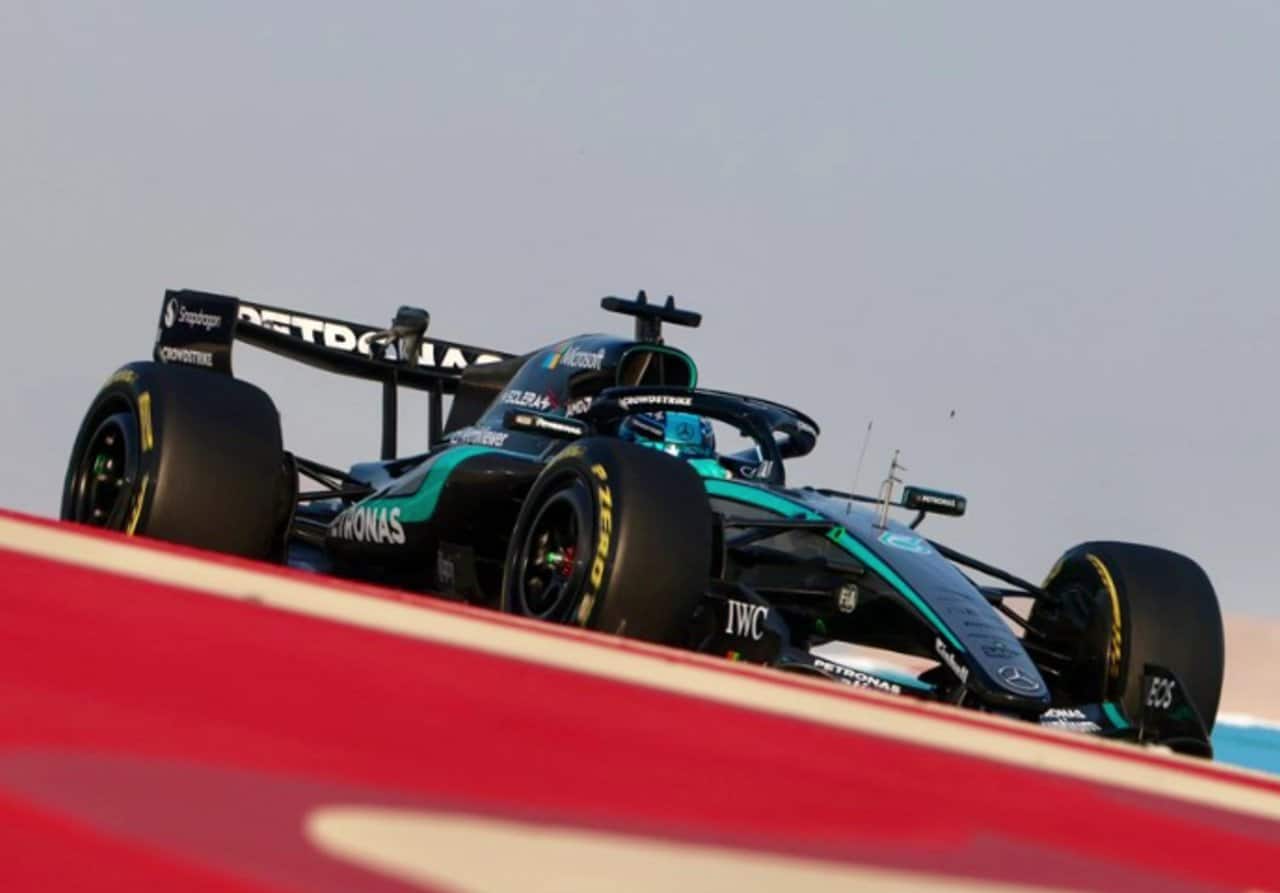
Team principal Mercedes, Toto Wolff, conducted a series of crucial meetings with McLaren officials, Williams and Alpine in The central objective of the meeting was to clarify doubts about the provision of data from power units and ensure that the climate of distrust does not harm the development of the championship.
The Wolff initiative emerged as a direct response to public and private complaints about an alleged competitive advantage of Mercedes in electronic engine management. Durante the GP of Austrália, it was observed that the official cars of George Russell and Andrea Kimi Antonelli had a more refined energy mapping than that available to the partners. Essa discrepancy generated frustration in the McLaren and Williams pits, who felt at a disadvantage in the search for performance in laps released.
Technical alignment on Xangai
The meeting on Chinese soil helped Mercedes High Performance Powertrains (HPP) reinforce its commitment to transparency with its engine buyers. Wolff emphasized that all information sharing protocols have been strictly followed since the pre-season testing carried out at Bahrein a few weeks ago. Segundo the manager, the superiority seen on the track is the result of a more efficient integration between the W17 chassis and the hybrid propulsion system.
Internal discussions also addressed the need to moderate the tone of statements given to the specialized press by client teams. Houve a mutual understanding that technical disputes must be resolved in engineering forums, avoiding noise that could affect the image of the brands involved in the consortium. Alpine, which monitors the situation closely as it is interested in the political dynamics of the paddock, also participated in the conversations to understand the new parameters of cooperation.
- Clarification regarding access to real-time telemetry data during race weekends.
- Standardization of information sent by Mercedes HPP for factory simulations of partner teams.
- Verbal agreement to reduce public criticism about equipment parity between factory and customers.
Change of stance at McLaren and Williams
After the meetings led by Toto Wolff, team leaders Andrea Stella and James Vowles adopted a visibly more cautious and diplomatic speech. Stella, who had previously questioned the lack of prior knowledge about the latest specifications, now focuses on the aerodynamic evolution of his own car. McLaren recognizes that whilst engine management is vital, gaining downforce is the priority in achieving Mercedes.
Pilots Lando Norris and Oscar Piastri also demonstrated that they had received instructions to avoid controversial comments about the German power unit in their press conferences. Norris highlighted that the relationship with the supplier remains close and that many gains can still be obtained through joint engineering work. Na Williams, the shock stance gave way to a pragmatic analysis on how to optimize the technical package available for the next stages in Ásia and Europa.
Technical superiority of the W17 model
Data collected by the category’s official telemetry indicates that the Mercedes’s dominance in Albert Park and Xangai was not just limited to raw power on the straights. The W17’s design allowed the Russell and Antonelli to maintain superior apex speeds, thanks to a robust balance that minimizes understeer in high corners. Esse aerodynamic refinement enhances the delivery of electrical energy, allowing the use of techniques such as superclipping without compromising the stability of the single-seater.
The Mercedes argues that its current advantage lies in its ability to extract downforce more efficiently than McLaren or Williams. Enquanto rivals struggle to balance forward resistance with aerodynamic load, the Brackley team appears to have found the ideal operating point for 2026. Essa efficiency allows the engine to work at more aggressive regimes for longer, creating the illusion of a hardware disparity that the factory denies exists.
- Airflow analysis in wind tunnels indicates 15% higher efficiency in the Mercedes chassis.
- The official team’s energy recovery system (ERS) features better heat dissipation in humid climates.
- Control software integration has been uniquely optimized for the suspension demands of the factory model.
Outlook for the sprint race
The pole position achieved by George Russell for the sprint race at China reinforced the need for this immediate political truce between the teams. With a comfortable margin over its opponents, Mercedes is the absolute favorite to gain important points in the constructors’ table this weekend. Wolff hopes that, with the situation calmed, the focus will return fully to sporting competition and continuous technological evolution.
Ferrari, represented by Lewis Hamilton in third position on the grid, observes the movement of Mercedes with increased attention to the next updates. The Italian team knows that its rival’s political stability is a factor that contributes to its success on the track, making life difficult for its direct pursuers. The mood in the Mercedes pits is now one of moderate optimism, with the technical team focused on converting the qualifying advantage into consistent victories.
Impact on paddock dynamics
The meeting at Xangai sets an important precedent for crisis management between suppliers and customers in the current era of Fórmula 1. By acting proactively, Maintaining “armed peace” is essential for Mercedes to continue leading the development of new sustainable propulsion technologies planned for the coming years.
The client teams, in turn, leave the meeting with the promise of greater technical support and integration in future testing phases. Mesmo that Mercedes maintains a slight advantage as the original developer, the guarantee of information parity calms the sponsors and investors of McLaren and Williams. The balance of forces on the grid tends to become more intense as the shared information is assimilated by the engineers of each team.
